GS1 Poland: Advancing Supply Chains with Global Standards

Businesses in Poland are turning to accurate product identification and data sharing to keep supply chains running smoothly. With EU rules and growing consumer demand for transparency, clear labeling, and standardized information have become important for compliance, sustainability, and building trust.
GS1 Poland (PL) plays a central role in this transformation by providing globally recognized standards such as GTINs (Global Trade Item Numbers) and barcodes. These solutions enable businesses in Poland to run smoothly, track products better, connect with global markets, and provide more value to consumers.
This blog explores how GS1 supports industries in Poland in applying global standards, improving product information systems, and transitioning to 2D barcodes.
Table of Contents
What is GS1 Poland?
Founded in 1994, GS1 PL is also known as GS1 Polska. It is the local division of the global standard organization GS1. The GS1 Poland Foundation develops, manages, and promotes GS1 standards across the country.
For the first sixteen years, GS1 Poland operated under the Institute of Logistics and Warehousing. In June 2016, it became an independent organization.
It is the sole authority that admits Polish and EU companies and grants them access to GS1 codes. GS1 PL collaborates with trading communities to support safer, more sustainable, and transparent supply chains.
Contact information:
Address: Malta Office Park, ul. Baraniaka 88B, budynek C, piętro 3, 61-131 Poznań, Poland
Contact no: +48 61 62 81 590
Email: gs1pl@gs1pl.org
Introduced initiatives and collaborated campaigns
GS1 PL partners with leading industry players to promote global standards that help improve supply chain efficiency and support digital innovation.
Sustainability and New Legislative Compliance
In Poland, legal regulations on sustainable development, such as the EU’s Corporate Sustainability Reporting Directive (CSRD) and the Digital Product Passport (DPP), will be implemented. They aim to reduce environmental impact, make supply chains more transparent, and protect consumers.
GS1 standards can provide support in adapting to the new requirements. With barcodes, QR codes, and RFID tags, the movement of goods becomes more consistent and reliable, and data exchange among all market participants becomes simpler.
Cooperation of GS1 PL with food banks and retail chains
GS1 PL partnered with the Federation of Polish Food Banks to optimize food aid logistics and reduce food waste. The global standards helped improve how food banks and retail chains work together, making distribution faster, safer, and more efficient.
Working with the Łukasiewicz – Poznań Institute of Technology, GS1 reviewed each step of the supply process, found problem areas, improved resource use, and measured the outcomes.
With the GS1’s involvement, food banks and their retail partners can manage supplies more effectively, ensuring that food reaches those in need.
GS1 PL services for businesses
GS1 provides tools and services that help businesses work more productively and foster innovation across various sectors.
GTIN (EAN code)
If you plan to sell products on marketplaces like eBay, Amazon, Allegro, etc., then you require a GTIN for each product.
Here are the steps to get a GTIN:
- Visit the official Member Registration portal and fill out an application form. Fill in details like name, surname, e-mail address, phone number, company revenues, etc.
- Submit essential documentation (such as an identification document, proof of address, and business registration proof).
- Determine the number of barcodes required, aligning with your business’s operational needs.
- Pay either online or download a proforma invoice and pay via bank transfer.
- Once the application is reviewed and approved, GS1 PL issues a GS1 Company Prefix.
- Log in to the MojeGS1 platform and assign GTINs to your products.
- GS1 PL then issues the GS1 System Certificate of Participation, confirming your membership and rights to use GS1 standards.
The fees are of two types:
Registration fee: It is a one-time fee you need to pay while you submit the application. It depends on the number pool.
Annual fee: It is based on the company’s total net revenues for the preceding year, paid once a year.
Verified by GS1
Verified by GS1 is a tool that ensures product data accuracy by letting businesses confirm product identities through the GS1 Global Registry.
By registering on the GS1 Polska eProducts platform, retailers, online marketplaces, and other businesses can check the integrity of product listings. The service enhances supply chain transparency and builds confidence across stakeholders.
To access data in Verified by GS1, first create GTINs for your products following GS1 standards, ensuring each variation has a unique identifier. Add these GTINs to your MyGS1 account. Once products include the six required attributes, they qualify for the program.
You can then visit eprodukty.pl to see how your products appear to users.
eProducts
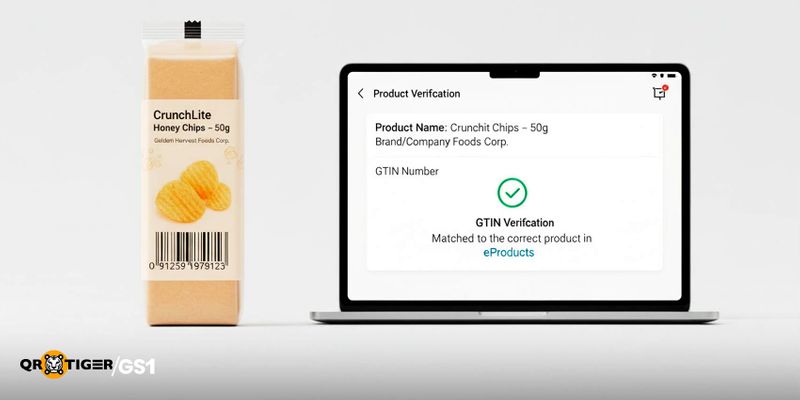
eProducts is GS1’s global product catalog, containing over 650 million products worldwide, where each item is identified by a unique GTIN (EAN code) issued by GS1.
On eProducts, you can check whether a GTIN is valid and issued by GS1, see which company owns or uses it, and view details about the product linked to that code. The platform connects to the GS1 Global Registry through the Verified by GS1 service, ensuring accuracy of GTIN information.
The product data is supplied by brand owners and manufacturers participating in the GS1 System.
You can use eProducts data to organize your database, correct product information errors, remove duplicate entries, and fill in missing data. It helps ensure your records are accurate, consistent, and up to date. It is useful for marketplace operators, large retail networks, comparison websites, wholesalers, warehouses, and developers of mobile or web applications.
This database helps you uncover new commercial opportunities by browsing items within specific categories, finding products that fit well with what you already offer, and partnering with companies that align with your business.
LEI (Legal Entity Identifier)
An LEI is a 20‑digit code that uniquely identifies a company or organization in global finance. Built on the ISO 17442 standard, it acts like a universal ID card for parties in financial transactions, making it easier to recognize who’s involved.
Its purpose is to strengthen risk monitoring, simplify regulatory reporting, and ensure that every legal entity has just one LEI worldwide.
LEI can be requested for anyone involved in a financial deal, such as registered companies, funds/trusts, government bodies, sole proprietors, branch offices, and others.
GS1 PL supports classic LEI and smart LEI.
Under the classic LEI package, you get a new LEI with a validity period of 1/3/5 years. It is allowed to add an LEI certificate.
Smart LEI supports a comprehensive package for new LEIs. Its benefits include fast payment processing, automatic renewal, issuance of an LEI certificate, and a simple application.
MojeGS1 (MyGS1)
MojeGS1 is a user‑friendly platform that lets GS1 Polska participants easily handle product identifiers.
You can activate and manage GTINs and GLNs (Global Location Numbers), create product descriptions, share data online (even on mobile), print EAN‑13 and EAN‑8 barcode labels, calculate check digits, and browse catalogs of variable‑quantity goods, all in one place.
On the MojeGS1 platform, you can fill in your annual information (a form that GS1 participants must submit to update company details and show how GS1 standards are applied in Poland), request new identifiers, update business details, access e‑invoices, and contact GS1 PL.
Applications of 2D barcodes across industries in Poland
By 2027, retail POS will be able to scan 2D barcodes. These barcodes can hold far more details than traditional ones, making product tracking smoother and customer engagement stronger. This shift, driven by the GS1 Sunrise 2027 initiative, aims to simplify and improve shopping both online and in stores.
While 1D barcodes can still be used where regulations permit, many businesses are already preparing by adding both 1D and 2D codes to packaging. This helps keep current systems running while paving the way for future upgrades.
Preparing for Sunrise 2027 is simple. Businesses can generate GS1‑compliant 2D barcodes by following official guidelines or use trusted third‑party tools like QR Tiger’s GS1 QR code generator.
For those short on time or technical resources, external solutions offer a fast, reliable way to adopt next-generation barcodes, ensuring a smooth and future‑ready transition.
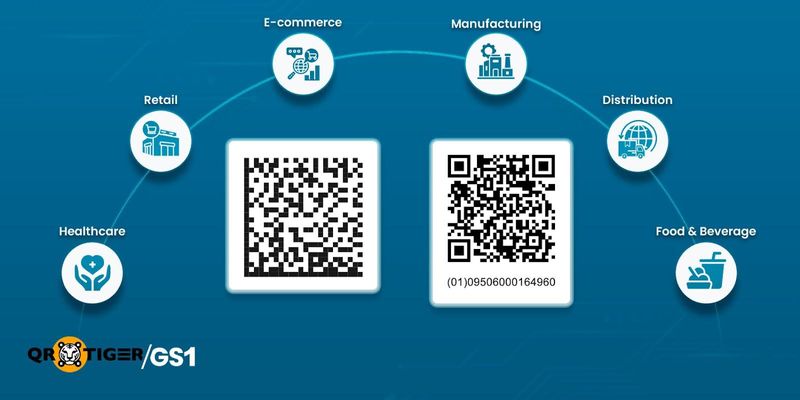
Here are some of the key applications of these codes across industries in Poland:
Retail
Retailers are preparing for the Sunrise 2027 initiative, which requires all consumer goods packaging to be scannable with 2D barcodes at the point of sale (POS).
Major supermarket chains and FMCG brands in the country are piloting GS1 QR codes to provide consumers with instant access to product details such as GTIN, batch/lot number, expiry date, nutritional values, and other logistics details.
This shift goes beyond compliance; it improves the shopping experience. By embedding the GS1 Digital Link QR code, retailers can connect physical products to digital platforms, enabling promotions, loyalty programs, and traceability features that build consumer trust.
Healthcare and Pharmaceuticals
GS1 DataMatrix is used in the healthcare sector to enhance patient safety and supply chain integrity. Hospitals and pharmacies use these 2D barcodes as they fit on small packaging and ensure reliable scanning in clinical environments. This supports compliance with the EU Falsified Medicines Directive, which mandates 2D barcodes on prescription medicines.
These codes embed details such as batch identifiers, serial numbers, and expiry dates, allowing easy traceability of medicines and medical devices from manufacturer to hospital. By scanning a GS1 DataMatrix, hospitals can verify authenticity, reduce counterfeit drugs, and enhance inventory management.
Food and Agriculture
Food producers are adopting QR codes powered by GS1 Digital Link to meet growing consumer demand for transparency. These codes allow companies to encode detailed information about ingredients, harvest dates, allergens, certification details, and sourcing.
This is relevant only to packaged goods that use GTINs. These codes ensure reliable product traceability in sectors like dairy, meat, and horticulture that export internationally.
By scanning these codes, producers can provide farm‑to‑fork information, strengthening consumer confidence in food safety and sustainability.
Distribution
This industry uses the GS1’s Scan4Transport standard to simplify logistics. It uses 2D barcodes to encode the Serial Shipping Container Code (SSCC) to uniquely identify each pallet, carton, or container. This makes sure each logistic unit is easy to scan and linked to the correct shipment record.
For example, when a logistic partner scans a GS1 QR code, they can check details such as shipment IDs, handling instructions, or compliance notes. This means that they can instantly review status updates and benefit from supply chain visibility.
Inspiring Success Stories from GS1 in Poland
GS1 PL helps companies boost traceability, safety, and efficiency with barcode solutions. These success stories indicate how GS1 standards help build smarter supply chains and consumer trust across Poland.
Polska Spółka Gazownictwa sp. z o.o. (Polish Gas Company Ltd.) (PSG)
From June 2020, Polska Spółka Gazownictwa (PSG) updated the numbering of Output Points (PoDs) to follow the GS1 standard, as part of moving tariff areas into its main billing and customer service system.
As a part of the change process, PSG has prepared an Excel file “Mapowanie PoD.xlsb’. It contains data of mapping of the output points (‘old numbers’ to ‘new numbers’).
An example of a Global Service Relation Number (GSRN), the PoD number has 22 digits made up of the GS1 Company Prefix, the service relationship number, and a check digit. This makes it a unique ID that allows service providers to store information about the services given to customers.
With GS1 numbering, the PoD system becomes standardized. The check digit helps IT systems confirm the number when entered, making it easier to spot and fix errors quickly.
Żabka
Żabka is a network of small convenience stores in Poland, operating on a franchise model for over 25 years.
In 2018, Żabka introduced GS1 DataBar barcodes on fresh products, which included the GTIN, along with batch and lot numbers. This 1D barcode helped the company improve how goods were received and how inventory was managed.
However, some warehouses and stores struggled to scan these barcodes, especially on packages with curved or rounded surfaces. These issues showed the need for a barcode that could store more information and ensure versatility.
With support from GS1 PL, Żabka worked with Nowalijka, a private‑label fresh food supplier, to introduce GS1 DataMatrix barcodes across all Nowalijka products.
The rollout of these 2D barcodes improved how inventory is managed, made products more available, and helped track expiry dates. Żabka can now monitor stock levels, apply automatic discounts, and prevent expired items from being sold. This reduces food waste and protects customer safety.
Matbet
Matbet, located in Tarnowo Podgórne, Poland, is a manufacturer specializing in large-format concrete components. The company focuses mainly on producing custom-made products.
The manufacturer has been manually labeling concrete elements with paper slips, which often get damaged by weather and cause identification errors, especially during shipping. With hundreds of components stored, locating the right product could take up to twenty minutes.
A process analysis by GS1 PL and Jantar (an IT Services and IT Consulting firm) revealed that Matbet struggled with incomplete inventory control, risks of errors in handling outbound goods, and long delays in locating products within its warehouse.
To solve these issues, Matbet chose ten products for testing. They were incorporated with GS1 DataMatrix or RFID tags (that encoded GTIN). The 2D barcodes were printed on customized, tested labels and attached to the products. RFID tags were mounted on special antennas, which made it easier to use RFID technology with concrete.
By using GS1 standards to identify products, Matbet gains full control of its manufacturing process. RFID tags also cut product search time in the warehouse from 14 minutes to just 2, an 85% improvement.
Encoding GTIN data in GS1 DataMatrix or RFID tags gives stakeholders consistent and reliable information across the supply chain and construction project. This improves visibility, traceability, and accuracy of data for buildings and other properties.
Allegro
Allegro is the most renowned shopping platform in Poland. It faced challenges with duplicate product listings that confused buyers and sellers. By adopting GS1 identifiers such as the GTIN, the platform created a cleaner, more reliable product catalog. This allowed customers to find items faster and sellers to manage listings more efficiently.
The use of GS1 standards improved data accuracy, reduced duplication, and enhanced trust in Allegro’s marketplace. As a result, the platform now offers smoother experiences for millions of users.
Paediatric Teaching Clinical Hospital
The Paediatric Teaching Clinical Hospital used manual processes of ordering and administering medicines. It adopted GS1 standards to make these processes automatic.
Together with GS1 PL and other partners, the hospital introduced GS1 DataMatrix barcodes to ensure that each medicine was correctly matched to the right patient.
By integrating GS1 standards into its IT systems, the hospital reduced medication errors, improved traceability, and enhanced patient safety. Every prescription and administration step is now digitally recorded, ensuring transparency and reliability in healthcare delivery.
JMP (Jeronimo Martins Poland)
JMP (Jeronimo Martins Poland), which owns Biedronka, is the leading retailer in Poland.
Biedronka has been working on keeping customers safe and happy, while also making sure products can be traced and quickly recalled if needed.
Biedronka introduced GS1 DataBar to improve how fresh foods are managed and sold. They applied it to products like meat, poultry, salads, bread, dairy, and fish, adding details such as GTIN codes, expiry dates, weights, and batch numbers. This helps meet legal rules and rising customer expectations for quality and safety.
It plans to label more than 100 of its brand products with GS1 DataBar.
By using GS1 DataBar, the retailer can manage fresh products with short shelf life more effectively and simplify operations. This also improves inventory tracking in real time, reduces waste, and helps deliver better service to customers.
Regional Hospital, Poznań
The Regional Hospital in Poznań, Poland, founded in 1973, was losing money each year. Medications represented 19% of operating costs, but everything was tracked manually on paper, making it impossible to know costs per patient.
The hospital partnered with GS1 Poland to implement barcode scanning for medications. When nurses give medicine to a patient, they scan the GS1 barcode on the packaging. All information, medication name, patient, batch number, and time, automatically enters the hospital's computer system.
Results: Nurses save 15 minutes per patient daily, giving them more time for patient care. The hospital can instantly see medication costs per patient and quickly locate recalled medications by batch number. Manual typing errors were eliminated, and government tracking requirements were automatically met.
By scanning barcodes instead of writing everything down, the hospital made medication tracking faster, cheaper, more accurate, and safer.
 Empowering Polish Businesses with Global Standards
GS1 Poland supports businesses by providing globally recognized standards that make supply chains more transparent, efficient, and reliable. Its solutions help companies across industries improve product identification, simplify data exchange, and meet both local and international requirements confidently.
By joining GS1, businesses gain access to trusted tools and expert guidance that improve operational efficiency, enhance collaboration, and build consumer trust. As Poland’s economy grows and industries embrace digital transformation, GS1 empowers businesses to connect smoothly, share information accurately, and stay competitive in global markets.
Frequently asked questions
1. How do GS1 standards benefit Polish businesses?
GS1 standards help Polish businesses work smarter by ensuring accurate product identification, reducing mistakes, and making supply chains safer and easier to track. They also simplify meeting EU rules on labeling and serialization, while opening doors to global markets through standardized data exchange.
GS1 builds consumer trust by ensuring product information is transparent and reliable, allowing companies to expand their reach both locally and globally.
2. Do I need to update GS1 Polska if my company information changes?
Yes, keeping your company information current is important. You can easily update your details yourself through the MojeGS1 platform, or if you prefer, contact GS1 Polska by phone, e‑mail, or the online form.
3. Is GTIN and EAN the same?
No. EAN is the barcode format, whereas GTIN is the number inside it. EAN is a GS1 barcode that carries a GTIN, and GTIN is the global code used to uniquely identify products. In practice, people often use the two terms as if they mean the same thing.

DISCLAIMER: We acknowledge that GS1, as well as the materials, proprietary items, and all related patents, copyright, trademark, and other intellectual property (collectively, “intellectual property”) relating to its use, are the property of GS1 Global, and that our use of the same shall be in accordance with the conditions provided by GS1 Global.