
GS1 New Zealand: Empowering Businesses with Standards

Industries across New Zealand are adapting to global trade demands, sustainability goals, and the need for transparent supply chains. From agriculture to healthcare, businesses depend on product information that is accurate, shareable, and trusted across different systems.
GS1 New Zealand (NZ) plays a key role in this transformation by providing globally recognized standards such as GTINs (Global Trade Item Numbers) and barcodes. These tools help companies improve traceability, reduce errors, and meet both local and international requirements.
This blog explores how GS1 NZ empowers businesses to adopt global barcode standards, improve supply chain transparency, and build consumer trust.
Table of Contents
What is GS1 New Zealand?
GS1 New Zealand is the official GS1 branch for the country, operating as a not‑for‑profit entity. It is licensed to issue globally unique barcode numbers (GTINs) and manage GS1 standards locally. It issues GS1 company prefixes that begin with 94.
Founded in 1979, it helps Kiwi businesses operating in New Zealand identify, capture, and share product and location information using trusted global data standards. As part of the global GS1 network, the local member organization (MO) also provides advisory services, training, and tools to support members in adopting smart packaging.
Contact information:
Address: Level 2, 158 The Terrace, 6011 Wellington, New Zealand
Contact no: + 64 4 494 1050
Email: info@gs1nz.org
Introduced initiatives and collaborated campaigns
GS1 NZ partners with leading companies to advance global standards that drive digital transformation and strengthen supply chain efficiency.
Partnership with Government on NZBN
GS1 NZ works alongside government agencies, businesses, and communities to build a secure digital foundation for the economy. It applies global data standards to optimize processes like border clearance, procurement, and product identification.
These standards ensure information is consistent, transparent, and interoperable, which is vital for international trade and sustainable growth.
The partnership involves the use of the New Zealand Business Number (NZBN). This is a unique identifier given to every business in the country, from sole traders to large companies, and it’s based on GS1’s Global Location Number (GLN).
Each NZBN is linked to essential business details, known as Primary Business Data (PBD). Think of NZBN as a nationwide digital business card system where every business has one unique number that links to all their key information, making it easy for businesses and governments to find accurate details without constantly asking for the same information over and over.
SmartFacts® Digital Labeling Initiative
GS1 NZ, GS1 Australia, the New Zealand Food & Grocery Council (NZFGC), and the Australian Food and Grocery Council (AFGC) have teamed up to launch SmartFacts. The project standardizes digital labeling for food and grocery products.
The initiative uses the GS1 Digital Link, to connect QR codes directly to a brand’s website. With a quick smartphone scan, shoppers can instantly check product details (like nutrition, allergens, and company information). This helps remove confusion and build trust in brands.
The initiative provides guidance for producers and brands on how to present consistent digital labels, making product information easier to read and compare. This consistency improves the shopping experience, supports supply chain transparency, and helps foster long‑term consumer confidence.
SmartFacts® began rolling out across selected FMCG products in the second half of 2025 to harmonize digital labeling in both New Zealand and Australia.
Eco Choice Aotearoa and GS1 NZ
Eco Choice Aotearoa is a New Zealand organization that verifies sustainability claims, ensuring products are genuinely environmentally friendly.
They check products by reviewing things like:
- Whether materials are responsibly sourced
- Recycling or circular economy practices
- Environmental certifications and audits
- Carbon or emissions claims
They partnered with GS1 NZ to boost traceability in local manufacturing and supply chains. By using 2D barcodes powered by GS1 Digital Link, the collaboration makes it possible to share verified sustainability information (like sourcing claims) directly with retailers, suppliers, and consumers.
This partnership combines GS1’s global data‑sharing standards with Eco Choice Aotearoa’s independent certification. The motive is to help businesses meet rising expectations for transparency and environmental accountability.
These 2D barcodes can store or link to structured data that supports traceability and circular economy goals. They help companies meet regulatory and customer demands for transparency and also protect sensitive business information.
GS1 NZ services for businesses
GS1 provides businesses with solutions and services that support innovation and enhance operational efficiency.
Barcode Identification & Licensing
This is the core service. GS1 NZ provides the global license required to uniquely identify your products.
Includes Member Registration, the allocation of a unique Company Prefix, and the assignment of GTINs and corresponding barcode to your products. This ensures your products are easily identified and tracked by retailers and marketplaces worldwide (like Amazon, Woolworths, and Foodstuffs).
Barcode Verification
GS1 NZ offers a barcode checking service to make sure your product’s barcode is accurate and scans correctly anywhere in the world. They test both finished products and packaging artwork, reviewing details like size, color, print quality, and the data inside the code. After testing, you receive a verification report that can be shared with retailers.
To avoid costly printing errors, GS1 suggests doing an interim verification using your packaging artwork before final labels are printed. This early check shows any issues so you can fix them before moving into full production. Once the packaging is complete, a full verification report is required.
The service helps businesses save time and money, ensures products scan reliably at checkout, and gives retailers confidence in your product. GS1 members also get five free reports each year, and the verification is recognized in both New Zealand and Australia.
Product Photography
Customers can better understand your products and feel confident about purchase if high-quality, clear images are used. GS1 NZ has modern studios in Wellington and Auckland, where their team deals with capturing images that make products stand out online and in-store.
They offer different photography packages: Standard, Brand, and Custom. All of them are designed to suit a range of business needs and offer quick turnaround times.
The service is designed to be reliable, affordable, and hassle-free. You will work with a professional team that ensures your product images are accurate and consistent. This gives shoppers the details they need to make informed choices.
With this service, businesses get excellent value for money while saving time and effort. It makes it simpler to present products.
National Product Catalogue
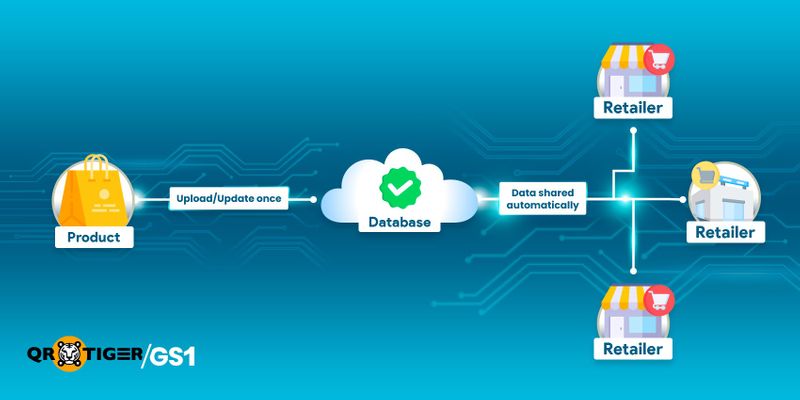
The National Product Catalogue (NPC), operated by GS1 New Zealand, is a secure online platform where businesses can manage and share standardized product information with their trading partners.
Brands and suppliers enter their commercial and logistical product details, such as product name, dimensions, weight, pack sizes, and trade information, into the NPC. GS1 validates the data against required standards before it is published to authorized trading partners.
When product information changes, account holders update the NPC, and the revised details are distributed to connected partners. This helps reduce discrepancies, minimize manual corrections, and ensures supply chain data remains accurate and consistent.
GS1 offers two implementation options: Standard and Fast Track. Both provide expert support, training, and data validation. Fast Track goes further by handling data collection for you.
MediaLibrary
MediaLibrary is a secure online hub where businesses can store, manage, and share all their digital marketing assets (like product photos, videos, safety sheets, and certificates) with retailers and customers.
It’s available 24/7 and ensures that the right, high‑quality images and documents are always used. It avoids mistakes like outdated or poor‑quality visuals appearing in promotions or online listings.
The hub provides one central place for all your content. Companies get unlimited users and downloads, free minor image edits, and the confidence that their assets are reliable and consistent.
Retailers benefit too; they can easily access product images across categories (like health, food, beauty, and stationery), filter them to meet their needs, and even link directly to their systems for automatic updates.
On Pack data collection
On Pack Data Collection is similar in function to the National Product Catalogue and MediaLibrary, providing a central, secure source of product information. Unlike those services, it captures the consumer-facing details printed on your packaging: ingredients, nutrition panels, allergens, health claims, and other label information.
Retailers and trading partners can access this verified data instantly. When products are updated, such as changes to ingredients, packaging, or design, the On-Pack data can be refreshed, and new product photography added if needed.
ProductFlow
The service brings together the key services already discussed into one coordinated launch process.
It includes validation of your product and packaging data, on-pack label checks, retail-ready product photography, and barcode verification testing to confirm reliable scanning. Each element has its own role. Together, they ensure your product information is complete and retail-compliant before release.
Once everything has been reviewed and confirmed, the approved data set is shared with your connected trading partners. The goal is simple. Fewer corrections. Fewer delays. A smoother path to shelf and online listing.
ProductRecallNZ
Product recall or withdrawal is required when a product has a safety issue or could harm your brand’s reputation. ProductRecallNZ is GS1’s secure, online system that makes this process faster and easier.
It allows businesses to send precise, targeted recall or withdrawal notices instantly to trading partners and customers. This makes sure the right people get the right information at the right time.
The system also supports mock recalls for training and audits to help companies stay prepared. By replacing slow, manual processes with a digital platform, ProductRecallNZ reduces errors and can save time and costs during a recall.
Verified by GS1
Verified by GS1 is a global registry that connects a GTIN to its registered product to confirm its identity. It verifies that the GTIN is licensed to the correct company and corresponds to the core product data (such as Brand and Description) originally entered in the National Product Catalogue.
My Locations
My Locations is part of GS1 NZ's main member platform, MyGS1. It gives businesses one secure place to create, update, and share Global Location Numbers (GLNs).
GLNs are unique codes that identify specific locations in your business — like a warehouse, loading dock, or finance department. They help make sure the right location is referenced accurately in things like invoices and orders.
My Locations makes it easy to manage all your GLNs in one place and share them with your trading partners instantly. GS1 NZ members get 5 free GLNs to start with. The platform is available 24/7, so your information is always there when you need it.
SSCC Logistics Label Tool (GS1 Print)
A free online tool called the SSCC Logistics Label Tool (GS1 Print), which is found in the MyGS1 platform. It lets you generate and print pallet labels without expensive software.
An SSCC is an 18-digit number that identifies a pallet or shipping unit, similar to how a GTIN identifies a single product. It allows retailers and logistics partners to scan and track each pallet as it moves through the supply chain.
The free tool works well for manual label creation. For automatic SSCC generation on production lines or system integration, you’ll need specialist software from a GS1 solution provider.
Expert consulting
GS1 NZ offers expert consulting to help businesses improve their supply chain operations and get the most value from GS1 standards. Their consultancy team provides cost‑effective advice to improve efficiency and accuracy across your processes.
There are three main consulting options as outlined below.
- System Deployment involves implementing specific GS1 standards, such as barcodes.
- Rapid Assessment gives high‑level recommendations on how your business can better use GS1 standards.
- Supply Chain Enhancement helps companies to use GS1 standards to optimize their supply chains.
Applications of 2D barcodes across industries in New Zealand
The retailers in New Zealand are expected to upgrade their POS systems to support 2D barcodes by 2027. Unlike traditional 1D barcodes, these advanced codes can hold far more information to make product tracking easier and enable stronger connections with customers.
This transition is called theGS1 Sunrise 2027 initiative. 1D barcodes are still commonly used and will continue to work with current systems. Some companies are upgrading by using GS1 2D barcodes on their packaging or including both 1D and 2D for backwards compatibility.
To prepare for Sunrise 2027, brands have two options. They can either generate GS1‑compliant 2D barcodes in-house by following GS1 official guidelines, or they can rely on trusted third‑party solutions such as QR Tiger’s GS1 QR code generator.
For businesses short on time or technical expertise, external platforms offer a fast and reliable way to next‑generation barcodes.
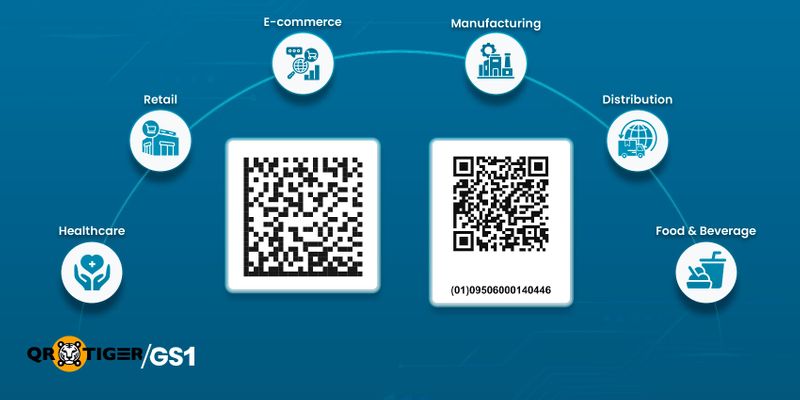
Some of the key applications of these barcodes across industries in New Zealand are discussed below:
Retail
2D barcodes are transforming the retail sector by enabling richer product information at the POS., GS1 2D barcodes can carry details such as batch numbers, expiry dates, and sustainability certification. This helps retailers improve stock control, reduce food waste, and optimize product recalls.
For example, a retail employee can scan a GS1 Digital Link QR code to sort products for FIFO, which stands for “first in, first out.” This means products that arrived first are sold first, helping prevent expired or old stock from staying on shelves.
The system can read the product’s batch or expiry date and flag items that need to be sold first. This avoids manually checking labels, helps staff organize shelves, and reduces waste.
Healthcare
GS1 DataMatrix barcodes are used in this industry to identify and trace medical products. These barcodes carry essential data (such as batch numbers, serial numbers, and expiry dates) in a small footprint. This ensures compliance with international regulations and reduces the risk of counterfeit drugs.
The adoption of GS1 standards benefit hospitals and pharmacies with improved accuracy in dispensing and inventory management. Patients get safer, more reliable access to medicines.
Distribution
The logistics industry adopts GS1 2D barcodes to optimize operations and improve cross-border interoperability. By using GS1’s Scan4Transport standard, logistics service providers can encode SSCC, which uniquely identifies cartons, pallets, and containers. This makes handling and tracking more efficient.
For example, a GS1 QR code can embed the SSCC and print it directly on a transport label. With a single scan, each logistics unit is identified, and the barcode links to its digital shipment record.
This allows logistics partners to instantly access handling instructions, compliance notes, and delivery addresses. This leads to faster movement of goods, reduced errors, and enhanced visibility across supply chains.
Agriculture
The sector uses 2D barcodes to enhance sustainability and product traceability in the supply chain. Producers use QR codes powered by GS1 Digital Link to guarantee authenticity and safety.
These barcodes can hold detailed information like ingredients, batch numbers, harvest dates, sourcing, and allergen details. Easier tracking of food products helps build consumer trust in both safety and sustainability.
Only packaged products with GTINs are considered in this scope to ensure reliable tracking for exports in dairy, meat, and horticulture. This boosts trust in the country’s food products locally and globally.
Inspiring success stories from GS1 in New Zealand
GS1 NZ helps companies implement barcode solutions that boost traceability, safety, and efficiency. The following success stories show how GS1 standards build smarter supply chains and strengthen consumer trust nationwide.
Woolworths
Woolworths adopted GS1 2D barcodes to manage fresh food with a short life. It used GS1 DataMatrix to track freshness and reduce food waste. These codes provide access to details like batch numbers, expiry dates, weight, and even links to extra product information.
Working with their meat supplier, Hilton Foods, Woolworths rolled out 2D barcodes across all fresh meat products in North Island stores.
Results:
- Waste reduction: The brand can easily track products nearing expiry and automatically generate markdowns. This has raised turnover of time-sensitive stock, minimized excess ordering, and cut food waste across the meat department.
- Better food safety: The expired products are automatically blocked at checkout. If an item slips through, the system alerts staff. This ensures customers never purchase unsafe food.
- Improved freshness: Quick barcode scans capture best‑before dates instantly to help stores manage stock better. This means better stock rotation and allowing more time for customers to enjoy fresh products.
These strong results have encouraged the brand to use 2D barcodes across all its fresh products.
Tui Balms
Tui Balms is a New Zealand workers’ co‑operative that creates natural skincare and massage products. Its products are sold in over 500 retail outlets around New Zealand. To meet supplier requirements and maintain strong compliance, the company uses GS1’s ProductRecallNZ (PRNZ) service.
PRNZ helps Tui Balms carry out mandatory mock recalls every six months. This is a proactive safety measure that is well above the legal requirement of every 12 months, under the Food Act, Wine Act, and Animal Products Act.
Anihana
Anihana is a New Zealand family‑owned business that offers a wide range of natural soaps, bath bombs, and beauty products made to uplift everyday routines while supporting sustainable practices.
When the brand entered the grocery market, it needed barcodes for its products, so it turned to GS1 for expert support. GS1 supported them with barcode allocation and verification to ensure their products could be scanned reliably at checkout.
This guidance helped the brand successfully place its products on supermarket shelves and later expand into export markets like Australia and the US.
Pic's Really Good Peanut Butter
Pic’s Really Good Peanut Butter is a New Zealand brand based in Nelson, known for making fresh, high‑quality peanut butter.
To manage its growing retail and export operations, the company used GS1 standards. Each jar carries a GTIN encoded in an EAN‑13 barcode, whereas cartons and pallets are tracked with GS1‑128 and SSCC. This system ensures smooth movement of products through local supermarkets and export channels via the Port of Nelson.
Using MyGS1, the brand can easily allocate GTINs and store digital data in one place to avoid duplication and simplify barcode creation. Today, master data and product images for 53 items are uploaded into the NPC. This gives Australian and New Zealand supermarkets instant access to accurate product information.
With GS1’s Product Flow service, the company can update product data quickly and easily and launch new products to market faster.
Sobhna's
Sobhna’s curry pastes and spice blends are made to help people easily cook authentic Indian meals at home.
The brand applied to Countdown’s Kete Accelerator Programme, which helps small businesses get their products into supermarkets. Sobhna’s was one of only five businesses chosen, and the next challenge was preparing their products to meet retail standards.
GS1 played a key role in this journey in bringing its products to supermarket shelves. When Sobhna’s faced issues with thousands of non‑compliant labels, their GS1 Engagement Manager worked directly with Countdown to resolve the problem. GS1 supported them with barcode compliance, product photography, and packaging requirements.
 Driving Digital Transformation across New Zealand Industries
GS1 New Zealand plays a vital role in helping businesses across industries adopt trusted global standards that make product identification, data sharing, and supply chain management more reliable. These services enable companies to meet growing demands for transparency, efficiency, and compliance in both local and international markets.
Its tools and services reduce errors, improve traceability, and build customer trust, which help businesses support digital transformation. By joining GS1, companies get access to a global network of standards and expertise that ensures they remain competitive, future‑ready, and connected worldwide.
FAQs
1. Can I use overseas barcodes on products imported into New Zealand?
Yes, products imported into New Zealand can use barcodes issued by GS1 organizations in other countries, as GS1 standards are globally recognized. However, businesses must ensure the barcodes are valid, correctly formatted, and scannable in the country’s retail and logistics systems.
You can log in to your GS1 account to request a Verification Report. It ensures your barcode complies with GS1 specifications and is of acceptable print quality.
2. How does GS1 support product data sharing?
GS1 enables product data sharing through the Global Data Synchronization Network (GDSN). This system allows businesses to upload, validate, and share standardized product information with trading partners. It ensures consistency, accuracy, and trust in product data across supply chains.
3. How do I ensure my barcode scans correctly in New Zealand?
GS1 provides Barcode Verification Reports to test barcode quality. Members can request these reports through their GS1 account. The verification process checks barcode attributes such as size, shape, color, print quality, and encoded data.
A detailed report is then issued, which can be shared with retailers. Passed reports are automatically uploaded to Woolworths New Zealand, which requires verification before products are listed in its system. This ensures barcodes scan reliably in retail and logistics environments.

DISCLAIMER: We acknowledge that GS1, as well as the materials, proprietary items, and all related patents, copyright, trademark, and other intellectual property (collectively, “intellectual property”) relating to its use, are the property of GS1 Global, and that our use of the same shall be in accordance with the conditions provided by GS1 Global.
