GS1 Vietnam: Powering Digital Traceability across Industries

Vietnam’s industries, from agriculture to retail, turn to global standards and digital tools to make supply chains more transparent, meet regulations, and stay competitive in worldwide markets. As they expand, businesses require product information that is accurate, easy to share, and reliable across different systems.
GS1 Vietnam (VN) supports this journey by providing globally recognized standards such as GTINs (Global Trade Item Numbers) and barcodes. These tools help companies improve product traceability, reduce errors, and align with both local regulations and international trade demands.
This blog explores how GS1 VN supports businesses in adopting global barcode standards and building more transparent supply chains.
Table of Contents
What is GS1 Vietnam?
Founded in 1995, the National Barcode Center (NBC) or GS1 VN, was first known as the Code Office numbers and barcodes belonging to the Vietnam Institute of Standards and Quality. NBC and GS1 Vietnam are the same entity with two names - NBC for domestic governmental purposes and GS1 Vietnam for international GS1 network purposes.
It is the sole representative of Vietnam to issue GTINs and GS1 barcodes. It provides support for implementing GS1 standards to serve over 80,000 businesses across 25 industries in the country.
The member organization (MO) operates under the Directorate for Standards, Metrology, and Quality (STAMEQ) within the Ministry of Science and Technology (MOST). It manages the country prefix 893. It offers training and support, and brings communities together through events and online forums.
It works with industry partners to boost efficiency and ensure reliable product tracking across industries.
Contact information:
Address: No 8 Hoang Quoc Viet Street, Nghia Do Ward, Cau Giay District, VSR 100 000, Hanoi, Vietnam
Contact no: +84 24 3836 1463
Email: msmv@nbc.gov.vn
Introduced initiatives and collaborated campaigns
GS1 works with industry leaders to promote global standards that enable digital innovation and build stronger, more efficient supply chains.
Cross-border food safety
GS1 VN issued interoperability guidelines to ensure compliance and smooth data exchange. It also developed and implemented the Vietnam National Traceability Portal (VNTP).
To boost cross-border traceability, it partnered with GS1 HK on a pilot project using the ezTRACK platform. The collaboration resulted in a digital food traceability system for both Vietnam and Hong Kong.
The project chose frozen fish fingers as the product to test. Four key parties joined the trade route: CP Vietnam as exporter, CP Food Hong Kong with its logistics provider as importer, GS1 HK as project manager and owner of the ezTRACK platform built on EPC standards, and GS1 VN as project owner.
The ezTRACK platform recorded and shared key information (such as certificate of origin, batch number, expiry date, etc.) to ensure better visibility, integrity, and transparency in cross-border trade. To make this information accessible to consumers, GS1 HK developed an interface and used GS1 QR code, allowing easy scanning and viewing of complete traceability details.
The pilot strengthened food safety, ensured regulatory compliance, improved supply chain visibility, and built traceability records for future use.
GS1 VN and SAFEGRO
The Safe Food for Growth (SAFEGRO) project aims to improve access to safe, competitive agri-food products in Vietnam, enhancing the well-being of both consumers and stakeholders.
The SAFEGRO team met with GS1 VN, which is responsible for implementing the National Traceability Portal (VNTP) and coordinating with all 63 provinces and ministries. The team collaborated with GS1 VN to develop traceability guidelines for selected value chains, focusing on pork and vegetables, to ensure alignment with international standards.
GS1 VN shared their organizational development and key role in the country’s digital transformation. It presented the test version of the VNTP interface and discussed with the SAFEGRO team how its value chain traceability approach could align with the VNTP platform.
Compliance with Food Safety Law No. 55/2010/QH12
Enacted on June 17, 2010, this law defines the rights and duties of organizations and individuals to ensure food safety. It covers:
- Rules for guaranteeing the safety of food in production, trading, import, and export
- Guidelines for how food is advertised and labeled
- Procedures for testing food
- Assessment of risks related to food safety
- Actions to prevent, control, and solve food safety problems
- Sharing knowledge and training about food safety
- Duties of government bodies in overseeing food safety
GS1 VN provides barcodes and product identification solutions that make it easier for businesses to follow these obligations. These tools allow products to be tracked correctly and labeled clearly, helping companies stay compliant with requirements for safety checks and information sharing.
Compliance with Circular 23/2023/TT-BYT
Vietnam’s Ministry of Health (MoH) released Circular 23/2023/TT-BYT, updating the rules on drug labeling that were first set out in Circular 01/2018/TT-BYT.
Effective from January 15, 2024, the new Circular allows a transition period wherein medicines made or imported before January 1, 2025, can keep using their approved labels and inserts until each batch reaches its expiry date.
To support this, GS1 VN provides barcodes and digital identification tools that help pharmaceutical companies meet the stricter requirements. It makes sure labels provide accurate and traceable details to protect consumers and support regulators.
GS1 Vietnam services for businesses
GS1’s tools and solutions help businesses improve efficiency and innovate across different industries.
LEI code
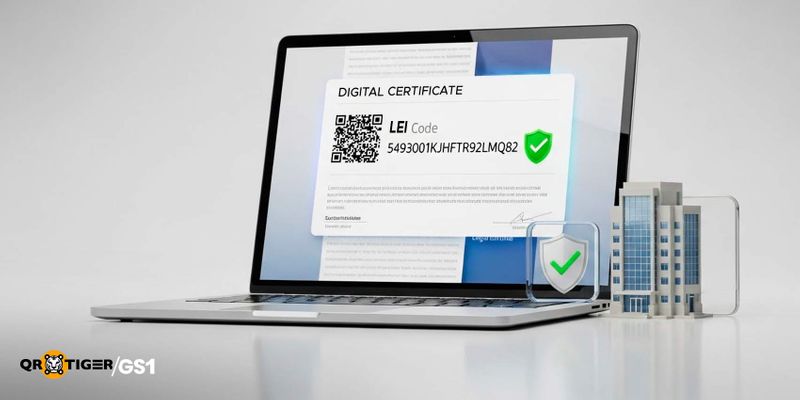
A Legal Entity Identifier (LEI) is a 20‑character alphanumeric code, defined by ISO 17442:2012, assigned to legal entities involved in financial transactions. Each LEI provides clarity on an entity’s identity and ownership structure.
It helps businesses cut costs by avoiding overseas LEI registration and getting better local support. An LEI code is valid for one year from registration, and companies must renew it annually to remain eligible for regulated financial activities.
Verified by GS1
This service ensures GS1 identifiers are genuine and accurate. Through the GS1 Registry Platform, users can access one trusted source of product information. Brand owners upload their data, while merchants check listings to confirm that product codes and barcodes follow GS1 standards.
It also verifies that each number is correctly licensed to a company and that the registered details match official records.
UDI
The Unique Device Identification (UDI) system is a globally recognized framework designed to improve patient safety and supply chain transparency in healthcare.
UDI is composed of two parts: the Device Identifier (DI), which specifies the manufacturer and model of the device, and the Production Identifier (PI), which includes variable information such as batch number, serial number, and expiration date.
To meet regulatory requirements in regions such as the U.S. FDA (Food and Drug Administration), the EU, and other markets, manufacturers often encode UDI data into GS1 DataMatrix and GS1-128. Both these barcode types serve different purposes.
GS1 DataMatrix is widely chosen for regulated healthcare items because it can hold extensive data and remains readable even when partially damaged. On the other hand, GS1-128 is generally used on outer packaging and products that pass through a distribution center. It is also suitable for medical devices.
Selecting the right GS1 barcode symbol is essential to ensure UDI compliance with regulatory requirements.
Barcode number
The GS1 MO is the official authority that issues barcode numbers to businesses nationwide. These numbers uniquely identify products, making them recognizable globally and ensuring transparency in trade.
By registering with NBC, companies gain access to GS1 standards, helping them meet global rules for product identification, labeling, and digital traceability.
Beyond registration, NBC guides businesses on how to use barcode numbers correctly, helping them apply GS1 standards in packaging, logistics, and digital systems. This improves supply chain visibility and protects against counterfeit products.
By adopting GS1 barcode numbers, Vietnamese companies can run operations more efficiently, build consumer trust, and compete more effectively in global markets.
Traceability
GS1 VN offers traceability solutions that allow businesses to track products across the entire supply chain. By using GS1 standards, including barcodes and identifiers, companies can record and share product information at every stage (from production and packaging to retail).
This ensures transparency, supports regulatory compliance, and helps protect consumers by making it easier to verify product origin and authenticity.
Training support
GS1 VN offers training to help you learn and apply GS1 standards correctly. The sessions guide you on global best practices and how to use them in your daily processes. The training covers product data capture, barcode printing, and logistics practices to make your operations more efficient.
Applications of 2D barcodes across industries in Vietnam
Retail POS will be able to scan 2D barcodes by 2027. Unlike traditional 1D barcodes, these barcodes can carry much more information, making product tracking easier and boosting customer engagement.
The GS1 Sunrise 2027 initiative is driving a move toward more transparent and efficient shopping experiences across digital and physical channels. Although adoption is not yet mandatory, companies can continue using traditional 1D barcodes where regulations permit.
To ease the transition, many companies are encouraged to use dual marking (adding both 1D and 2D barcodes to packaging). This keeps current systems running smoothly while preparing for future tech upgrades in retail.
To prepare for Sunrise 2027, companies can either create GS1-compliant 2D barcodes themselves by following GS1’s official guidelines or use trustworthy third-party solutions like QR Tiger’s GS1 QR code generator.
When time or technical skills are limited, these external tools give businesses an easy and reliable way to apply next-generation barcodes.
Retail
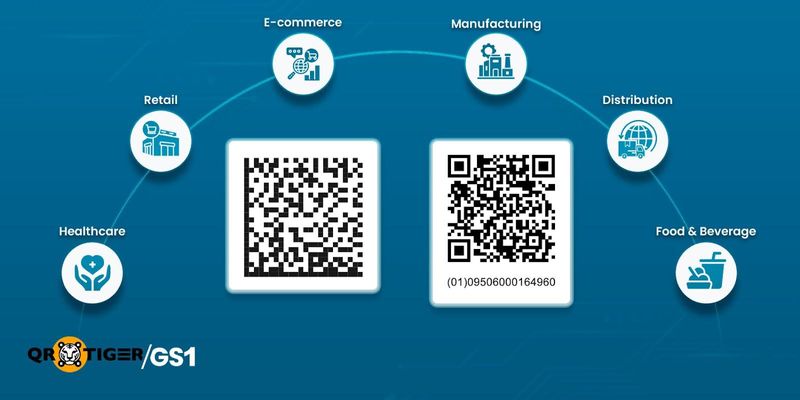
In the retail sector, GS1-powered 2D barcodes are used to enhance point of sale (POS) operations, consumer trust, and transparency. These barcodes (such as GS1 QR codes and GS1 DataMatrix) allow shoppers to scan products and instantly view details such as allergens, nutritional information, recipes, sustainability credentials, etc.
For example, scanning a GS1 Digital Link QR code helps consumers access a web page containing verified product information. With these codes, retailers can improve inventory accuracy, strengthen consumer engagement, and support compliance with government regulations on product labeling.
Healthcare
The healthcare industry increasingly uses GS1 DataMatrix barcodes to secure the pharmaceutical supply chain. These barcodes embed critical data (such as batch numbers, serial numbers, dosage information, and expiry dates), allowing hospitals and pharmacies to verify medicines and reduce risks of counterfeit drugs.
By adopting GS1 standards, pharmaceutical companies and distributors can ensure compliance with international best practices. Patients benefit from more reliable, safer access to medicines.
Agriculture
The country’s agricultural sector, especially seafood, coffee, and fruit exports, relies significantly on GS1-compliant 2D barcodes to meet international traceability requirements.
For example, food exporters use these QR codes to provide detailed information on product origin, farming practices, and certifications, which are essential for accessing global markets.
Farmers and cooperatives use these QR codes powered by GS1 Digital Link to build consumer trust by showcasing safe production methods and compliance with food safety standards. Scanning these codes helps consumers verify sustainability.
Distribution
The logistics sector uses 2D barcodes to improve efficiency and interoperability across borders. Logistics providers use GS1’s Scan4Transport standard to simplify logistics. The standard encodes the Serial Shipping Container Code (SSCC) that simplifies identification of the container, carton, and pallet.
For example, the SSCC can be encoded into a GS1-compliant QR code and printed on a transport label, and each logistics unit can be identified with a single scan. At the same time, the barcode provides a direct link to the shipment’s digital record.
When logistics partners scan the barcodes, they can quickly verify handling instructions, compliance notes, and delivery addresses. As a result, shipments move more quickly, and supply chain visibility improves.
Success story: Dalat Milk Supply Chain
Founded in 1978, Dalat Milk provides premium-quality dairy products. The company and its partners used paper-based processes (100% manual at farms, 85% at collection centers, 70% Excel-based at factories) without any organized system for tracking or records.
The company implemented GS1 Global Traceability Standards with WeCheck software, which specify the key data to be collected, recorded, and shared for full supply chain traceability. Data was digitized and encoded into barcodes with unique codes for each product type and production batch.
Traceability stamps used four GS1 identifiers: GTIN, GLN (Global Location Number), GIAI (Global Individual Asset Identifier), and SSCC. They ensure compliance with international standards and keep information available in real time.
The system lets farmers, factories, and partners record product history in a central database, making it easy to share verified details on hygiene, safety, and quality.
All parties can quickly check milk origin and quality; all supply chain data can be retrieved in just 2 seconds. Manual operations were reduced by 50% at collection centers, and paperwork decreased by 70-80%."
 Empowering Vietnamese Industries with Global Standards
GS1 Vietnam helps businesses by providing global standards that make product identification, tracking, and data sharing easier across industries. These services support companies in meeting growing needs for transparency, efficiency, and compliance in local and international markets.
Through initiatives and collaborative campaigns, the member organization empowers manufacturers, retailers, and exporters to go digital, build consumer trust, and stay competitive. By joining GS1, Vietnamese businesses connect to a trusted global network of standards that support smarter trade and sustainable growth.
FAQs
1. What is the GS1 prefix for Vietnam?
893 is Vietnam's GS1 prefix assigned by GS1 Global. It shows the barcode was issued by GS1 Vietnam, not where the product was made. A Vietnamese company can manufacture anywhere but use 893 if registered with GS1 Vietnam. The prefix ensures barcodes are unique worldwide.
2. Who manages GS1 VN?
The Directorate for Standards, Metrology and Quality (STAMEQ) manages GS1 VN to ensure barcode and product identification standards align with national regulations.
3. Which industries benefit most from GS1 standards in Vietnam?
Industries such as health, shipping & logistics, engineering, and agriculture & food rely on GS1 standards in Vietnam. These sectors use barcodes and data-sharing systems to improve product traceability, reduce errors, and build consumer trust.

DISCLAIMER: We acknowledge that GS1, as well as the materials, proprietary items, and all related patents, copyright, trademark, and other intellectual property (collectively, “intellectual property”) relating to its use, are the property of GS1 Global, and that our use of the same shall be in accordance with the conditions provided by GS1 Global.