
GS1 Netherlands: Enabling Smarter Supply Chains

Industries across the Netherlands depend on accurate product identification and transparent data sharing to keep supply chains running smoothly. As businesses go digital and move toward a circular economy, correctly identifying products and exchanging accurate information has become key for meeting rules, supporting sustainability, and building customer trust.
GS1 Netherlands (NL) plays a vital role in this shift by providing globally recognized standards such as GTINs (Global Trade Item Numbers) and barcodes.
These tools make it easy to identify products, track shipments, and share data with partners. As a result, Dutch companies can cut down on errors, improve traceability, and meet growing regulatory demands.
This blog highlights how GS1 supports Netherlands industries in adopting global barcode standards, strengthening product data management, and advancing toward 2D barcodes.
Table of Contents
What is GS1 Netherlands?
Founded in 1976 as EAN Netherlands, GS1 NL is the Dutch division of the global standard organization GS1. It’s the only authorized entity licensed to issue GS1 barcodes and GTINs in the Netherlands.
The member organization (MO) provides guidance and support for implementing GS1 standards across the country. With over 30,000 companies and health institutions in the Netherlands, GS1 NL collaborates with its members to improve supply chain efficiency and traceability through effective product data exchange.
Contact information:
Address: Stroombaan 16, 1171VX Amstelveen, Netherlands
Contact no: + 31 20 511 3888
Email: info@gs1.nl
Introduced initiatives and collaborated campaigns
GS1 NL collaborates with leading industry players to advance global standards that support digital growth and smarter supply chain systems.
GS1 NL and Fresh Upstream
Fresh Upstream works to create one uniform digital language for the international agro supply chain. Its goal is to ensure that farmers, traders, governments, and consumers can all exchange product information easily. As supply chains become digital, reliable data flows are key for efficiency, sustainability, and safety.
To achieve this, Fresh Upstream encourages companies to use standardized data from a single source, in cooperation with GS1 NL. “Fresh” means agricultural products that reach consumers directly without processing (often cut, mixed, or packed).
To share product information accurately from farm to table, standardization must begin at the source, not only at retail.
Fresh Upstream also helps businesses assess their data needs through the ‘QuickScan Data Standards in Agrifood.’ This tool reviews how companies manage systems, standards, and data quality. It determines how GS1 standards like GLNs can improve efficiency and transparency.
Aligning data in the supply chain helps Dutch agri‑food companies optimize their operations.
Foundation Together Against Food Waste and GS1 NL
The Waste-Free Week, held from 8 to 14 September, encourages people not to throw away food. If everyone participates, 23 million meals can be saved in just one week. GS1 NL supports this effort with tools like QR codes powered by GS1, which helps companies and consumers make smarter choices and reduce waste.
Samen Tegen Voedselverspilling(Food Waste Free United) or STV was founded in 2018 and it aims to cut food waste in the Netherlands by half. GS1 NL contributes by providing standards and solutions that give retailers better control over their stock.
Sharing accurate product data, especially for fresh goods, is essential to quickly adjusting to changes in supply and demand. Both GS1 NL and STV highlight that agile systems and reliable data are essential to minimize food waste.
DatakwaliTijd 2.0 or Data Quality Time 2.0
DatakwaliTijd 2.0 is a program focused on improving product data, specifically in the Dutch food and drugstore sectors.
It began in 2016 and has since become a continuous effort, not just a temporary project. The main aim is to ensure information in GS1 Data Source matches real products, what’s on the label, as well as dimensions and other details.
A core part of the program involves Data Management Services (DMS). These are GS1-certified teams that physically check products and compare them to the data submitted by suppliers.
They catch errors that automated checks often miss. Over time, GS1 clarified the rules (especially in 2020–2021), making it easier for companies to understand what “good data” means. Because of this, data accuracy has improved dramatically, reaching around 96 percent reliability.
Key parts of the program include:
- Physical data checks by certified DMS
- Clear definitions of what correct and complete product data should be
- Early checks for new products
- Removal of outdated or unused product entries
Retailers benefit from fewer data mismatches. Suppliers spend less time fixing wrong data. And consumers end up with more trustworthy product information.
Hospital Implementation Dashboard (HID)
GS1, together with IT firm PinkRoccade, developed the Hospital Implementation Dashboard (HID). This tool shows how hospitals are applying GS1 standards and helps them share knowledge. By learning from each other, hospital teams can better understand the benefits of using these standards.
The healthcare sector manager at GS1 NL explains that the goal is to simplify implementation through collaboration and networking. GS1 MO supports hospital staff in filling in the necessary data, reducing administrative work.
Because the information is collected consistently, it can be compared across hospitals, while also strengthening GS1’s connection with healthcare teams.
The insights from HID allow hospitals to expand and improve the use of GS1 standards. This leads to greater efficiency, smoother operations, and better patient safety. The dashboard also highlights the different ways hospitals can successfully apply these standards.
GS1 NL services for businesses
GS1 provides tools and services that help businesses work more productively and foster innovation across various sectors.
GS1 Data Source
GS1 Data Source is a certified data pool, connected to the international Global Data Synchronization Network (GDSN). This global standard ensures that all product information is entered, stored, and shared in the same way.
It makes product information sharing simple and reliable. Manufacturers, wholesalers, and suppliers can upload article data once and share it instantly with all their customers globally. This not only adds value to products (since items without data are invisible online), but also helps optimize logistics, cut costs, and improve efficiency across the supply chain.
For retailers, wholesalers, and healthcare providers, the service ensures quick access to accurate, up-to-date product information from suppliers.
In healthcare, this reliable data reduces medical errors and strengthens patient safety. Hospitals, clinics, and registries like the Dutch Implant Registry (LIR) already use this service to manage medical product information consistently.
Suppliers decide who to share data with, and industries agree on what information is needed, whether it’s food, health & beauty, DIY, garden & pet, or healthcare. With one click, businesses can share or receive the data they need to keep supply chains efficient and transparent.
GS1 EDI
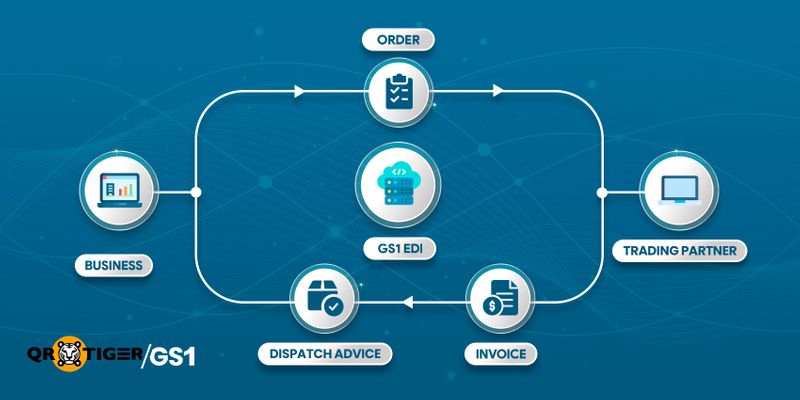
GS1 EDI makes exchanging business information faster and more efficient. Instead of sending orders, invoices, packing slips, or stock data by mail or fax, companies can use Electronic Data Interchange (EDI) to share standardized digital messages with trading partners.
This reduces paperwork, saves time, prevents manual errors, and speeds up transactions with immediate responses.
Getting started with GS1 EDI is simple. First, businesses need to identify their locations using a Global Location Number. Next, they decide which processes to digitize and align with trading partners on readiness.
Ordering the basic EDI package through MyGS1 provides access to the standards, documentation, and manuals needed to begin. Implementation partners are also available to guide companies through setup.
Once prepared, businesses can test and go live with GS1 EDI. By digitizing administrative processes, companies simplify communication, reduce costs, and improve accuracy across the supply chain.
With GS1 EDI, exchanging messages like orders and invoices becomes a smooth, standardized process that strengthens collaboration and efficiency.
GS1 PAC
GS1 PAC stores packaging data centrally, making it easy and safe to use. Instead of managing multiple Excel files or duplicate entries, businesses can use one central tool to record, organize, and share packaging information with partners, customers, and authorities.
This saves time, reduces costs, and ensures administration is always in order. The tool makes it easy to collect and structure packaging data per product. Information can be imported from internal systems, material suppliers, or packaging providers, either manually or via Excel.
Once complete, data can be exported securely to customers, linked with GS1 Data Source, or shared with other systems, helping companies meet ESG, Verpact, and upcoming PPWR requirements while keeping control over their supply chain.
It can be used independently or connected to the GS1 Data Source, ensuring modular and neutral integration. Companies decide with whom to share data, making it confidential yet chain‑wide and consistent from manufacturer to declaration.
By standardizing packaging data, GS1 PAC helps businesses comply with legislation, streamline operations, and keep up‑to‑date information ready for use in their own systems and with partners.
Verified by GS1
The service makes it easy to check if GS1 identifiers are valid. By using GS1 registers, users can confirm whether a product’s GTIN and barcode follow GS1 standards and are officially assigned by a GS1 Member Organization.
It ensures supply chain integrity by verifying that product numbers belong to the right company and that the data matches official records. This helps businesses reduce errors, improve transparency, and build trust with trading partners.
GS1 Location Finder
GS1 Location Finder is the global source for reliable location and organization data. Using the unique 13‑digit GLN, it provides clear identification of locations and organizations, making it easier to capture, search, and share accurate information.
This single source of truth helps businesses avoid confusion and ensures consistency across the supply chain. The tool improves efficiency and transparency by reducing administrative work, supporting compliance with laws and regulations, and enabling the sharing of sustainability information.
With better visibility and traceability, companies can optimize logistics processes, make smarter decisions, and build supply chains that are sustainable and future‑proof.
Getting started is simple. Businesses enter GLNs and related details (such as trade names, addresses, GEO locations, linked sites, and sustainability certificates) via the MyGS1 portal. Chain partners can then search this data through MyGS1 or the Verified by GS1 portal.
Up to 30 codes can be looked up for free each day, with an API available for larger needs, ensuring secure and scalable access to trusted location data.
APIs of GS1
An API (Application Programming Interface) of GS1 acts as a digital bridge that lets different systems communicate smoothly. They send information from one application to another, ensure it is understood correctly, and return the response. This makes it easier for businesses to connect systems and share data automatically.
Through GS1 APIs, companies can make information and functionalities available to third parties. Just like embedding a Google Maps location on a website, GS1 APIs allow businesses to integrate GS1 services directly into their own systems, making data access faster and more reliable.
GS1 NL offers APIs for several practical uses. These include looking up GTINs and GLNs, uploading and downloading product data from GS1 Data Source, accessing data quality information for retailers in the food and drugstore sectors, and using label information from GS1 Data Source.
These APIs help businesses optimize operations and improve data accuracy across the supply chain.
GS1 e-Label
GS1 e‑Label is the online solution for meeting legal label requirements for wine and aromatized wine. Effective since December 8, 2023, it ensures compliance in a simple, digital way. By using existing data from GS1 Data Source, businesses only need to enter product information once, making data management efficient and consistent.
Creating a label is quick and easy. Through the MyGS1 portal, brand owners can generate a free GS1‑compliant QR code and place it directly on their product labels. When scanned, this code links to a web page containing all legally required product information, giving consumers instant access.
Brand owners upload the necessary details into the GS1 Data Source, and the GS1 e‑Label automatically converts this data into a web page. Consumers simply scan the QR code to view the information, ensuring transparency, compliance, and a seamless way to share product details.
For businesses that want a more customized product page beyond legal requirements, QR Tiger is recommended as an alternative solution.
Data Quality Program
The GS1 Data Quality Program ensures product information in the GS1 Data Source is always correct, complete, and up to date. Companies in the sector agreed on how to improve data quality, and suppliers joined the program when their customers expect it.
Note that this program is only for companies participating in the Food & Drugstore Data Quality Program and for healthcare suppliers participating in the GS1 Data Care data optimization program.
DMS makes sure product details match the GS1 Data Source. They don’t just verify information but they can also record data directly for suppliers, helping keep everything aligned and reliable.
Suppliers indicate which product details or updates need checking, while GS1 adds its own automatic system controls. The feedback flows back continuously through MyGS1, so errors are spotted quickly and information stays sharp.
Fruit and vegetable products often differ in packaging, size, and weight. To handle these differences, companies follow agreed standards on size, weight, packaging, and tolerances. These standards make sure product information remains consistent and trustworthy.
Applications of 2D barcodes across industries in the Netherlands
By 2027, retail will step into a new era of smarter labeling with 2D barcodes. Unlike traditional 1D barcodes, these advanced codes can store much more information, making product tracking easier and customer connections stronger.
This change is part of the GS1 Sunrise 2027 initiative, a global move to bring clarity and efficiency to shopping experiences (both online and in stores).
The shift depends on the industry, so it is not mandatory for all sectors. Industries not covered by traceability regulations, such as those outside the scope of the EU Digital Product Passport (DPP), can still choose 1D barcodes instead of 2D.
To stay ready, many companies are already using dual marking, placing both 1D and 2D barcodes on packaging to keep current systems running while preparing for future upgrades.
Getting ready for Sunrise 2027 is straightforward. Brands can either generate GS1‑compliant 2D barcodes themselves by following GS1’s official guidelines or rely on trusted third‑party tools like QR Tiger’s GS1 QR code generator.
Companies with limited time or technical expertise can use external solutions, which provide a quick, reliable way to integrate next-generation barcodes. They make the transition smooth, practical, and future‑proof.
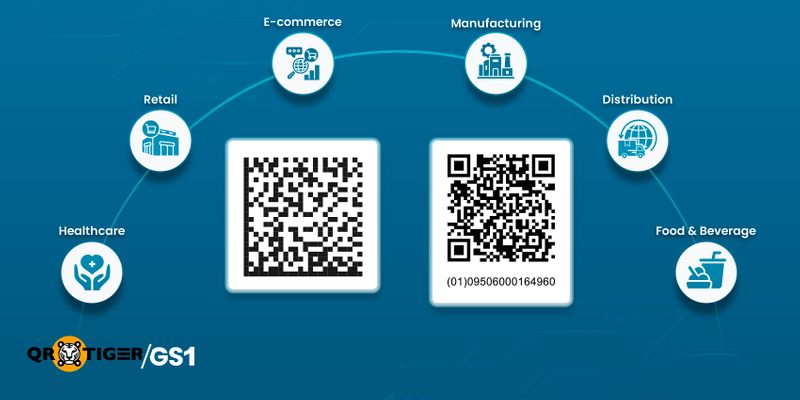
Here are some of the key applications of these codes across industries in the Netherlands:
Retail
Retailers are adopting GS1-powered 2D barcodes to improve point of sale (POS) operations and consumer engagement.
When scanned by a retail POS barcode scanner, the 2D barcode provides structured data (such as GTIN, price, batch/lot number, expiry date, and other logistics details) required for business processes. This ensures faster, more accurate transactions and better stock management.
When scanned by a consumer smartphone, a GS1 Digital Link QR code connects directly to a web page with verified product information. Shoppers can instantly access details such as nutritional facts, allergen warnings, certifications, recycling instructions, and sustainability claims.
This dual functionality makes 2D barcodes valuable for both retailers and consumers. The codes help retailers ensure compliance with EU regulations on product labeling and traceability.
Healthcare
The healthcare providers use GS1 DataMatrix barcodes to improve patient safety and supply chain integrity. These 2D barcodes encode critical details such as batch identifiers, serial numbers, and expiry dates, ensuring that medicines and medical devices are traceable from manufacturer to hospital.
Hospitals can scan a single barcode to verify authenticity, reduce counterfeit drugs, and optimize inventory management. This supports national healthcare goals to reduce errors and follow the EU Falsified Medicines Directive.
Distribution
GS1’s Scan4Transport standard is mainly applied in distribution to make logistics smoother and more reliable. At the heart of this process is the Serial Shipping Container Code (SSCC), which acts as the unique identifier for each pallet, carton, or container.
Encoding the SSCC into a 2D barcode on a transport label makes each logistics unit easy to scan and instantly linked to the right shipment record.
When a logistics partner scans this GS1‑compliant barcode, they see the SSCC and can also access key transport details such as delivery addresses, handling instructions, or compliance notes.
This speeds up goods reception, helps carriers and warehouses work together more smoothly, and strengthens supply chain visibility by showing all parties where shipments are and how they’re being handled.
Food and Agriculture
Food producers and exporters increasingly use QR codes powered by GS1 Digital Link to share product origin and sustainability data. Farmers and suppliers can encode harvest dates, production methods, and certification details in a 2D barcode.
This applies only to packaged goods that use GTINs. In sectors like dairy, meat, and horticulture that export internationally, these codes provide reliable traceability.
Consumers can scan these codes to confirm sustainability, while regulators and trade partners trust the labeling.
Fashion
In the fashion industry, 2D barcodes support omnichannel retail and product authenticity. For example, brands use GS1 QR codes to connect garments to digital product passports (DPP), which include material composition, care instructions, and sustainability certifications.
This helps fashion retailers meet EU circular economy goals by allowing consumers to access recycling or resale information. It also helps reduce counterfeiting, since each item has a unique GS1 identifier.
Inspiring Success Stories from GS1 NL
GS1 NL helps companies improve product tracking, safety, and operations. These success stories show how GS1 standards strengthen supply chains and build consumer trust.
Mijn Melk
Mijn Melk gives consumers direct insight into the origin of their milk. By scanning the GS1 QR code on the packaging, they can trace the journey from cow to bottle. The milk is processed and packaged right on the farm in a mini dairy, ensuring a short, transparent supply chain and delivering extra‑fresh milk straight to the supermarket.
This approach guarantees full traceability from farmer to consumer. At Yvonne Oostdam’s family farm in Bodegraven, cow welfare and minimal transport are central.
Each milk barrel receives a unique batch number, embedded in the QR code, which reveals details such as when the cows were milked, shelf life, and nutritional values like protein and fat content.
The GS1 QR code includes GTIN, batch number, and expiration date. This added data gives consumers direct access to reliable, detailed product information at the batch level, strengthening transparency and trust in the supply chain.
Frug I Com
Frug I Com is a collaborative organization uniting growers, packers, traders, and retailers in the Dutch fresh produce supply chain. Founded over a decade ago, it helps the industry adopt GS1 standards to improve efficiency and transparency.
With growing consumer demand for detailed product information and EU regulations requiring traceability, GS1 standards provide accurate data for retailers and consumers alike.
A major step forward has been the use of GLNs. Previously, growers used their own codes, but now around 16,000 locations are identified with GLNs. This shift supports certification requirements from GLOBALG.A.P. and government quality control initiatives.
Currently, more than 1,500 growers use GLNs, with the potential for 15,000 across the industry. Frug I Com helps new users set up GLNs for supply chain roles and sites like packing stations or greenhouses.
The detailed hierarchies of GLNs and the GLN Registry improve transparency in international agreements, while the shared information strengthens collaboration across the supply chain. By making data clear and reliable, companies position themselves as trusted partners, building stronger relationships and confidence in global trade.
Floricode
Floricode supports the Dutch floriculture sector in using GS1 standards for a faster, smarter supply chain. Fresh flowers must reach retailers within a day, so speed and cost savings matter. Since 2000, Floricode has helped auctions and growers use GLNs for easy electronic orders, deliveries, and invoices.
The adoption of GLNs has transformed the industry. Instead of creating their own codes, growers and traders use globally recognized GS1 identifiers, ensuring efficiency and consistency across international markets.
By 2009–2010, Floricode expanded this system by placing GLNs encoded in barcodes at nurseries, trader sites, and auction boxes. Currently, around 16,000 locations each have their own GLN, allowing transport carriers to scan barcodes for accurate handling and delivery.
GLNs also improve traceability and trust in the supply chain. Retailers can verify when and where flowers were loaded or unloaded, and if quality issues arise, traders can trace the product back to the grower and its journey through the chain.
Together with other GS1 standards, GLNs let flower traders track and trace products easily.
 Advancing Dutch Businesses with Global Standards
GS1 Netherlands empowers businesses to build smarter, more connected supply chains through globally recognized standards for product identification, data sharing, and traceability. Its services help companies across sectors optimize operations, meet regulatory demands, and improve transparency.
By joining GS1, businesses in the Netherlands gain access to reliable tools and expert support that reduce errors, boost efficiency, and enhance consumer trust. As businesses go digital, GS1 helps them work smarter, share data better, and stay competitive worldwide.
Frequently asked questions
1. How does GS1 NL contribute to sustainability and the circular economy?
GS1 NL supports sustainability by making data exchange reliable for circular supply chains. They support initiatives like the DPP and collaborate with GS1 in Europe to let Dutch companies meet EU regulations on product lifecycle transparency and environmental reporting.
2. What is a GLN, and how is it used in the Netherlands?
The GLN is a 13-digit identifier that uniquely identifies a business location, legal entity, or function. It helps supply chains recognize locations clearly and ensures smooth communication between companies.
In the Netherlands, GLNs are widely used in sectors like healthcare, logistics, and agriculture to identify hospitals, warehouses, growers, and trading partners. For example, floriculture and fresh produce sectors in the country use GLNs to track shipments from growers to retailers to improve product traceability and compliance.
3. How does GS1 Data Source support Dutch companies?
GS1 Data Source is a common system for product information. Dutch suppliers enter their data once, and retailers receive it correctly, quickly, and following Dutch and EU rules.

DISCLAIMER: We acknowledge that GS1, as well as the materials, proprietary items, and all related patents, copyright, trademark, and other intellectual property (collectively, “intellectual property”) relating to its use, are the property of GS1 Global, and that our use of the same shall be in accordance with the conditions provided by GS1 Global.
