
GS1 Sweden: Digital Standards Shaping Future

Across Sweden, industries follow global standards to meet EU rules, sustainability goals, and customer demand for transparency. To keep operations efficient and trustworthy, businesses now rely on product data that is accurate and easy to share.
GS1 Sweden (SE) plays a central role in this transformation by providing globally recognized standards such as GTINs (Global Trade Item Numbers) and EPC (Electronic Product Code). These tools help Swedish companies improve traceability, reduce errors, and ensure compliance with both local and international requirements.
This blog explores how GS1 SE enables businesses to adopt global barcode standards, build transparent supply chains, and prepare for the shift to 2D barcodes.
Table of Contents
What is GS1 Sweden?
Previously called EAN Sweden, GS1 SE is the official GS1 Member Organization (MO) responsible for issuing GS1 Company Prefixes for businesses operating in Sweden. These prefixes are a unique set of numbers that identify a company in the GS1 system and allow it to create product numbers, such as GTINs.
These product numbers are then turned into barcodes that can be scanned in stores and across the supply chain. The GTINs created begin with numbers in the 730–739 range assigned to the country.
The MO provides guidance, training, support, and tools to implement GS1 standards across the Swedish market. These standards help companies improve efficiency, sustainability, security, and product traceability in the supply chain.
Contact information:
Adress: Västra Järnvägsgatan 15, 111 64, SE-111 91 Stockholm, Sweden
Contact no: + 46 8 50 10 10 00
Email: kundservice@gs1.se
Introduced initiatives and collaborated campaigns
GS1 SE teams up with industry leaders to enable digital transformation and improve supply chains.
Collaboration with TCO Development for IT Product Certification
TCO Development is a non-profit organization based in Stockholm, Sweden. Their job is to make sure that IT products, like laptops, monitors, headphones, and phones, are made and used in a responsible, sustainable way.
They created a certification called TCO Certified, which is basically a "seal of approval" that tells buyers: "This product was made ethically and with the environment in mind.
Thanks to their partnership with GS1 Sweden, TCO Certified now requires brand owners to submit GTINs and strongly recommends using GS1 Digital Link. This ensures certified IT products can be traced, accurately matched to their certificates, and easily identified in procurement systems. This helps businesses and consumers make more sustainable choices.
GS1 SE and EU Packaging and Packaging Waste Regulation (PPWR)
On January 1, 2023, Sweden introduced a new regulation. The Ordinance (2022:1274) on producer responsibility for packaging came into force and reshaped how producers handle packaging compliance.
In simple terms, producers are now more accountable. They must report accurate data about the packaging they place on the Swedish market. That includes material types, weight, and structure. The level of detail is higher. The expectations are stricter.
This ordinance works alongside the Waste Ordinance (2020:614), which governs how waste is classified and managed in Sweden. Together, these regulations push for better traceability and clearer reporting across the packaging lifecycle.
GS1 Sweden supports businesses by providing standardized ways to structure and share product and packaging data.
Through GS1 standards, companies can:
- Assign globally unique product identifiers such as GTINs
- Structure packaging information in a consistent format
- Share accurate data with trading partners and reporting systems
This matters because producer responsibility is data-driven. If your packaging data is incomplete or inconsistent, reporting becomes manual. And manual reporting increases the risk of errors
Climate Declarations for Buildings in Sweden
Sweden introduced climate declarations for new buildings in 2022 under the Act (2021:787) on climate declarations for buildings.
Developers must report the building’s climate impact after construction. This mainly covers emissions from materials, transport, and the construction phase. The declaration is submitted to Boverket.
The purpose is straightforward. Make carbon emissions visible so they can be reduced.
Climate calculations depend on accurate product and material data. GS1 standards provide globally unique identifiers and structured data formats that help companies track materials consistently across projects and systems.
When materials are clearly identified, linking them to verified environmental data becomes easier. Less manual matching. Fewer reporting errors. More reliable climate declarations.
In short, structured identification supports credible carbon reporting. And credible reporting supports smarter building decisions.
GS1 SE services for businesses
GS1 provides businesses with tools and services that help them work more productively and support innovation.
Identification Codes
A GS1 subscription lets you use all the GS1 standards and services, including identification codes. A GTIN identifies products with barcodes, a GLN identifies locations, and an SSCC identifies logistic units.
GS1 offers three subscription options; choose the one that fits your business.
GS1 Company Prefix: It provides you access to all GS1 standards, services, and support, with thousands of numbers to manage products and locations.
Single Number: Suitable if you only need one product or location ID; includes a GTIN, a GLN, and large sets of SSCC or GSIN numbers, plus support.
One‑Off GLN: For businesses that just need a single GLN to identify a location or party, with support included.
Verified by GS1
Verified by GS1 makes sure product and location data are authentic and reach the right recipient. This builds trust across the supply chain, improves efficiency, and enhances the shopping experience.
For retailers, the tool makes it easy to search GTINs and GLNs worldwide, identify the owner, and access basic product or location details. This reduces errors, saves time and costs, and optimizes business processes.
For brand owners, managing GTINs and GLNs in MyGS1 ensures their data is registered in the GS1 Registry Platform. Stakeholders can then verify ownership, confirm correct product codes, and see linked locations. The result is faster data sharing, stronger brand integrity, and better visibility across markets.
ProductSearch
ProductSearch is a free service launched by GS1 that provides updated, quality‑assured product information and images from its database. Users can search by GTIN, brand name, supplier, or product type, and even compare up to four products side by side.
The database enables you to find and compare items across industries like food and beverages, beauty, health care, household appliances, workwear, mobile accessories, and toys.
Suppliers, e‑retailers, public sector buyers, and consumers all benefit from the service. It simplifies purchasing and sales planning, ensures accurate product data, and helps suppliers reach new markets.
The products are checked for quality both manually and automatically. The updates are synchronized several times a day. Hence, ProductSearch guarantees reliable, current information for everyone in the value chain.
Check Digit Calculator
Every barcode ends with a check digit, which confirms that the number is correctly structured. GS1 Sweden provides a Check Digit Calculator to help businesses quickly calculate check digits for all GS1 identification keys.
GS1 customers can also log in to MyGS1 and use the “Generate numbers” service. This tool allows them to create multiple GTIN‑13 codes at once, along with GTIN‑14, GLN, SSCC, and GSIN (Global Shipment Identification Number), all based on their GS1 Company Prefix.
By using these services, companies ensure their product identifiers are accurate, standardized, and ready for use across supply chains.
GS1 Trade Item Information
GS1 Trade Item Information gives products a clear, standard description so suppliers and buyers can easily share correct data in local and global markets. It is widely used across industries connected to GDSN (Global Data Synchronization Network), such as grocery, foodservice, pharmacy, and beverages, to ensure consumers always receive accurate product details.
This standard helps companies keep product data accurate and consistent. It matches product information with the actual item. This helps down on manual work and makes it easier to handle orders, deliveries, stock, and product listing in sales channels.
GDSN updates happen several times a year to let businesses meet current market and legal requirements. The result is accurate, standardized product data that strengthens business partnerships and gives consumers safer, more reliable information.
EDI Validation
EDI Validation checks whether your electronic business messages, such as orders, invoices, and delivery notices, are correctly structured according to GS1 standards before you send them to a trading partner.
When two companies exchange these messages automatically between their systems, even small formatting errors can cause the other system to reject them entirely.
This service lets you upload a message and get immediate feedback on whether it's correct, and if not, exactly what needs to be fixed.
It's useful for suppliers, buyers, logistics companies, and EDI system providers — anyone involved in setting up or maintaining this kind of automated communication. The service follows the ESAP20 process, which is the GS1 standard that defines how business messages in the retail supply chain should be structured.
The result is fewer errors, less back-and-forth troubleshooting with partners, and more reliable communication across the supply chain. The service is included in the GS1 Company Prefix subscription.
Validoo
Validoo is a product data and image bank where suppliers store, manage, and share trade item information with retailers and wholesalers.
The platform automatically validates trade item data and product images against GS1 standards and Swedish market requirements before publication.
Suppliers publish their product information through Validoo to the GDSN network, allowing buyers to retrieve synchronized, up-to-date data.
It also supports businesses with customer service, manuals, training courses, and webinars. This makes it easier for companies to optimize sales processes, strengthen collaboration, and deliver accurate product information to the market.
Link Management
Link Management is a service that lets brand owners create and manage GS1 Digital Links; standardized web addresses tied to a specific product. Where these links go can be updated at any time without reprinting anything, meaning the information they lead to can change even after the product is already on the shelf.
You can connect multiple types of information to a single product such as a product description, recipe, sustainability certificate, safety sheet, or recall notice and control what gets shown and when.
The GS1 Digital Link can be embedded in a 2D barcode, such as a QR code, printed on the packaging. Because the link routes through GS1 Sweden's system rather than pointing directly to a webpage, you stay in control of the destination even after the barcode is printed.
Applications of 2D barcodes across industries in Sweden
By 2027, checkout systems in Sweden will be ready to scan 2D barcodes. These codes can hold far more product details, which simplifies tracking products and connecting with shoppers in both physical and online stores. The change is part of the GS1 Sunrise 2027 initiative, aimed at creating a smoother, smarter shopping experience.
1D barcodes will still work but many businesses are already preparing for the transition. To stay backward-compatible, companies are printing both 1D and 2D barcodes on packaging. This ensures current systems keep running and simultaneously stay prepared for future upgrades.
The shift to 2D barcodes is straightforward for businesses. Companies can generate GS1‑compliant 2D barcodes by following the GS1 official guidelines, or they can use reliable tools such as QR Tiger’s GS1 QR code generator.
If businesses lack time or technical expertise, they can use these external tools as they provide a fast and reliable way to adopt next-generation barcodes to make the shift smoother.
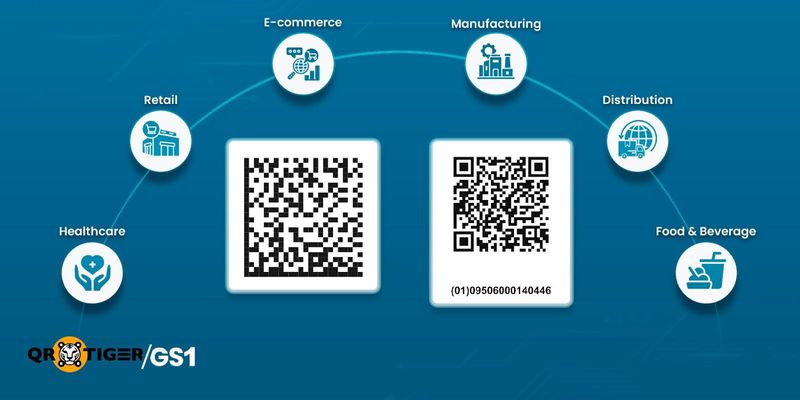
Here are key applications of these barcodes across industries in Sweden:
Retail
Retailers in Sweden are moving toward a future where every product package can be scanned with a 2D barcode at checkout, in line with the Sunrise 2027 initiative.
These advanced codes carry far more detail than traditional barcodes, which helps simplify inventory management and ensure accurate transactions at checkouts.
One practical example is the use of the GS1 Digital Link QR code that connects physical items to a digital platform. This benefits retailers with targeted promotion, product transparency, and product traceability. Scanning the code allows shoppers to instantly view nutritional facts, certifications, sustainability labels, and other key details.
Healthcare
GS1 DataMatrix barcodes are used in this sector to ensure patient safety and supply chain transparency. Their compact size makes them ideal for small medicine packs and medical devices.
They carry critical data such as serial numbers, batch codes, and expiry dates that allow medicinal products to be tracked easily from the manufacturer to hospitals.
Healthcare staff scans these 2D barcodes to confirm product authenticity, manage stock more effectively, and reduce counterfeit drugs. Scanning the codes also supports accurate dispensing that helps reduce errors and boost trust in Sweden’s healthcare system.
Food and Agriculture
2D barcodes help consumers with transparency in the food products they buy. Food producers apply QR codes powered by GS1 Digital Link to packaging to confirm product authenticity and meet safety standards. This keeps consumers confident in what they are purchasing.
These barcodes can hold detailed data such as allergens, ingredients, harvest dates, and sourcing information, making it easier to follow products from farm to shelf.
Only packaged goods carrying GTINs are included, which ensures reliable tracking for exports in key sectors like dairy, meat, and horticulture. The use of these codes thus supports food safety and sustainability.
Distribution
The logistics companies use GS1’s Scan4Transport standard to optimize operations. By using 2D barcodes to carry the SSCC, each pallet, carton, or container can be uniquely identified. This ensures that every unit is scanned correctly and linked to its transport record.
Logistics service providers benefit by scanning the GS1 QR code to instantly access shipment details such as handling requirements, compliance notes, and tracking IDs. This provides real-time visibility into supply chain movements, which makes transport safer, faster, and more efficient.
Inspiring success stories from GS1 in Sweden
GS1 SE provides barcode solutions that help companies work more efficiently. These success stories show how GS1 standards create smarter supply chains and build consumer trust across the country.
Filippa K
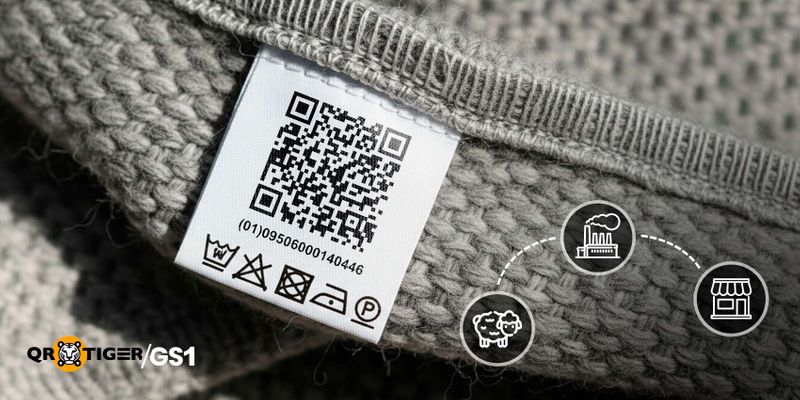
Filippa K is a Swedish fashion house founded in 1993, known for high‑quality clothing. It worked with GS1 SE, Axfoundation, and VirtualRouteZ to explore a new way of tracking wool garments. The project uses GS1 Digital Link QR codes.
By scanning the code, shoppers can instantly see reliable details about where the garment came from and how it was made. This project provides a practical roadmap for brands to meet upcoming EU Digital Product Passport (DPP) requirements, while demonstrating the brand's commitment to traceable and sustainable production
Nestlé Sverige
Nestlé Sverige is the Swedish branch of Nestlé, one of the world’s leading companies in nutrition, health, and wellness.
The company uses GS1’s Validoo DataEntry system regularly to manage trade item information. This allows them to create, edit, and send product data to retailers and digital channels well before a product launch. This ensures customers have accurate details ready in advance.
The system validates product information automatically, catching errors in fields like dimensions, weight, or allergens before publishing. This helps the company to provide reliable product details that guide storage practices, support merchandising, improve online visibility, and keep store labels accurate.
Validoo helped make product launches smoother and more efficient. Teams can save grocery trade certificates in drafts, update information later, and ensure all data is consistent across channels. The results are better communication with retailers, fewer errors, and faster workflows that benefit both Nestlé and its customers.
Coop
Coop is one of Sweden’s largest retail grocery chains, operating supermarkets and online shopping services across the country. It used GS1’s Validoo service to create structured product information across its supply chain.
Previously, Coop relied on Excel sheets to share product details manually. With Validoo, updates now flow automatically between Coop and supplier systems.
Errors can be corrected centrally to save time. With support from GS1, the brand trained suppliers to help them adapt smoothly to the ongoing digital transformation.
The shift to standardized, automated processes benefited Coop with improved efficiency and better data accuracy, prepared suppliers for future requirements, and built a reliable system for managing product data across both food and non‑food items.
Apotea
Apotea is Sweden’s largest online pharmacy. Their warehouse runs on automation. Fast systems. Tight processes.
For that to work, they need correct product data moving through their system at all times. If the data is wrong, someone has to fix it by hand. That takes time. And time in a busy warehouse is expensive. They wanted far less of that manual correction.
So, they worked with GS1 SE on a joint project. They adopted GS1 standards for product information, EDI, and pallet scanning. The objective was simple. Better data leads to fewer mistakes. Fewer mistakes mean less manual work. Purchasing, delivery, and invoicing become smoother and more predictable.
The project also helps with their sustainability goals. Apotea now has access to detailed information about packaging and materials. This helps them measure and reduce their carbon footprint more accurately.
 Building Smarter Supply Chains with Global Standards
GS1 Sweden supports businesses across industries by delivering trusted global standards that simplify product identification, data sharing, and traceability. Its services help Swedish companies meet rising demands for transparency, efficiency, and compliance with EU sustainability regulations.
By adopting 2D barcodes and global standards, organizations can reduce errors, improve supply chain resilience, and build customer trust. Joining GS1 gives businesses access to tools and expertise that enable smarter trade, sustainable growth, and a future-ready position in both local and international markets.
FAQs
1. When do I need a new GTIN, and when can I keep the old one?
You need a new GTIN when something important about the product changes. For example:
- The composition changes in a way that matters to the consumer (for example, from gluten-free to containing gluten).
- The brand or company changes.
- The number or type of items in a pack changes.
- The packaging changes in a way that affects how it’s sold (size, shape, or dimensions).
- The product itself changes (new size, new flavor, new ingredients).
You can keep the same GTIN if nothing important changes:
- The item’s status changes in the system (for example, from non-orderable to orderable).
- The supplier changes but the product stays identical.
- Marketing or promotional info is added to the packaging, as long as volume, weight, and price stay the same.
- The product is the same, just a minor update like a new design or label.
In short: if the product is still the same thing customers expect, keep the GTIN. If it’s really a new product, assign a new GTIN.
2. What is the difference between traditional barcodes and 2D barcodes?
Traditional 1D barcodes (like UPC/EAN) show data in a linear sequence when scanned whereas 2D barcodes can be read from both horizontal and vertical directions.
1D barcodes carry only a product identifier, usually a GTIN. On the other hand, 2D barcodes (such as GS1 DataMatrix or QR codes) can encode much more information including batch/lot numbers, expiration dates, marketing content, regulatory data, etc. all in a single symbol.
This makes them more versatile for supply chain visibility and transparency.
3. What is a company prefix?
A company prefix is a unique number issued by GS1 to your business. It identifies your company within the GS1 system and forms the first part of a GTIN, which is your product code.
You combine this prefix with your own item reference numbers to create a complete GTIN. That GTIN is then encoded into a barcode for scanning. The full number makes each product uniquely identifiable worldwide.
Because the prefix is licensed to your company, the numbers you create will not overlap with another business. This ensures global uniqueness. It keeps product identification clear, accurate, and accepted across supply chains.

DISCLAIMER: We acknowledge that GS1, as well as the materials, proprietary items, and all related patents, copyright, trademark, and other intellectual property (collectively, “intellectual property”) relating to its use, are the property of GS1 Global, and that our use of the same shall be in accordance with the conditions provided by GS1 Global.
