
GS1 Taiwan: Local Source of Standards for Global Business

GS1 Taiwan (TW) is the only organization in Taiwan authorized to issue GS1 identification numbers, the globally recognized codes that power modern supply chains, product labeling, and trade logistics.
As the country’s link to the global trade system, GS1 TW helps local businesses from small manufacturers in Taichung to major exporters in Kaohsiung work smoothly with international partners through standardized barcodes, identification systems, and data-sharing technologies.
At its core, the GS1 member organization TW exists to make Taiwan's trade more efficient and competitive on the world stage.
Whether it’s a tech component shipped from Hsinchu Science Park, a food product sold through retailers like PX Mart or Carrefour Taiwan, or a pharmaceutical product moving through the cold chain, GS1 standards provide a reliable system for identifying and tracking goods, locations, and assets at every stage.
Taiwan joined the global GS1 network in 1986 as its 23rd member organization and was assigned the country prefix 471 for the Republic of China. This prefix is still used today on GS1-registered product codes from the country.
It was founded as EAN Taiwan in 1984 and officially approved by EAN International in 1986. In 2005, following the global rebranding of EAN International to GS1, it changed its name to GS1 TW.
Contact and Offices
GS1 TW maintains three offices:
Taipei (Headquarters): 13F., No. 1, Sec. 4, Nanjing E. Rd., Songshan District, Taipei City 105609 | Tel: (02) 2545-0011
Taichung: 6F.-9, No. 262, Sec. 2, Henan Rd., Xitun District, Taichung City | Tel: (04) 2452-5422
Kaohsiung: 4F.-2, No. 10, Siwei 4th Rd., Lingya District, Kaohsiung City | Tel: (07) 535-0968
Table of Contents
Collaborated and Supported Local Campaigns
GS1 Taiwan actively collaborates with government agencies, industry associations, and local organizations to support impactful campaigns across Taiwan.
Through partnerships and initiatives, GS1 Taiwan helps promote the adoption of global standards, enhance supply chain efficiency, and drive digital transformation among Taiwanese businesses and industries.
UDI Single Service Window
In 2015, the Taiwan Food and Drug Administration(TFDA) introduced guidance for the Unique Device Identification (UDI) system based on international standards from the IMDRF and the U.S. FDA.
A UDI is a standardized way to identify medical devices using unique codes on labels and packaging, typically via barcodes or other scannable formats.
To support UDI adoption, the TFDA provided on-site consulting, created a national UDI database, and helped hospitals across the country begin using the system.
GS1 TW played an important role by providing the global standards needed for UDI implementation. Using GS1 standards such as Global Trade Item Numbers (GTINs) and Application Identifiers, medical device companies could create labels that met both local and international requirements.
They also provided technical support, training, and guidance on barcode labeling and data capture standards.
As part of the UDI rollout, five hospitals introduced barcode scanning and automatic identification technologies in areas such as operating rooms, cardiac catheterization labs, and warehouses.
By scanning UDI barcodes with handheld devices, hospitals could identify medical products faster and more accurately without manual data entry. This helped reduce staff workload, lower medical errors, improve inventory management, and strengthen patient safety.
The UDI system also made it easier for TFDA to trace medical devices linked to safety issues, improving monitoring and response times.
As UDI becomes more widely adopted worldwide, Taiwan continues to strengthen its medical device traceability system, with GS1 standards serving as a key foundation for compatibility, compliance, and supply chain visibility.
TAITRA Partnership
A major milestone for GS1 TW came in December 2021 when it signed a Memorandum of Understanding with the Taiwan External Trade Development Council (TAITRA).
The council supports local businesses through overseas exhibitions, trade missions, marketing activities, and partnerships with international distributors. By working with the organization, exporters can strengthen their presence in global markets through standardized product data and identification systems.
GS1 TW’s e-catalog platform allows member companies to register and update product information in real time. This improves data accuracy, supports better information sharing, and increases supply chain efficiency.
Combined with TAITRA’s global trade network, the partnership helps Taiwanese products become more visible, identifiable, and competitive in international markets.
Taiwan Food and Drug Administration
To improve patient safety and reduce medication errors, the TFDA encouraged the use of barcodes in hospital medication processes. However, many prescription drugs did not yet have standardized barcodes, making adoption difficult for hospitals.
To better monitor patient safety issues, the Department of Health launched the Taiwan Patient Safety Reporting (TPR) system in 2003. Hospitals could voluntarily and anonymously report incidents through the system.
More than 3,900 hospitals later reported around 189,000 incidents, with medication errors identified in the 2010 TPR Annual Report as the most common patient safety issue.
In response, the TFDA began pushing for pharmaceutical companies to use GS1 barcodes on drug packaging.
In 2011, GS1 TW and the Taiwan Society of Health-System Pharmacists helped create a healthcare user group involving major hospitals across the country.
Together, they promoted GS1 standards and automatic identification systems to improve medication safety, product traceability, and hospital efficiency.
They also provided technical support to help hospitals and pharmaceutical companies address challenges such as system costs, barcode printing, and packaging limitations.
Multi-Country Cargo Consolidation (MCC)
Taiwan is working to strengthen its position as a regional shipping and transshipment hub. One important initiative supporting this goal is the Multi-Country Cargo Consolidation (MCC) program.
Launched in 2015 by Taiwan’s Ministry of Finance and Ministry of Transportation and Communications, the MCC program helps shipping companies combine cargo from different countries into a single shipment headed to the same destination.
These smaller shipments, known as Less than Container Load (LCL) shipments, are packed together as-is, meaning the original packaging of each shipment is not altered in the process. The result is a Full Container Load (FCL), which is then transshipped.
In simple terms, instead of sending many small, partially filled containers from different countries separately, MCC bundles them into a single full container, saving costs and improving efficiency.
GS1 TW helps support the technology behind this system. Taiwan Customs introduced MCC services using cloud platforms and RFID electronic seal systems to improve cargo tracking and customs clearance efficiency.
The organization contributed by supporting RFID and EPC standards used in port management, including the “In-transit Container Escort Exemption Program” at the Port of Kaohsiung.
By using internationally recognized GS1 identification and tracking standards, Taiwan aims to improve port efficiency and remain competitive as a major logistics and trade hub in Asia.
GS1 Taiwan Services for Businesses
GS1 Taiwan offers a comprehensive range of services to help Taiwanese companies improve efficiency, ensure compliance, and succeed in global markets.
Get a Barcode
The most foundational service offered by GS1 TW is helping businesses obtain a GS1-compliant barcode.
A GS1 barcode is the globally recognized standard for product identification, used by retailers, distributors, and e-commerce platforms around the world.
Through this service, businesses are assigned a unique GS1 Company Prefix a number that forms the basis of their product identification codes and corresponding barcodes ensuring that every product they sell can be uniquely identified anywhere in the world.
The organization guides applicants through the registration process, from selecting the right barcode type (such as EAN-13, ITF-14, or GS1-128) to generating print-ready barcode files that meet international quality specifications.
Whether you are a startup launching your first product or an established manufacturer expanding your catalog, this service is the starting point for participating in modern supply chains.
Barcode Verification
Having a barcode is only the beginning; ensuring that it scans correctly at every point in the supply chain is equally important.
GS1 TW’s Barcode Verification service tests and validates barcodes against ISO (International Organization for Standardization), IEC (International Electrotechnical Commission), and GS1 quality standards before products reach shelves or distribution centers.
A barcode that is poorly printed, incorrectly sized, or placed in the wrong position on packaging can fail to scan, leading to delays, rejections by retailers, and added costs.
GS1 TW’s verification process checks key parameters including print quality, contrast, quiet zones, and symbol size, providing businesses with a detailed report and an official ISO/IEC print quality grade..
This service is especially valuable for manufacturers, packaging suppliers, and exporters who need to meet strict retailer or regulatory scanning requirements.
TDSN (Taiwan Data Synchronization Network)
The Taiwan Data Synchronization Network, or TDSN, is GS1 TW’s platform for enabling accurate and efficient exchange of product data between trading partners.
In modern supply chains, retailers and distributors rely on precise, up-to-date product information, including descriptions, sizes, ingredients, images, and pricing, to manage their operations and serve customers.
TDSN serves as a central platform where suppliers can upload product information, and buyers can access it in a standardized format.
This reduces manual data entry and helps prevent errors caused by inconsistent information across systems.
By sharing product data through TDSN, businesses can speed up product listings, improve order accuracy, and build stronger relationships with trading partners.
TDSN is aligned with the GS1 Global Data Synchronization Network (GDSN), meaning data shared through it can also be exchanged with international trading partners.
IOT / EPC Coding Center
The service helps businesses track products in real time and improve supply chain visibility.
Its GS1 IoT/EPC Coding Center provides technical support and software for companies using IoT and RFID technologies.
The center helps businesses create and manage product identification codes and convert data between RFID and barcode formats for use in labeling, mobile apps, and information systems.
The Electronic Product Code (EPC) is a GS1 standard that gives each individual product a unique identity using RFID technology.
An RFID tag is a small chip with an antenna that stores the product's unique EPC code. When the tag comes within range of an RFID reader, the reader emits radio waves to wirelessly power the tag and read its code, without requiring direct line of sight or manual scanning.
That code is then matched to product data in a connected system.
When combined with IoT systems, EPC-tagged products can be automatically tracked throughout manufacturing, warehousing, transportation, and retail operations.
This helps businesses improve inventory visibility, product recalls, and supply chain management.
In practice, GS1 TW supports RFID manufacturers, exporters, apparel companies, and retailers with RFID tagging and coding services that meet the requirements of international retailers such as Walmart and Macy's.
The organization also helps companies manage large volumes of serialized product codes and provides software for developing GS1 numbering systems compatible with both barcodes and EPC standards.
To support local expertise, the organization offers training programs and the EPCIE certification exam to help develop IoT professionals in Taiwan.
Training & Certification
GS1 TW offers training and certification programs that help students and industry professionals understand GS1 standards and how they are used in real business operations.
Training is available through classroom sessions, online learning, and industry-focused programs. Courses cover basic barcode knowledge as well as more advanced topics such as pharmaceutical barcodes, medical device UDI labeling, export logistics, RFID item tagging, and cross-border e-commerce.
They also provide four certification programs for individuals who want to validate their knowledge and skills:
- EPC/RFID Basic Certification: An entry-level certification for students from different academic fields.
- EPCIE IoT Engineer Certification: An advanced certification for graduate students in engineering or computer science, along with industry professionals.
- International Barcode Management Technician: Designed for students in vocational schools and technical colleges studying business or distribution.
- GS1 Barcode Manager – Retail Industry Expert: Intended for people working in or studying retail and distribution.
These certifications are awarded to individuals who pass the exams. They are recognized by Taiwan’s Ministry of Economic Affairs and YunTech University. The EPC/RFID certifications also include internationally recognized EPCglobal credentials.
Verified by GS1
Verified by GS1 is a global service that helps businesses confirm that their barcodes and product data are accurate and meet GS1 standards.
When a product is registered in Verified by GS1, its barcode information is checked against the GS1 database and marked as verified. This gives retailers, online platforms, and consumers confidence that the product data is reliable.
As concerns about counterfeit products and inaccurate online listings continue to grow, Verified by GS1 helps improve trust and transparency.
For businesses selling through retail stores or e-commerce marketplaces that require verified product data, the service helps support compliance while also improving brand credibility.
Application of 2D Barcodes Across Industries in Taiwan
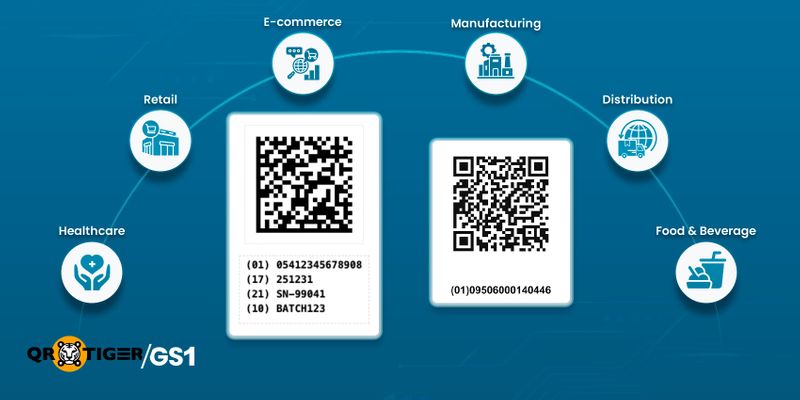
2D barcodes, including GS1 DataMatrix and GS1 QR Code, are transforming how products are identified, tracked, and verified across virtually every sector of Taiwan's economy.
GS1's global Sunrise 2027 initiative marks a pivotal transition in retail scanning: by 2027, point-of-sale systems worldwide are expected to be capable of reading 2D barcodes in addition to traditional 1D barcodes.
GS1 TW is actively preparing businesses for this shift, helping manufacturers and retailers upgrade their labeling and scanning infrastructure ahead of the deadline.
Healthcare
In healthcare, 2D barcodes, particularly GS1 DataMatrix, are the backbone of the Unique Device Identification (UDI) system for medical devices.
Hospitals such as National Taiwan University Hospital (NTUH) were early adopters of GS1-based healthcare barcode systems, improving medicine safety and hospital supply chain automation.
Food & Beverage / Fresh Produce / Agriculture
In the food and agriculture industry, 2D barcodes help track products from farms to store shelves, improving food safety and traceability. Taiwan’s food safety cloud system uses GS1 standards to monitor produce and packaged goods throughout the supply chain.
For fresh and perishable products, 2D barcodes can also store extra information such as batch numbers, harvest dates, and expiry dates, giving consumers and regulators better product visibility.
Retail & Consumer Goods
For retail and consumer goods, 2D barcodes offer a significant upgrade over traditional EAN/UPC barcodes.
A GS1 Digital Link QR Code or DataMatrix can carry far more information including serial numbers, expiry dates, and URLs linking to product landing pages enabling richer consumer engagement, anti-counterfeiting measures, and more accurate inventory management.
GS1 TW has collaborated with major domestic retailers and international platforms such as Amazon, eBay, and Alibaba to drive adoption.
Logistics & Supply Chain
In logistics, 2D barcodes work alongside RFID technology to enable real-time shipment tracking, container identification, and warehouse automation.
GS1 TW has applied these standards in settings ranging from Kaohsiung Port container tracking to nationwide distribution networks, using SSCC codes and EPC/RFID tags to streamline operations.
Regulations
Regulations are increasingly requiring the use of 2D barcodes.
In the European Union, the European Database on Medical Devices also requires compliant 2D barcode labeling for medical devices sold in its market.
GS1 TW has also helped prepare Taiwanese exporters for these requirements through training programs focused on EUDAMED compliance and international standards.
Inspiring Stories from GS1 Taiwan
Across Taiwan, businesses of all sizes are using GS1 standards to overcome challenges and achieve global success. Here are some inspiring stories that showcase how GS1 Taiwan is making a real difference from local manufacturers expanding overseas to innovative companies transforming their supply chains.
Changhua Christian Hospital (CCH) Healthcare / Medication Safety
When the TFDA required GS1 2D barcodes on prescription drugs, Changhua Christian Hospital was one of the first hospitals to implement them in Taiwan.
This effort was supported by a collaboration between GS1 TW and the TFDA to introduce barcode labeling in the pharmaceutical sector. The hospital’s early adoption was later highlighted as a case study in the GS1 Healthcare Reference Book (2012/2013).
At the pharmacy level, medication errors were a serious concern. Data from Taiwan’s Patient Safety System showed that 14.1% of medical errors in Q3 2021 were linked to dispensing mistakes, often caused by similar drug names or missed double-checking.
To address this, Changhua Christian Hospital introduced a Smart Dispensing Counter system using barcode scanning. This improved accuracy and reduced pharmacists’ workload by supporting safer and more efficient dispensing.
The system also helped organize and label medications, using visual indicators to remind staff to double-check prescriptions before handing them to patients.
Overall, the hospital’s experience showed how GS1-based barcode systems can reduce human error and improve patient safety in busy pharmacy environments.
Kaohsiung Container Port: Logistics / RFID Smart Seals
GS1 TW played a key role in modernizing container security at Kaohsiung Harbor, the largest port in Taiwan one of the ten largest ports in Taiwan.
The port previously required Customs officers to physically escort tens of thousands of containers each year to prevent smuggling, a process that was costly, slow, and labor-intensive.
To solve this, the organization provided the technical specifications for EPC/RFID-based passive electronic seals, ensuring the system was built in compliance with international GS1 standards.
These smart seals, once attached to a container, could be scanned automatically as trucks passed through checkpoints at 60km, triggering an alert if a seal was tampered with or if the truck, driver, and container IDs did not match.
The resulting system achieved a read accuracy rate of over 97%, eliminating thousands of manual cargo escort tasks each year, where port or customs personnel had to physically supervise container movements between checkpoints. Its success at Kaohsiung later prompted plans to expand the system to other major ports across Taiwan.
Driving Growth with Global Standards
Since its founding in 1984, GS1 Taiwan has grown from a small standards body promoting barcodes in department stores into a multi-service organization at the heart of Taiwan's supply chain, healthcare, and digital commerce ecosystems.
The country is a major export-oriented economy, with significant trade activity in electronics, semiconductors, medical devices, and consumer goods.
GS1 TW sits at the intersection of this trade activity and global standards compliance.
By ensuring that products carry GS1-compliant identifiers, the organization enables them to be listed and accepted on major international retail and e-commerce platforms from Amazon and eBay to Alibaba and EU-regulated marketplaces.
As global trade increasingly requires compatible and traceable product data from regulations like the European Union UDI and EUDAMED to e-commerce platform requirements, GS1 TW plays an important role as the only authorized issuer of GS1 identifiers.
This makes it a key partner for companies operating in Taiwan doing business internationally.
 FAQs
FAQs
Is GS1 TW a government agency?
No. GS1 TW is an independent, not-for-profit organization. While it works closely with government bodies such as the Ministry of Economic Affairs (MOEA) and the Taiwan Food and Drug Administration (TFDA), it is not a government agency.
It does, however, hold the exclusive government-recognized authority to issue GS1 identifiers within Taiwan.
What does the "471" prefix on a barcode mean?
The prefix 471 is the GS1 country code assigned to the Republic of China (Taiwan).
Importantly, the prefix identifies where the company is registered, not where the product was manufactured.
A product made outside Taiwan can still carry a 471 prefix if its brand owner is registered with GS1 TW.
How many barcodes do I need?
Each product variation, such as a different size, color, flavor, or packaging type, needs its own unique GTIN and barcode.
For example, a t-shirt available in three sizes and two colors would need six different GTINs.

DISCLAIMER: We acknowledge that GS1, as well as the materials, proprietary items, and all related patents, copyright, trademark, and other intellectual property (collectively, “intellectual property”) relating to its use, are the property of GS1 Global, and that our use of the same shall be in accordance with the conditions provided by GS1 Global.
