
GS1 Czech Republic: Standards for Smarter Trade

GS1 Czech Republic / Czechia(CZ) is the sole licensed national member organization authorized to administer the GS1 System of Standards in the Czech Republic.
It operates as a non-profit organization, part of the global GS1 federation, a network of over 120 local member organizations operating in more than 150 countries worldwide.
This means any business operating in the republic that wants an internationally recognized barcode or product identifier must register through this branch of the organization.
In 1983, Czechoslovakia became the 19th member of EAN International, now GS1 Global.
Following the country's peaceful dissolution in 1993, the prefix 859 continued to be used by both the Czech Republic and Slovakia and remains associated with companies registered in either country today.
Contact Information
Address: Na Pankraci 30 140 00 Praha 4, Czech Republic
Phone: +420 227 031 261
General Inquiries: info@gs1cz.org
Collaborated and Supported Local Campaigns
GS1 CZ actively participates in national initiatives that promote the adoption of global standards across industries.
ECR Czech-Slovakia
The Efficient Consumer Response (ECR) is an industry group that brings together retailers, manufacturers, and suppliers to improve retail and supply chain processes. Members share best practices, join working groups, attend workshops, and collaborate on industry projects.
In April 2022, the Czech-Slovak ECR Initiative highlighted collaboration and sustainability as the latest top priority.
They emphasized that close cooperation is important for helping retailers go digital, keeping store shelves reliably stocked, and minimizing waste.
It continues to support the Lean & Green program, which promotes sustainable logistics, and is preparing unified methodology and reporting standards in line with upcoming ESG (Environmental, Social, Governance) requirements.
Other discussions also include cutting truck shipping emissions, using cleaner fuels like liquefied natural gas, and going electric.
The group also outlined clear priorities for its working groups focused on EDI (electronic data interchange), benchmarking, on-shelf availability (OSA), and sustainability.
Sustainability is a central theme. The initiative has partnered with the SYBA Packaging Institute to create a national guide for making highly recyclable packaging. based on global ECR and World Packaging Organization standards.
eHospital Conference 2022
The inaugural eHospital conference, organized by GS1 Czech Republic in early May 2022 in Brno, proved to be a success.
Titled "eHospital: the future of healthcare," the event brought together IT managers, deputy heads of hospital information technology, and technology partners to explore the computerization of hospital processes using GS1 standards.
“This meeting presented specific examples of automatic identification and GS1 standards in foreign hospitals, as well as the first implementations in Czech hospitals. Our goal is to create a space for cooperation and sharing of experiences,” said Pavla Cihlářová.
The event was co-organized by Magnus Regio and attracted 43 participants.
The conference began with an overview of how the GS1 system supports automatic identification, data collection, and sharing in hospitals.
A key topic was the serialization of prescription drugs using GS1 standards, which has already become standard practice in both commercial and hospital pharmacies.
A major part of the program was dedicated to the Unique Device Identifier (UDI), which is becoming mandatory for medical devices in the Czech Republic.
Martin Tuček, Biomedical Manager at VAMED CZ, presented practical applications across the VAMED MEDITERRA group of medical facilities. He emphasized the use of core GS1 identifiers:
- GTIN for products
- GLN for locations and organizations
- GPC for product categorization
- GSRN and GSIN for services and shipments
- GIAI and GDTI for assets and documentation
Tuček stressed that unambiguous identification is essential for meeting legislative requirements, minimizing patient and staff risks, and ensuring proper storage, maintenance, and traceability of medical devices.
SpeedCHAIN International Logistics Conference
SpeedCHAIN is one of the biggest logistics conferences in Central Europe. It usually brings together about 700 participants from 11 countries and features around 65 speakers.
The event helps promote modern logistics and strengthens connections between Central European businesses and the wider European market.
SpeedCHAIN gives logistics experts a place to discuss topics such as manufacturing, international trade, supply chains, and logistics services.
The conference is mainly attended by business leaders, supply chain managers, IT professionals, consultants, government representatives, academics, and manufacturing industry experts.
SpeedCHAIN is one of the largest logistics conferences in Central Europe. It regularly attracts more than 700 participants often approaching 1,000 logistics leaders from multiple countries and features a strong lineup of expert speakers.
The event serves as a key platform for promoting modern logistics, facilitating professional discussions, and strengthening connections between Central European businesses and the broader European market.
SpeedCHAIN provides logistics experts with a forum to discuss key topics such as manufacturing, international trade, supply chains, logistics services, technology innovations, sustainability, and efficiency.
The conference is primarily attended by business leaders, supply chain managers, IT professionals, consultants, government representatives, academics, and experts from the manufacturing and logistics sectors.
Retail in Detail Conference (Digitech)
GS1 CZ actively participates in the Retail in Detail conference series, a specialized retail event focused on technology, digital transformation, and innovation in the retail sector.
At the 2023 Digitech edition, which explored how technologies such as AI can improve retail operations, customer experience, logistics, and supply chains, GS1 CZ played a prominent role.
Pavel Moravec and Tomáš Tlučhoř delivered a presentation on how GS1 standards help businesses manage increasingly complex supply chains and deliver the right products with accurate digital information.
By joining events like this, GS1 CZ shows how its standards can help businesses handle more complex supply chains while still meeting what customers expect.
GS1 CZ Services for Businesses
The organization provides several services to help businesses use GS1 standards and identifiers:
GS1 CZ provides company prefix licensing, barcode registration, and other services that help businesses of all sizes improve efficiency and trade confidently in domestic and global markets.
Membership Registration and Company Prefix Licensing
Registration gives a business official globally accepted product and location codes. These are mainly GTIN for products and GLN for locations. GTIN is the number inside a barcode. GLN identifies a company or site.
Without these, most retailers and online marketplaces will not accept product listings, since they require GS1-issued codes.
Step 1: The process starts by choosing how many product codes a company needs. This affects the price because it depends on the size of the number range assigned.
Step 2: The company submits an online application, signs an agreement with GS1 CZ, and pays a one-time registration fee plus an annual fee linked to company size or revenue.
Step 3: Once approved, the business receives a Company Prefix and GLN, plus access to GS1 Activate for creating and managing product codes.
Registration also means the company agrees to follow GS1 rules for using the codes. Payments must be kept current. Basic guidance or training is usually included so the codes are used correctly in retail and online systems.
Barcode Verification
One of the organization's core offerings is barcode verification, a service aimed at both new businesses wanting to ensure their products are correctly labeled before entering the market, and established suppliers whose trading partners have reported readability issues.
GS1 CZ carries out verification at the design stage, during packaging print, and on the final product, issuing an internationally recognized quality protocol as the result.
All checks are conducted in accordance with current ISO standards, and in cases where problems are identified, the team provides consultations and support for corrective action.
Key Features of the Service
Verification at all stages: They test during design (artwork), printing, and on final products/packaging.
Standards compliance: Checks follow current ISO norms (e.g., ISO/IEC for symbol quality, print quality, dimensions, contrast, etc.). Equipment is regularly calibrated by a Czech Metrology Institute-certified firm and with calibration cards.
Output: You receive an internationally recognized verification report/protocol. If issues are found, they provide consultations and support to fix them.
On-site retailer checks: For retailers, they perform extensive in-store verifications based on point-of-sale (POS) data to identify problematic products. Options include one-off checks or regular (e.g., monthly) monitoring of selected items.
Common Barcode Issues They Identify and Help Fix:
- Insufficient symbol size or height (reduces scan speed or makes it unscannable).
- Damaged quiet zones (protected areas around the barcode invaded by text/graphics).
- Poor placement (e.g., on edges, seams, or curved surfaces).
- Low contrast, wrong colors, glossy/laminated surfaces, or inverse (negative) printing.
- Print quality problems (e.g., defective print heads).
GS1 Activate
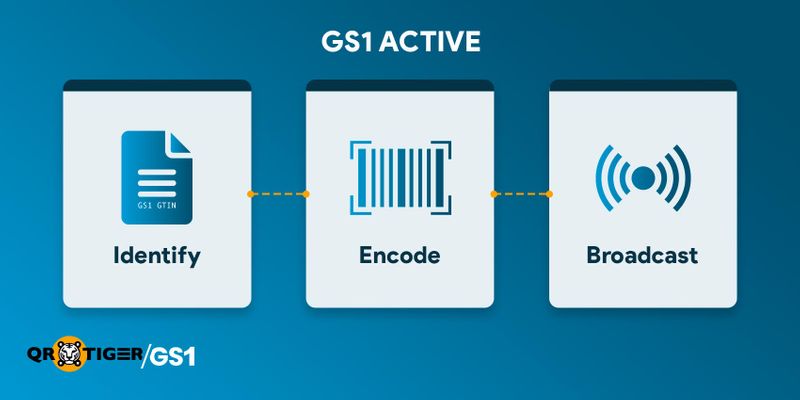
GS1 Activate is a web-based tool for easy management of identification numbers, primarily GTINs (Global Trade Item Numbers for products) and GLNs (Global Location Numbers for locations/companies).
It simplifies barcode and product identification processes for GS1-registered companies in the Czech Republic:
Generate GTINs instantly without manually calculating check digits. You get a clear overview of available numbers in your GS1 Company Prefix range and avoid duplicates or errors.
Export/import via Excel templates useful for companies with existing portfolios. GS1 CZ support can assist with imports.
Manage and assign numbers to products and locations, including secondary GLNs for branches, warehouses, etc.
Store basic product data/attributes such as:
- Product name
- Global product classification
- Packaging level/hierarchy
- Trademark (optional)
- Net quantity
- Target markets/countries of sale
- Additional identification
- Images (per market if needed)
- Export/import via Excel templates useful for companies with existing portfolios. GS1 CZ support can assist with imports.
Issue ownership certificates for GTINs/GLNs
Publish data to global registries, making it verifiable via the Verified by GS1 search tool.
Synfony: Product Data Catalog
Synfony is the certified GDSN (Global Data Synchronization Network) data pool and electronic product data catalog.
It serves as a centralized, standardized platform for suppliers (manufacturers/brands) and retailers to exchange high-quality master product data.
Suppliers load validated product data (linked to GTINs from GS1 Activate or elsewhere) into Synfony and publish it to specific markets or individual retailers.
Connected retailers subscribe and download the data directly into their systems. Data remains in a global standard format.
Key Features and Functionalities:
- Intuitive web application accessible from anywhere for entering, managing, publishing, editing, or deleting product data.
- Bulk import/export via Excel is easy for initial data loading or updates.
- System integration XML (via FTP or AS2) or JSON via API for larger companies connecting to their own ERP/IMS.
- Automatic synchronization changes to published items are automatically sent to all subscribed retailers/partners.
- Rich data support: GTIN-linked product attributes (following GS1 standards and Global Data Model), Attachments: photos/images, safety data sheets (SDS), certificates, documents, and Compliance with EU regulations (e.g., 1169/2011 for food info).
- Validation and control data owner retains full control; one-click access to problematic fields; data verification support from GS1.
- Export to PDF for product sheets.
- Tailored to the Czech market through user working groups.
Application of 2D Barcodes Across Industries in CZ
Sunrise 2027 is the most significant change to barcode standards since the UPC was invented in 1974.
It is a global, industry-driven initiative established by GS1 that calls for all retail point-of-sale (POS) systems to be capable of scanning and processing 2D barcodes by the end of 2027.
Traditional 1D barcodes the familiar vertical black-and-white lines seen on nearly every consumer product store.
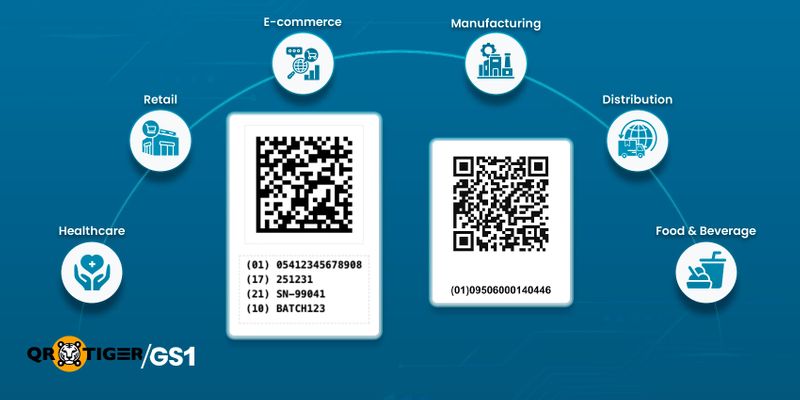
A 2D barcode, such as a QR code with GS1 Digital Link or a GS1 DataMatrix, encoding a product's expiration date, batch/lot number, serial number, and much more in a single scan.
For businesses operating in CZ, Sunrise 2027 means:
- Brands and manufacturers begin placing 2D barcodes on product packaging, either replacing or supplementing existing 1D codes.
- Retailers are expected to upgrade their POS scanners and software to process GS1 2D barcodes alongside traditional 1D codes.
GS1 recommends a dual-marking approach during the transition; products carry both a 1D and a 2D barcode until 2D scanning is universally supported.
GS1 CZ plays a key role in educating companies about this mostly optional transition, helping them prepare technically and operationally before the 2027 deadline.
Healthcare
Falsified Medicines Directive (FMD): Since February 2019, EU rules have required prescription medicines and some over-the-counter products to carry a unique GS1 DataMatrix 2D barcode and a tamper-evident seal to help prevent counterfeit medicines.
EU Medical Device Regulation (MDR/IVDR): EU regulations on medical devices and in-vitro diagnostics mandate the use of Unique Device Identifiers (UDIs), with GS1 identification systems as a compliant standard.
These regulations require UDI numbers to appear on device labels and packaging and to be submitted to EUDAMED, the European medical device database.
Food & Beverage / Fresh Produce / Agriculture
Product Traceability: GS1 2d barcodes help enable end-to-end traceability of food products from farm to supermarket shelf.
In the event of a food safety issue, encoded batch and lot numbers allow rapid identification and recall of affected products, protecting consumers and limiting business losses.
2D Barcodes for Consumer Transparency: 2D barcodes that provide consumers with access to nutritional information, ingredient lists, allergy warnings, recall notices, and sustainability credentials all from a single smartphone scan.
Retail & Consumer Goods
Retailers are working toward upgrading POS infrastructure to handle 2D barcodes, which will enable enhanced capabilities such as automatic expiry date alerts at checkout, preventing the sale of out-of-date products.
Distribution
GS1's Scan4Transport initiative provides guidelines for using GS1 2D barcodes in transport and logistics.
It helps companies add more information to shipping labels, such as shipment IDs, routing details, and other logistics data, while supporting existing barcode scanning systems.
Benefits of using Scan4Transport include:
- More logistics information can be stored in a single barcode.
- When a GS1 Digital Link is encoded, these codes can connect online information beyond internal lookup systems
Regulations
The EU Digital Product Passport (DPP) is a digital record that stores key information about a product throughout its lifecycle, including its materials, sustainability data, and recycling information.
Expected rollout timeline (:
- Batteries (EV, industrial, and light transport batteries)
- Textiles, apparel, and footwear: Expected to begin around 2027, with broader requirements introduced through 2030–2033.
- Iron & steel, aluminium, tyres, and detergents: Likely required between 2027 and 2028.
- Furniture, mattresses, electronics, and ICT products: Expected between 2028 and 2030.
- Other products (such as chemicals, paints, lubricants, machinery, packaging, and plastics): Gradual rollout through 2030, with most physical products eventually covered.
Note: These timelines are estimates based on current EU plans and may change as product-specific rules and requirements are finalized.
DPP information will typically be accessed through 2D barcodes or RFID tags. GS1 Digital Link and GS1 2D barcodes are emerging as key technologies for implementing DPPs.
KM Beta
KM Beta, the CZ’s largest manufacturer of concrete roofing and only producer of calcium silicate bricks, adopted the GS1 Logistics Label to improve warehouse management and product traceability.
Using GS1 labels with SSCC codes, the company can now identify all palletized production.
The rollout began in 2014 with a pilot at the Hodonín brickworks, which produces more than 80 types of bricks and construction elements and ships up to 600 tons of goods per day during peak season.
The solution, implemented by Bartech, an accredited GS1 CZ partner, automatically applies GS1 logistics labels to pallets at the end of the production line.
Each label contains:
Top zone: Contains the company logo and address, a GS1 DataMatrix symbol encoding the GS1 data from the label, and a customer-facing QR code linking to product documentation and technical information.
Middle zone: Displays the SSCC, GTIN, quantity, production date, and the ID of the production operator responsible for the pallet in human-readable form.
Bottom zone: Contains two GS1-128 barcodes encoding the SSCC, as well as the product identification and quantity of units on the pallet.
The GS1 DataMatrix code was added after finding that forklift structures made linear barcode scanning difficult. The code allowed operators to scan pallets reliably using handheld terminals from their forklifts.
The label now includes a customer-facing QR code that links directly to the product’s technical datasheet. Before, this QR code was printed on a separate plastic label placed inside the pallet. This change made the process simpler and reduced costs.
Connected to Helios Orange, the system records each pallet and creates a goods receipt document when the label is applied, ensuring accurate warehouse records.
The result was a fully traceable, automated production and dispatch process giving KM Beta instant visibility over what was produced, by whom, and all built on globally recognized GS1 standards.
Dahlhausen
Dahlhausen CZ, a leading Czech distributor of medical devices and healthcare products, implemented a GS1-based warehouse management system (WMS) with ICS Identifikační systémy to improve warehouse operations and prepare for upcoming UDI requirements.
The company manages more than 1,900 products at its distribution center in Kuřim. As part of the project, it adopted GS1 DataMatrix alongside traditional barcodes to identify products and record information such as batch numbers, expiration dates, and serial numbers.
Key Results:
• Product identification using GTINs, GS1 DataMatrix, batch numbers, expiration dates, and serial numbers.
• Better control of receiving, storage, picking, packing, shipping, and inventory processes.
• Unique GTINs assigned to each packaging level, from individual items to larger cartons.
• Preparation for future UDI requirements while following GS1 standards.
This project shows how GS1 standards can help healthcare companies improve product tracking and meet industry requirements.
Evolving Supply Chains with GS1 CZ
GS1 Czech Republic stands at the intersection of tradition and innovation.
From the first barcode printed on a chocolate bar in 1979 to the upcoming transition to 2D barcodes under Sunrise 2027, it has helped businesses adapt to a rapidly evolving global marketplace.
As the sole authorized provider of GS1 standards in the CZ, they offer more than barcodes. It provides the global standards that connect businesses to supply chains, support regulatory compliance, and improve transparency across industries.
 Frequently Asked Questions
How do I get a barcode for my product in CZ?
You register with GS1 CZ at www.gs1cz.org to receive a GS1 Company Prefix, from which you can generate GTINs (Global Trade Item Numbers) for your products. These numbers form the basis of the EAN-13 barcodes printed on retail products.
What is the difference between registering with GS1 Czech Republic versus using barcodes from other providers?
GS1 Czech Republic is the only official, licensed organization in the Czech Republic authorized to issue globally unique GS1 Company Prefixes and GTINs.
Numbers obtained from unofficial providers may already be in use by someone else, leading to duplicates, rejected listings on marketplaces, or compliance issues.
Official GS1 registration ensures global uniqueness, retailer acceptance, access to tools like Verified by GS1, and full support for standards like SYNFONY and future regulations.
Is SYNFONY suitable for small and medium-sized enterprises (SMEs), or is it mainly for large companies?
Yes, SYNFONY is built for businesses of all sizes. Small and medium-sized companies can get started with its easy-to-use web interface and upload or download data from Excel files, with no complex IT integration required.
GS1 Czech Republic offers the first 12 months of full operation for free (for properly registered members), free training, and support with initial data entry.
Larger companies can later connect via API or XML.
This makes it accessible for SMEs while scalable for bigger players.

