
GS1 Hungary: Local Access to Global Supply Chain Standards

GS1 Hungary (HU) plays a central role as the country's official representative of the global GS1 network.
Supply chains are growing more complex and both consumer expectations and EU regulations are rising, standardization has become more important than ever.
This is especially true for Hungary, a country whose economy is uniquely shaped by its position at the heart of Central Europe.
The chapter serves this global community locally helping manufacturers, retailers, healthcare providers, and logistics operators adopt and benefit from GS1 standards.
This article explores what GS1 HU is, what it does, and why its work is becoming increasingly vital for businesses especially with major initiatives like Sunrise 2027 and the EU Digital Product Passport on the horizon.
Table of Contents
What is GS1 Hungary?
GS1 HU is the sole authorized GS1 organization in Hungary. It is responsible for issuing GS1 company prefixes, identifiers, promoting standards, and supporting companies operating in Hungary in adopting global best practices for identification, traceability, and data sharing.
GS1 is a neutral, nonprofit organization in the field of global standardization, founded more than forty years ago. Although GS1's headquarters is located in Brussels, the organization is operated through a network of national Member Organizations(MO) in over 110 countries, one of which is GS1 HU.
GS1 has 120 local member organizations covering 150 countries, with over 2 million user companies worldwide.
The GS1 MO serves this global community locally, helping manufacturers, retailers, healthcare providers, and logistics operators adopt and benefit from GS1 standards.
Contact Information
Address: Váci street 144-150, 5th Floor, 1138 Budapest, Hungary
Contact Info: Phone: +36-1-5000-800
Email: info@gs1hu.org
Collaborated and Supported Local Campaigns
GS1 HU works closely with government bodies and industry leaders to update how entire sectors operate.
EKAER (Electronic Public Road Trade Control System)
The GS1 organization worked with Hungary's Electronic Freight Goods Tracking System (EKÁER) to make regulatory compliance easier for businesses. It is a Hungarian electronic monitoring system for road freight transport. The Hungarian Tax and Customs Authority (NAV) operates it.
Companies that already use GS1 standards, such as EDI messaging formats like ORDERS, INVOIC, and DESADV, can adopt the EKÁER system at a lower cost and with less effort, since the standards they already rely on are compatible with what EKÁER requires.
Hungary introduced EKÁER in January 2015 primarily to:
- Combat VAT fraud in road transportation.
- Increase transparency in the movement of goods.
- Enable real-time tracking and monitoring of shipments on public roads.
- Prevent the circulation of unreported goods and support food safety controls in some cases.
For companies not yet using GS1 standards, this presents a good opportunity to invest in a solution that serves multiple purposes at once.
The IDDA Project: A Cross-Sector Digital Milestone
One of GS1 HU's most ambitious projects is the IDDA (Integrated Delivery by Digital Assistance) initiative.
The goal of IDDA is to make it easier for businesses in logistics and supply chains to send and receive official business documents like delivery notes and invoices digitally, using GS1 standards.
To do this, a secure digital "gateway" was built that allows different companies and organizations to exchange these documents with each other reliably and efficiently.
On top of that, blockchain technology was added to the system, meaning every transaction is recorded in a way that cannot be altered, making the whole process more transparent and trustworthy.
Hungarian Government Decree: Deposit Return System (DRS)
The Deposit Return System (DRS) in Hungary is a mandatory national scheme for beverage containers, designed to boost recycling rates, reduce litter, and support the circular economy.
Think of it like a "bottle deposit" system. When you buy a drink, you pay an extra 50 forints on top of the price. When you return the empty container for recycling, you get that money back.
When a consumer inserts drink containers into a reverse vending machine (RVM), it automatically identifies and sorts the containers, and pays out the correct refund more efficiently and securely than manual returns.
The government decree on the DRS explicitly requires the use of the GTIN, the GS1-standard barcode assigned to every product covered by the system.
Under Hungary’s DRS regulations, affected beverage products must use GS1-standard GTIN identifiers. As the country’s GS1 member organization, GS1 HU supports businesses with GTIN allocation and DRS compliance.
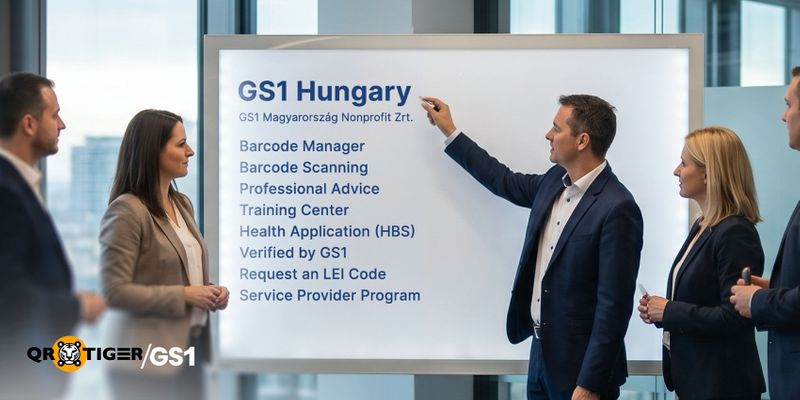
GS1 HU Services for Businesses
With a mission to help businesses identify, capture, and share information efficiently, GS1 HU offers a wide range of services designed to support companies across industries from retail and logistics to healthcare and financial services.
Barcode Manager
BarcodeManager is GS1 HU’s central platform for managing product barcodes and the data associated with them.
Through this tool, businesses can register and maintain their GS1-compliant product identifiers, ensuring that each item in their catalog is uniquely and correctly identified.
BarcodeManager streamlines the process of barcode allocation, making it easier for companies to onboard new products, update existing records, and stay compliant with international GS1 standards.
Whether you are a small business launching your first product line or a large enterprise managing thousands of SKUs, BarcodeManager provides the infrastructure to keep your product data organized and accurate.
Starting January 1, 2025, the use of the platform became mandatory for all their active partners (companies that have a valid GS1 license / company prefix).
Main reasons:
- To centralize and modernize data management.
- To ensure all GS1 members keep their product identifications, company data, and barcode information up-to-date in one centralized, cloud-based system.
- To improve data quality and traceability across the entire supply chain
- To prepare for future standards
Barcode Verification
The MO offers a barcode verification service to make sure barcodes are correct, easy to scan, and follow GS1 rules.
This service is useful for brand owners, packaging designers, and printers before products go to market. It also helps companies check barcode work made by outside suppliers or manufacturers.
They can check barcode types such as EAN, UPC, GS1-128, ITF-14, GS1 DataMatrix, and GS1 QR Codes.
Samples can be sent physically or digitally:
- Physical samples are fully checked for print quality, size, placement, and scan readability.
- Digital samples are checked for correct barcode structure and number use, but do not include a full quality report.
Results are usually ready within 5 working days and kept for 12 months. The yearly GS1 licence includes 5 barcode checks. Extra checks are available for an added fee.
Professional Advice
GS1 HU offers professional advisory services to help organizations understand which GS1 standards and tools are most relevant to their business needs.
Whether you are looking to implement GS1 identifiers for the first time, optimize an existing system, or expand into new markets, their team of experts provides personalized guidance.
Advisory sessions can cover topics such as barcode selection, data quality, regulatory compliance, and best practices for specific industries including retail, healthcare, and logistics.
Training Center
GS1 HU’s Training Center offers educational programs designed to build knowledge and capability around GS1 standards within your organization.
Courses are available for a range of audiences, from entry-level employees learning the basics of barcode use to supply chain managers seeking a deeper understanding of global data standards.
Training is offered in multiple formats, including in-person workshops, online modules, and tailored sessions for corporate teams.
By investing in GS1 training, businesses can improve compliance, reduce costly errors, and ensure their staff is equipped to work effectively within global supply chain ecosystems.
Health Application (HBS)
The Health Application, also known as HBS (Healthcare Barcode System), is a specialized GS1 service tailored to the needs of the healthcare and pharmaceutical industries.
Healthcare supply chains require exceptionally high levels of accuracy and traceability errors in product identification can have serious consequences for patient safety.
The solution enables hospitals, pharmacies, manufacturers, and distributors to use standardized GS1 identifiers for medicines, medical devices, and equipment.
This supports regulatory compliance, reduces the risk of counterfeit products, and enables full traceability from manufacturer to patient.
Verified by GS1
Verified by GS1 is a global service that allows businesses to confirm the accuracy of their product information in the GS1 registry.
When a product is verified, it receives a trusted mark indicating that its barcode and associated data have been validated against GS1 standards.
This helps build confidence among retailers, buyers, and consumers who rely on accurate product information when making purchasing decisions.
For businesses, being Verified by GS1 can open doors to new trading partners and platforms that require standardized, trustworthy product data as a condition of listing.
Request an LEI Code
GS1 HU helps organizations obtain a Legal Entity Identifier (LEI), a unique global code used to identify companies and organizations involved in financial transactions.
The LEI is increasingly required by regulators and financial institutions worldwide, particularly for businesses engaged in securities trading, reporting, and cross-border financial activity.
Companies can request and manage their LEI efficiently, benefiting from the organization’s expertise in identity and data standards.
Having an LEI in place supports transparency, regulatory compliance, and smoother access to financial markets.
Service Provider Program
The GS1 HU Service Provider Program is designed for technology vendors, consultancies, and solution providers that want to offer GS1-aligned services to their clients.
By joining the program, service providers gain access to official GS1 resources, training, and co-marketing opportunities, while being recognized as trusted partners within the GS1 ecosystem.
For businesses looking for implementation support, the program also serves as a directory of verified providers who have demonstrated competency in GS1 standards.
This creates a quality-assured marketplace that benefits both service providers and the businesses they serve.
Services for Healthcare
GS1 HU offers a broader portfolio of services specifically designed for healthcare organizations, including hospitals, clinics, medical device manufacturers, and healthcare distributors.
These services address the unique traceability, safety, and regulatory requirements of the sector, helping organizations implement end-to-end identification systems for patients, assets, locations, and products.
GS1 HU works closely with industry stakeholders and regulators to ensure its healthcare services align with both national requirements and international best practices such as those outlined by the EU Medical Device Regulation (MDR) and the UDI (Unique Device Identification) system.
Deposit Return System (DRS)
They help companies meet DRS barcode requirements by providing GTIN numbers, barcode standards, and guidance on correct GS1 use.
Support includes GTIN assignment, barcode management, number capacity checks, consulting, webinars, and barcode verification. The service also helps importers and manufacturers prepare products for DRS registration and market release.
GS1 Digital Link
GS1 Digital Link is one of the most forward-looking services offered by GS1 HU, enabling businesses to connect physical products to the digital world through a single, web-based identifier.
A GS1 Digital Link-enabled barcode or QR code can direct consumers, supply chain partners, or regulatory systems to a range of rich digital content such as product details, instructions, sustainability information, or authentication checks all from one scan.
As consumer expectations and regulatory requirements for product transparency continue to grow, GS1 Digital Link positions businesses to meet these demands while future-proofing their labeling infrastructure.
There are GS1 Partner solutions, like QR TIGER/GS1, if you prefer features not available in this service.
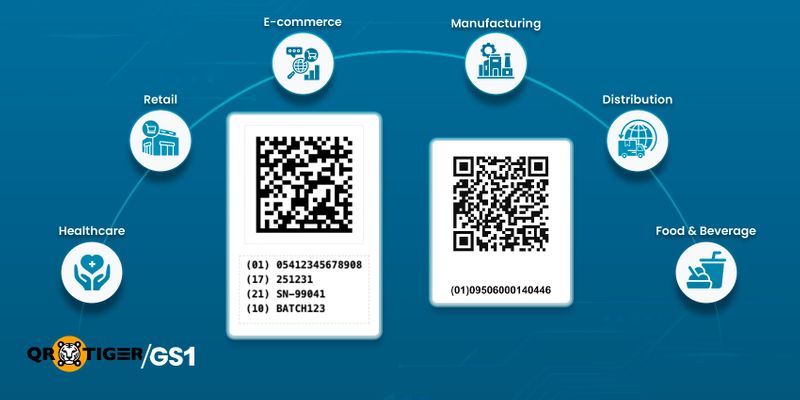
Application of 2D Barcodes Across Industries in Hungary
In 2023, GS1 launched a global initiative known as Sunrise 2027 to facilitate the transition from one-dimensional (1D) barcodes such as the EAN/UPC to two-dimensional (2D) barcodes at retail point-of-sale.
The initiative sets a global target date of 2027 for retailers and healthcare providers to ensure their scanning systems can read both traditional linear barcodes and new 2D symbols, such as QR codes and GS1 DataMatrix.
Unlike traditional barcodes, 2D codes can store far more information in a single symbol.
This makes it possible to do much more with one scan from tracking a product through the supply chain and verifying its authenticity, to managing stock, meeting sustainability reporting requirements, and even letting consumers access product information directly from their phones via the GS1 Digital Link standard.
Pilot programs and retail tests are already underway in over 48 countries, representing approximately 88 percent of global GDP.
Major retailers are updating their checkout systems and adjusting what they require from their suppliers all to be ready by 2027.
If the largest retailers in your category say they want 2D-ready products on their shelves, voluntary becomes effectively mandatory.
Healthcare
Custom solutions for GS1 partners that produce, distribute, or sell goods help improve patient safety with accurate data, meet regulatory requirements, and support more efficient and sustainable operations through transparent processes.
In the healthcare sector, 2D codes such as GS1 DataMatrix have been in use for prescription drugs since 2019. The code is scanned before medicine is dispensed to a patient in a pharmacy or hospital.
Retail & Consumer Goods
Retailers in Hungary and across Europe require GS1-compliant barcodes for shelf placement. As Sunrise 2027 approaches, retailers are updating their point-of-sale systems to accept 2D symbols, such as GS1 QR codes and DataMatrixes, in addition to traditional linear barcodes.
Consumer goods manufacturers working with GS1 HU are already building the capability to meet these retailer mandates ahead of the deadline.
Logistics & Supply Chain
Logistics and supply chain operators benefit from GS1's GLN, SSCC, and EPCIS standards to ensure seamless, error-free data exchange with trading partners.
A landmark example is the IDDA (Integrated Delivery by Digital Assistance) as discussed previously
The project reached a significant milestone with the completion of an eDelivery connectivity test, proving the successful implementation of the IDDA Access Point enabling AS4-standardized business message transportation, with blockchain solutions integrated to ensure the highest standards of transparency and reliability.
Regulations
Beyond Sunrise 2027, GS1 HU's members face a parallel regulatory shift: the EU Digital Product Passport (DPP). The DPP is a mandatory data structure that will simplify digital access to product-specific information related to sustainability and circularity, enabling B2B, B2C, and B2G data exchange.
It will be accessible via electronic means through the scan of an internationally standardized data carrier. The first DPPs will be fully operational and accessible through EU-prioritized products by February 2027.
GS1 standards for identification, automatic identification and data capture, and data sharing support the requirements of the EU's Ecodesign for Sustainable Products Regulation (ESPR).
Inspiring Success Stories
From small local producers to large-scale retailers, GS1's members share one thing in common: a story worth telling. Here are a few of the voices shaping the future of Hungarian commerce through the power of global standards.
Hungast Group: Food Services & Dietary Traceability
It is one of Hungary’s largest institutional catering providers, serving meals to schools, hospitals, and other public institutions. One of its biggest operational challenges emerged after the country introduced stricter nutrition and dietary regulations for public catering in 2015 (EMMI Decree 37/2014).
This significantly increased demand for specialized meals especially allergy-sensitive and medically required diets such as gluten-free meals.
Between 2015 and 2020, Hungast reported that the number of dietary consumers increased dramatically, which created pressure on its kitchens, packaging, and delivery processes.
To solve this, Hungast turned to GS1 HU in 2015 for help building a traceability system based on GS1 standards. Together, they designed a system where each reusable box carried a GS1 DataMatrix code containing a unique product identifier and delivery information.
Gottsegen György, Hungarian Institute of Cardiology: Medical Device Traceability
It is one of Hungary’s leading cardiovascular hospitals, handling complex procedures such as interventional cardiology, cardiac surgery, and heart transplants.
These procedures require expensive, highly specialized medical devices, stents, catheters, implants, and other critical supplies that often need to be available immediately, even when surgeries are unplanned.
Maintaining accurate stock records was difficult, especially when staff had to enter product information manually.
GS1 HU worked with the institute to introduce a GS1-based identification and traceability system for medical devices.
The implementation centered around UDI (Unique Device Identification) and GS1 barcodes, especially GS1 DataMatrix codes placed on medical devices by manufacturers. Through scanning, the hospital could automatically capture key device data.
This meant devices could be tracked from receiving, to storage, to actual use during surgery. According to the GS1 organization, GOKI was among the first hospitals in Hungary to adopt GS1 standards for tracking and managing medical devices in its warehouse and financial systems.

Driving Growth with Global Standards
GS1 Hungary occupies a quiet but critical role in the Hungarian economy. It connects local businesses to the global language of commerce, the barcodes, identifiers, and data standards that make modern supply chains function.
As the regulatory environment grows more complex, particularly with Sunrise 2027 and the EU Digital Product Passport reshaping how products are identified, labeled, and tracked, services are evolving from a back-office compliance function into a strategic business enabler.
In 2024/25, GS1 ratified 42 new standards and guidelines supported by a global community of over 800 industry companies.
For Hungarian companies or businesses operating in the country looking to compete in European and global markets, the question is no longer whether to engage with GS1 standards. It is how quickly they can build the capabilities to make the most of them.
FAQs
How do I get a barcode for my product in Hungary?
To get an official GS1 barcode for your product in Hungary, you need to register with GS1 HU, which is the sole authorized source for GS1 company prefixes, which are used to create the product identification codes; GTIN
Using unofficial or third-party barcode numbers can cause problems with retailers and trading partners.
Is GS1 HU a government agency?
No. It is a nonprofit private company and operates independently of the Hungarian government. It is part of the global GS1 network, a neutral, not-for-profit international organization headquartered in Brussels, with its HU member organization office located in Budapest.
Do I need to register with GS1 HU to sell products in Hungary?
If you are a business operating in Hungary that manufactures or distributes physical products sold through retail channels domestically or for export, you will need a valid GS1-issued GTIN on your products to meet retailer requirements.
You do not need to register with GS1 HU; product codes registered by any GS1 Member Organization are valid.
If your company is based in Hungary and does not already have a GS1 prefix, GS1 HU is the appropriate place to register.

DISCLAIMER: We acknowledge that GS1, as well as the materials, proprietary items, and all related patents, copyright, trademark, and other intellectual property (collectively, “intellectual property”) relating to its use, are the property of GS1 Global, and that our use of the same shall be in accordance with the conditions provided by GS1 Global.
