
GS1 Japan: Powering Japan's Supply Chain

Every time you scan a product at a convenience store checkout or a nurse scans a medication barcode before administering it to a patient, a quiet but powerful system is at work.
Behind those small black-and-white lines is a global network of standards and in Japan, the organization ensuring those standards are maintained and implemented successfully is GS1 Japan (JP).
From the humble beginnings of tracking soy sauce and soft drinks through Japan's early barcode trials in the 1970s, GS1 JP has grown into one of the most important bodies shaping how goods, data, and health products move across the country and the world.
Today, GS1 JP sits at the intersection of commerce, technology, healthcare, and regulation.
Contact Information
Address:9th Floor, Shin Aoyama Building East,
1-1-1 Minami Aoyama, Minato-ku, Tokyo, Japan
Inquiry Contact Form: https://www.gs1jp.org/about/contact.html
The organization has different phone numbers and email addresses for specific types of questions. These contact details are available on their website.
Table of Contents
- What is GS1 JP?
- Collaborations and Supported Campaigns
- GS1 JP Services for Businesses
- Application of 2D Barcodes Across Industries in Japan
- Inspiring Stories from GS1 JP
- Building Smarter Supply Chains with GS1 JP
- Frequently Asked Questions
What is GS1 JP?
GS1 JP is the Japanese member organization of GS1, a global non-profit body that develops and maintains global standards for identifying products, locations, and assets and sharing information across supply chains.
It was founded in 1972, initially called the Distribution System Research Institute (DSRI), primarily through the efforts of Japan's Ministry of International Trade and Industry (now the Ministry of Economy, Trade and Industry, or METI).
Its original role was to study and promote standardized product codes for the apparel and grocery industries. As barcode systems became widely used in Europe and the United States, GS1 JP helped introduce those global standards to Japan.
A landmark moment came in 1978, when GS1 JP was accepted as a member of the EAN Association becoming the first member organization outside of Europe.
Since then, GS1 JP has promoted a wide range of global standards in Japan, including:
- Global Trade Item Numbers (GTINs) and barcodes used at point-of-sale (POS) terminals
- Electronic Data Interchange (EDI) standards for business communication
- RFID and EPC standards for automated tracking
- 2D barcode standards, including GS1 QR codes and Data Matrix
- Product data management through the GS1 JP Data Bank (GJDB)
Today, GS1 JP serves businesses of all sizes from small manufacturers applying for their first barcode to major hospital networks implementing drug traceability systems.
Collaborations and Supported Campaigns
A significant part of its work involves partnering with government bodies, industry groups, retailers, and international organizations to pilot and scale new initiatives.
Japan's Ministry of Economy, Trade and Industry (METI)
A collaborative effort between GS1 Japan and the country's Ministry of Economy, Trade and Industry (METI) is pushing the boundaries of modern retail technology.
One of their most notable joint initiatives put 2D barcode-based item tracking and dynamic pricing to the test in a real supermarket setting.
For just over a month from late January to late February 2023 Maizuru Carrot supermarket in Karatsu, Saga Prefecture, served as the testing ground.
It marked a first for Japan: a live, point-of-sale trial using 2D barcodes built on GS1 standards, carried out with the backing of the Japanese government.
SATO Corporation (a global auto-ID and labeling solutions provider) took the lead on the technology side, deploying and managing the dynamic pricing system along with the electronic shelf tags that made it all work.
The trial brought together a range of organizations the Japan Research Institute, Imamura Trading, West Japan Ishida, Maizuru Carrot, GS1 JP, and SES-imagotag Japan all working toward a shared goal: turning pilot results into real, marketable tools.
The overall goals were:
- Improve product turnover: The system helps sell items with short expiry dates by applying gradual discount steps instead of one big markdown. This encourages customers to choose fresher products at better prices.
- Understand customer behavior: The trial helps study how shoppers react to digital pricing. Most shoppers chase visible discounts. If prices are equal, many still prefer fresher items.
- Reduce employee workload: Stores can save time and labor because they no longer need to manually change price tags or add discount stickers in-store.
These results are helping shape what smarter, less wasteful retail could look like across Japan.
Ryutsu BMS: A Cross-Industry EDI Standard
Every time a retailer places an order with a supplier or confirms a delivery, data has to move between their systems.
Standardized Electronic Data Interchange or EDI is the infrastructure that makes this possible, allowing businesses to exchange documents like purchase orders, invoices, and shipping notices in a structured, machine-readable format.
When that standard is shared across an entire industry, companies no longer need to translate between systems or maintain separate processes for every trading partner. Everyone speaks the same language.
That shared language, for Japan's retail sector, is Ryutsu BMS.
Before Ryutsu BMS came along, Japan's distribution industry ran on a fragmented patchwork of incompatible EDI systems, each retailer operating on its own format, including the aging JCA Protocol.
For suppliers, this meant duplicating effort at every turn: customizing processes, maintaining separate setups, and absorbing the costs that came with it. Data moved slowly, errors crept in, and visibility across the supply chain was limited.
Launched in April 2007, Ryutsu BMS was the result of a broad industry alliance — major retailers, wholesalers, manufacturers, Japan's Ministry of Economy, Trade and Industry (METI), and GS1 JP all had a hand in shaping it.
Rather than any one company setting the rules, the standard emerged from consensus, making it practical and accessible for businesses of all sizes.
At its core, Ryutsu BMS is an XML-based system that covers the full arc of a commercial transaction from order placement through to payment while standardizing both message formats and communication protocols like AS2 and JX.
A supplier that adopts it once can immediately transact electronically with any retailer that uses it, without additional customization.
GS1 JP Services for Businesses
GS1 Japan helps businesses improve supply chain management, product traceability, and data quality through its standards and services.
GS1 Identifier Codes
To build a GS1 identification key, an organization must become a member of GS1 and obtain a GS1 Company Prefix (GCP).
This prefix forms the basis of all GS1 identification keys, and there are 11 such keys in total, allowing organizations to connect physical events with related information throughout the supply chain.
GS1 JP Cross-Industry Registry
The GS1 Japan Cross-Industry Registry is a product information platform that helps retailers and wholesalers find product data from multiple industry databases using a GTIN (JAN code).
When a GTIN is searched, the registry collects product information from participating databases and converts 56 core data fields into a common format.
Industry-specific data can also be shared in its original format when needed. This makes it easier for businesses to access consistent product information from different sources.
Because the data comes from industry databases maintained by brand owners and other data providers, retailers and wholesalers can spend less time collecting, checking, and correcting product information. This helps reduce errors and improve efficiency across the supply chain.
The service entered production operation in April 2026 as part of a joint initiative by GS1 Japan, Japan Infolex (JII), and Planet to improve how product information is shared across Japan's supply chain.
According to project materials presented through a Ministry of Economy, Trade and Industry (METI) working group, businesses spend an estimated 300,000 person-months each year exchanging, checking, and correcting product data.
The GS1 JP Cross-Industry Registry, launched in April 2026, allows brand owners to register accurate product data once and share it with retailers and wholesalers through a single platform.
When a GTIN (JAN code) is searched, the system gathers data from multiple connected databases and converts 56 standard data fields into one unified format, while industry-specific information can also be shared in its original format.
This gives retailers and wholesalers direct access to brand-owner-verified product data, reducing manual data entry, errors, and operational costs.
The registry was developed by GS1 JP in partnership with Japan's Ministry of Economy, Trade and Industry, Japan Infolex, and Planet to address a long-standing challenge in Japan's supply chain: the inconsistent exchange of product information between manufacturers, wholesalers, and retailers.
Because each company relied on its own systems and processes, businesses spent enormous amounts of time and money checking and correcting product data, a burden the Ministry of Economy, Trade and Industry estimated at around 300,000 person-months of labor every year.
JICFS/IFDB JAN Code Integrated Product Database
JICFS/IFDB (JAN Item Code File Service / Integrated Flexible Database) is a centralized database system operated that manages JAN codes and related product information.
Since its launch in 1988, it has been an important product information system for Japan’s retail and distribution industry.
The database is widely used for POS systems, receipt printing, shelf labels, inventory management, and business documents.
When manufacturers register product information in connected industry databases, the data is automatically shared with JICFS/IFDB.
This means businesses only need to register their product information once for it to be distributed across linked systems.
GS1 JP has also started moving product registration services to the newer GJDB Product Information platform, although JICFS/IFDB continues to operate during the transition.
Data Bank Services
GS1 Japan provides Data Bank services that help businesses create, register, and maintain GS1 identification keys while sharing data with GS1 systems and trading partners.
Product Information Data Bank: Launched in October 2019, this service helps small and medium-sized brand owners manage GTINs and product data.
Companies with a GS1 Company Code can register product information, create and manage GTINs (JAN codes), and download barcode images. Check digits are calculated automatically, and registered data is shared with related GS1 databases both in Japan and internationally.
Barcode image creation is free for up to 10 items per company; fees apply from the 11th item onward.
Business Operator and Location Information Data Bank: The service helps businesses register and manage Global Location Numbers (GLNs) for offices, warehouses, stores, distribution centers, and other locations.
Using GLNs helps businesses know exactly where products, orders, invoices, or shipments should go
Check digits are calculated automatically, and registered GLN data is shared with related GS1 Japan services and trading partners.
Verified by GS1
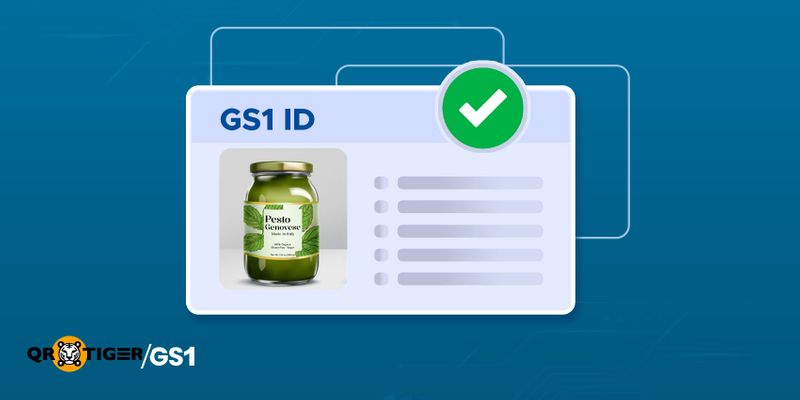
Verified by GS1 is a service that gives users access to the GS1 Registries, allowing them to look up GS1 identifiers and view information about products, companies, and locations.
The information is provided directly by the owners of those GS1 identifiers. This helps brand owners, retailers, online marketplaces, and government agencies confirm a product, company, or location and identify who owns a GS1 identifier.
However, GS1 confirms that the information has been submitted by the identifier owner but does not independently check every detail for accuracy.
Users can search information registered in the GS1 Registry Platform by entering a GTIN or another GS1 identifier. Depending on the available records, results may include the product name, brand name, quantity, product category, product image, and country of sale.
GS1 Company Code Information Verification Service
The service helps registered GS1 JP members look up company code information.
It offers two search options:
- Company Code Search: Search by GTIN or company name to view assigned company codes, basic company details, and the primary GLN.
- Bulk GTIN Search: Upload a CSV file containing up to 1,000 GTINs to retrieve related company information and download the results.
Unlike Verified by GS1, which is a public global tool for searching GS1 identifier data, the Company Code Information Confirmation Service is limited to company codes issued in Japan. It helps members check and confirm company code details including bulk searches.
 Application of 2D Barcodes Across Industries in Japan
Traditional 1D barcodes and those familiar striped lines have served Japanese commerce well for over four decades.
But they have limits: they can store only a small amount of information, usually just a product identifier.
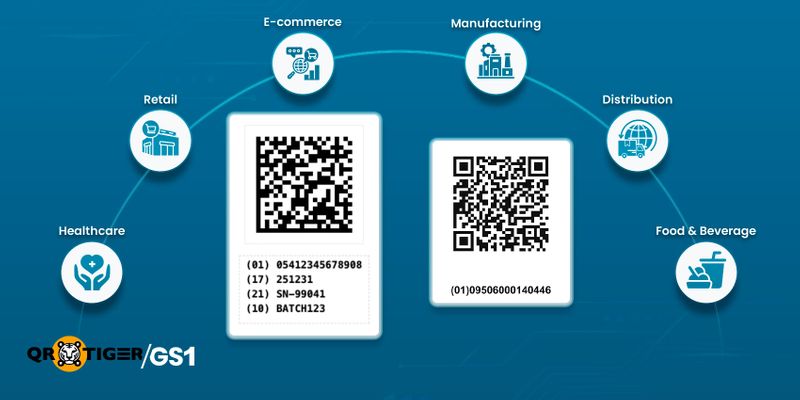
2D barcodes, such as GS1 QR codes and Data Matrix codes, can store far more including lot numbers, expiry dates, serial numbers, and web links all in a compact, scannable format.
GS1 JP is at the forefront of rolling out these technologies across multiple sectors preparing for 2027.
Sunrise 2027 is a global GS1 initiative calling for all retail point-of-sale systems worldwide to be capable of reading 2D barcodes by the end that year. It represents a fundamental shift in how product information flows from manufacturer to consumer.
For brands, Sunrise 2027 means having the option to add 2D barcodes to product packaging and ensuring QR codes are formatted to GS1 standards and include the product's GTIN.
For retailers, it means upgrading POS scanners and back-end software to read and process the richer data these codes carry.
Healthcare
The healthcare sector has been one of the most active adopters of GS1 standards in Japan.
GS1 DataMatrix codes are used on pharmaceutical products and medical devices to encode the GTIN, batch/lot number, expiry date, and serial number in a compact format that can be scanned on even small packaging or directly on surgical instruments.
In hospitals such as Kyoto Second Red Cross Hospital and the University of Fukui Hospital, GS1 standards have been implemented for hands-free picking in pharmacies, integrated sterilization management of surgical instruments, and medication administration tracking directly reducing errors and improving patient safety.
GS1 DataMatrix also enables hospitals to seamlessly integrate barcode data with Electronic Health Records (EHR) systems, saving time on manual data entry and reducing transcription errors.
Food & Beverage / Fresh Produce / Agriculture
Food safety and waste reduction are two of the most pressing challenges for Japan's food industry, and GS1 standards are playing a growing role in addressing both.
GS1 JP has worked with food manufacturers and supermarkets to promote source marking the practice of manufacturers printing barcodes directly on product packaging rather than having retailers apply their own labels.
Guidelines have been published for raw materials suppliers, precooked food makers, and fresh produce handlers to standardize GTIN assignment across the supply chain.
As previously discussed, a government-backed trial supported by GS1 JP GS1 DataMatrix barcodes carrying expiry date data were used alongside electronic shelf labels to automatically reduce prices on food items approaching their sell-by date.
Retail & Consumer Goods
2D barcodes in retail help both stores and shoppers. For stores, they make checkout faster because items scan more easily. They also help with stock control by tracking expiry dates, which supports FIFO (first in, first out) so older stock is sold first.
Stores can also use them for gradual discounting on items close to expiry, helping reduce waste and improve sales.
For shoppers, a single scan on a phone can show ingredient lists, allergy details, nutrition facts, sustainability info, and promotions, all without changing the packaging size.
Logistics & Supply Chain
In logistics and distribution, 2D barcodes improve speed and accuracy in moving goods. A key standard is GS1 Scan4Transport (S4T), which stores shipment data in a single barcode placed on parcels, pallets, or freight labels.
It can include shipment IDs, delivery addresses, routing details, handling instructions, and tracking references. This reduces the need for separate paperwork and manual data entry.
The Serial Shipping Container Code (SSCC) remains the main identifier but can now be combined with additional shipment data in one scan.
This improves logistics speed and reliability. Parcels scan faster at checkpoints with less manual input. If tracking systems fail, the delivery data is still stored inside the barcode and can be read directly.
They also scan better when labels are damaged or partly unreadable and can link to online systems for full shipment details when connectivity is available.
This reduces tracking errors and keeps visibility steady from dispatch to delivery.
Inspiring Stories from GS1 JP
These examples highlight how Japanese businesses use GS1 standards to improve traceability, optimize operations, and strengthen supply chain visibility.
Seven-Eleven Japan and the POS Revolution
When Seven-Eleven Japan adopted POS systems at all 1,650 of its stores in 1982, it was a watershed moment for GS1 standards in Japan.
GS1 JP had been instrumental in building the groundwork for this adoption, running seminars across Japan, working with manufacturers on source marking, and cooperating with early retail pioneers on practical demonstrations.
Today, the chain has grown, all running on barcode-based POS, a testament to the enduring impact of standards established.
Kyoto Second Red Cross Hospital
Kyoto Second Red Cross Hospital implemented hands-free scanning of GS1-encoded medication barcodes. They were able to dramatically reduce manual picking errors, improve inventory visibility, and create a traceable record of every medication dispensed.
The initiative demonstrated how GS1 standards translate directly into improved patient outcomes, not just operational efficiency.
Seiyu: Standardizing EDI Across 593 Vendors
Seiyu GK, one of Japan's major supermarket chains, undertook a major transition from its legacy EDI protocol to the standardized Ryutsu BMS system.
By the end of fiscal year 2014, Seiyu had successfully connected 593 vendors to the new standard.
On Seiyu's end, the most immediate win was time: order processing that once dragged on for hours became far quicker.
For suppliers, the shift removed a longstanding issue; previously, each retailer's system demanded its own setup, but the standardized format meant one system worked across the board.
Building Smarter Supply Chains with GS1 JP
At its core, GS1 Japan’s mission is to make trade simpler, safer, and more efficient by ensuring that every product, location, and transaction can be uniquely identified and communicated in a language understood by partners anywhere in the world.
GS1 standards contribute to a more resilient and transparent supply chain, one better equipped to handle food safety incidents, drug recalls, or supply disruptions with speed and accuracy.
Over more than five decades, it has grown into a cornerstone of Japan's commercial and healthcare infrastructure, quietly ensuring that the barcodes on millions of products tell the right story, to the right system, in the right language.
Whether you are a food manufacturer seeking your first JAN code, a hospital administrator implementing drug traceability, or a retailer preparing for the 2D barcode transition, GS1 JP is the authoritative body that makes those connections possible.
 Frequently Asked Questions
What is a JAN code, and how is it different from a GTIN?
A JAN (Japanese Article Number) code is Japan's version of the internationally recognized GTIN (Global Trade Item Number) . It uses country prefix codes 45 or 49 to identify Japanese manufacturers.
In practice, JAN codes are GTINs; they are fully compatible and recognized globally.
How does a business register for a GS1 Company Prefix in Japan?
Businesses can register for a GS1 Company Prefix (GCP) through GS1 JP’s website and register your email address to start the online application.- Check your email for a link and fill in your company details.
- Pay the registration fee (based on your company's annual revenue; payable for 1 or 3 years).
- Once payment is confirmed, GS1 Japan will email your GS1 Company Prefix within 3 business days and mail a registration certificate.
The GCP is the unique number that forms the foundation of a company's product barcodes (GTINs).
GS1 JP updated its GCP renewal system in 2021 to improve management and ensure GTIN integrity, particularly for the growing e-commerce sector.
Japan's GS1 prefixes begin with 49 or 45.
Does Sunrise 2027 affect Japanese businesses?
Sunrise 2027 is a global GS1 initiative requiring retail point-of-sale systems worldwide to be capable of reading 2D barcodes by the end of 2027.
Manufacturers are indirectly impacted. There is no strict requirement, but many will shift to 2D barcodes because retailers and supply chains will increasingly expect richer product data like batch and expiry details.
Those who stay on traditional barcodes can continue operating, but may face friction with partners over time.
Retailers are more visibly affected.
Large chains are already preparing POS systems that can scan 2D barcodes. Smaller retailers will adopt more slowly due to cost, system upgrades, and training needs.
Can small businesses benefit from GS1 JP?
Whether small businesses benefit from GS1 JP really depends on where and how they sell.
A small business operating mainly through its own shop, local market, personal website, or direct courier shipping generally doesn't need to register GS1. Barcodes aren't a requirement in those situations.
It becomes more relevant when products enter retail stores, online marketplaces, or export channels, where trading partners typically expect standardized barcodes from GS1.

DISCLAIMER: We acknowledge that GS1, as well as the materials, proprietary items, and all related patents, copyright, trademark, and other intellectual property (collectively, “intellectual property”) relating to its use, are the property of GS1 Global, and that our use of the same shall be in accordance with the conditions provided by GS1 Global.
