
GS1 Pakistan: The Country’s Backbone of Modern Supply Chains

GS1 Pakistan (GS1 PK) is Pakistan's official member of GS1 Global, the international body that sets standards for how products are identified and tracked worldwide.
As the country's licensed provider of GS1 standards, GS1 PK helps operating businesses from small shops in Lahore's Liberty Market to large manufacturers in Karachi's SITE industrial area use barcodes and traceability systems that are recognized globally.
Their major industries, including textile exporters in Faisalabad, pharmaceutical companies regulated by the Drug Regulatory Authority of Pakistan, and Fast-Moving Consumer Goods (FMCG) brands sold through retailers, rely on GS1 standards to improve efficiency and meet local and international requirements.
With GS1 standards, businesses can label and track their products in a way that is accepted by global retail platforms, healthcare systems, and export markets, making it easier to trade abroad and comply with regulations.
Contact Information
Address: 2nd Floor, Azzainab Court, Campbell Street, 74200 Karachi, Pakistan
Contact No. : +92-21-3221 5844
Email: info@gs1pk.org
Table of Contents
Collaborated and Supported Local Campaigns
GS1 PK has steadily expanded its presence through strategic initiatives and partnerships to promote global standards across the country’s industries and businesses.
These efforts include industry outreach, collaboration with government agencies, educational programs, and alignment with the broader goals of GS1.
The Track & Trace System
The Track & Trace System (TTS)* is a nationwide digital monitoring system introduced by Pakistan’s Federal Board of Revenue (FBR).
It tracks products such as cigarettes, sugar, cement, and fertilizer from production through the supply chain using unique identification numbers (UIMs), barcodes, and scannable identification codes compliant with GS1 standards.
The system helps the government verify tax compliance in real time, reduce tax evasion, and curb the sale of illicit or untaxed products.
Pakistan’s TTS framework is currently implemented through licensed technology providers, including the Authentix-led consortium and its TransAct™ platform, which supports product authentication, monitoring, and compliance enforcement.
The system works by applying unique tax stamps and identification codes directly on products during production, allowing FBR to digitally monitor production volumes and track regulated goods throughout the supply chain.
*Note: This link is only accessible within Pakistan or through a VPN set to a Pakistan server.
GS1 Standards Implementation in Healthcare & Pharma
In 2012, counterfeit and unsafe medicines caused the deaths of patients at the Punjab Institute of Cardiology, including cases linked to ISOTAB and Tyno Syrup.
In response, the Pakistani government worked with the United States Agency for International Development, Gavi, the Vaccine Alliance, and GS1 to create a supply chain management system aimed at preventing counterfeit medicines.
The Drug Regulatory Authority of Pakistan (DRAP) also introduced new requirements, including:
- Manufacturers, exporters, distributors, and other responsible parties must have a valid GS1 Company Prefix.
- Barcode labels must follow GS1 standards and DRAP packaging requirements.
- Manufacturers must store GS1-standard product information in their own databases before releasing medicines to the market.
- Exported products must comply with the rules of the destination country.
Pakistan Pharma Vision 2030
Pakistan Pharma Vision 2030 is an industry-focused event series that aims to improve Pakistan’s pharmaceutical sector. It is held alongside events like the Pharma Asia International Exhibition and Conferences.
GS1 PK plays an important supporting role by promoting standardization, serialization, and traceability. Its representatives take part in discussions about GS1 2D Data Matrix, serialization, and track-and-trace systems.
The event also serves as a platform for collaboration between industry leaders and regulators, helping encourage the adoption of GS1 standards to support Pakistan’s pharmaceutical quality and export goals.
GS1 Pakistan Services for Businesses
GS1 PK provides essential services to help businesses optimize operations, meet regulatory requirements, and compete in global markets.Getting Barcodes
There are ten steps in obtaining and implementing barcodes.
The steps cover:
Step 1: Obtaining a GS1 Company Prefix
Step 2: Assigning GS1 Identification Numbers
Step 3: Choosing a Barcode Printing Method
Step 4: Determining the Scan Environment
Step 5: Choosing the Barcode Symbol Type
Step 6: Choosing the Size of a Barcode
Step 7: Compose the Barcode Text
Step 8: Choosing the Color of the Barcode
Step 9: Choosing the Barcode Location
Step 10: Barcode Quality Check
Barcode Estimator & Check Barcodes Fees
GS1 PK’s Barcode Estimator tool helps businesses calculate the number of Global Trade Item Numbers (GTINs) they need and provides a clear breakdown of membership fees.
Each product variation such as different sizes, colors, flavors, or packaging types needs its own unique GTIN. The tool helps businesses plan and budget correctly from the beginning.
GS1 PK’s pricing is based on annual business turnover, making GS1 standards accessible to both small businesses and large companies.
Verified by GS1
Verified by GS1 is a global service that allows companies, marketplaces, and government agencies to quickly check and confirm a product’s GTIN, brand owner, or GS1 location number (GLN).
For Pakistani exporters selling through platforms such as Amazon, Noon, or Carrefour, having product information registered in the GS1 database is becoming increasingly important.
Verified by GS1 helps build trust, reduce product listing disputes, and support anti-counterfeiting efforts. Larger businesses can also use batch searches and API integrations to verify large amounts of product data more quickly.
Barcode Verification
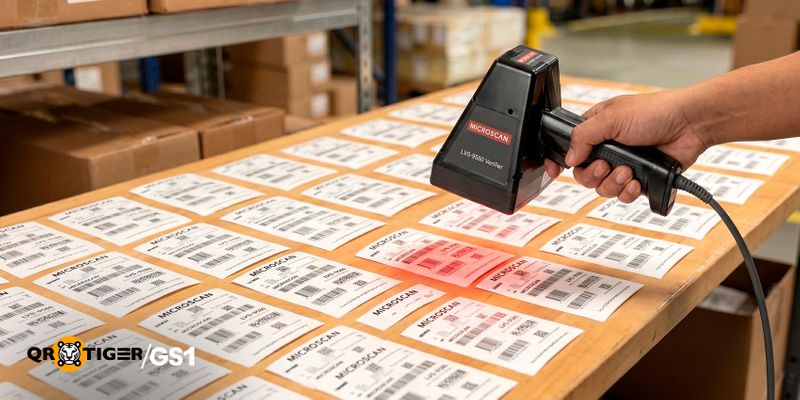
This service checks the quality of printed barcodes using special testing equipment at GS1 PK’s office.
The barcode is scanned several times from different angles and given an ISO quality grade from A to F (or 4 to 0).
Many major retailers require a minimum passing grade before accepting a product. Common barcode problems include missing quiet zones, short barcode height, poor color choices, low print quality, and packaging materials that affect scanning.
Update Your GS1 Identifier Registration
This service is designed to keep a company's global supply chain registry accurate when they rebrand, moves, or merges.
Because international retailers and customs cross-reference barcodes against the central GS1 database to authenticate products, this data must remain current to prevent shipment rejections.
Even though it is important, their website has technical problems because some links do not work properly, and some page layouts were never finished:
- Address Updates: Faulty link. Loops users back to the homepage instead of a profile form.
- Name Changes: Instructional pop-up. Requires a manual download of the Company Name Change Form to be uploaded later with legal proof.
- Mergers & Acquisitions: Template error. Opens a pop-up mistakenly copied from GS1 US, but clarifies that transfers require a Transfer Request Form and a signed Release Letter from the seller.
- Registration Verification ("I'm not sure"): External redirect. Routes users completely off the site to the global GS1 US GEPIR tool for manual status searches.
Education & Training
Because GS1 protocols are global supply chain standards, this page routes local members directly to the centralized GS1 Global Learning Zone.
Linking to the master international platform ensures Pakistani businesses receive the exact same standardized curriculum and certifications used by trading partners worldwide.
Access to the GS1 e-Academy is limited to authorized GS1 network members only.
You may register if you fall under one of these categories:
- GS1 employees: Register using your official business email and enter the official organization name during signup.
- Employees of registered businesses: The specific GS1 office where your company is registered will provide your access details.
Product Photography
Product images are just as important as barcodes for successful sales. GS1 PK’s product photography page lacks clear service details.
It mainly lists benefits like ecommerce readiness and stylized images, but does not explain how the service works.
Based on how similar GS1 offices operate globally, the process would work like this:
- Businesses submit products or samples for photography
- Images are captured following GS1 product image standards
- Final files are linked to the product’s GTIN for easier retailer and eCommerce uploads
- Some services may also include stylized marketing photographs
- Certain GS1 organizations also help upload images to retailer systems or registries
Check whether this is the correct service workflow. Contact them directly for accurate service details.
Application of 2D Barcodes Across Industries in Pakistan
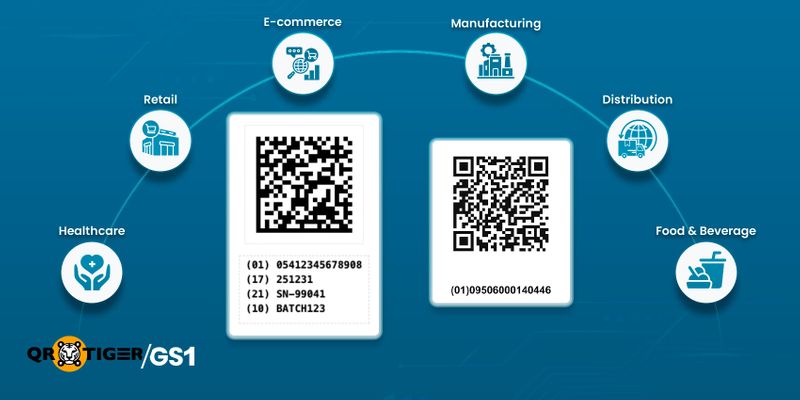
2D barcodes, such as QR codes and DataMatrix symbols, can store much more information than traditional 1D barcodes. This allows better product traceability, stronger consumer engagement, improved regulatory compliance, and greater supply chain visibility.
GS1 PK is actively helping its members prepare for this transition across different industries.
GS1’s Sunrise 2027 initiative is a global effort to make sure retail checkout systems can scan and process 2D barcodes by the end of 2027.
By then, stores worldwide are expected to support both traditional 1D barcodes and newer 2D barcode formats.
For brands, Sunrise 2027 means being able to add GS1 Digital Link 2D barcodes to packaging. For retailers in Pakistan, it involves upgrading scanners and POS systems to read 2D barcodes and training staff to use the new technology.
GS1 PK is supporting operating businesses through webinars, member programs, and partnerships with solution providers to help them prepare for the 2027 transition.
Healthcare
The healthcare industry is one of the most important areas where GS1 standards are used. Medication errors, counterfeit medicines, and inefficient supply chains can put patient safety at risk.
GS1 barcodes, especially the GS1 DataMatrix format, are the global standard for labeling medicines, medical devices, and healthcare products.
Using GS1 healthcare standards helps:
- Give pharmaceutical products unique GTIN identifiers, reducing medication errors.
- Track medicines throughout the supply chain, helping prevent counterfeit drugs.
- Meet international requirements for exporting medicines to markets like the European Union, the United States, and Gulf countries.
- Allow hospitals to scan medicines at the point of care to confirm the correct drug, dose, and patient before treatment.
GS1 PK takes part in this initiative to help the pharmaceutical industry meet local and international regulatory requirements.
Food & Beverage / Fresh Produce / Agriculture
Pakistan is one of the world’s major agricultural producers, known for products such as wheat, rice, sugarcane, cotton, mangoes, citrus fruits, and dairy.
In this sector, GS1 standards help provide the traceability that food safety regulations and international buyers now require.
Using 2D barcodes in Pakistan’s food and agriculture industry offers several benefits:
- Better traceability from farms to consumers using GS1 Global Location Numbers (GLNs) and GTINs.
- Compliance with food safety rules such as the U.S. Food Safety Modernization Act (FSMA) Rule 204, which is important for exporters supplying American markets.
- Easier tracking of freshness and expiry dates through the supply chain.
- Quick access to allergen and nutritional information through QR code scans.
- Can help protect against counterfeit products for premium exports
Retail & Consumer Goods
Retail is where the GS1 barcode was first widely used, and it remains the industry where GS1 standards are most common.
Supermarkets, hypermarkets, e-commerce platforms, and other modern retailers rely on GS1 barcodes for products scanned at checkout.
For fast-moving consumer goods industry, GS1 2D barcodes provide several benefits:
- 2D barcodes allow consumers to access product details, recipes, loyalty programs, and brand information with a smartphone scan.
- Accurate GS1 barcodes improve inventory tracking, shelf management, and automatic restocking in retail stores.
Logistics & Supply Chain
As Pakistani exporters connect more with global supply chains, GS1 PK helps provide the standards needed for better supply chain visibility and compliance with international trade requirements with GS1 2d barcodes.
Scan4Transport is a global standard for placing transport data on logistics labels. It supports companies across the entire delivery process from first mile (the movement of goods from the point of origin to a distribution hub) to last mile (the final delivery from the distribution hub to the end customer's door).
This helps companies meet growing customer demands.
The barcode, either a GS1 DataMatrix or GS1 QR code, can store data such as delivery addresses and delivery instructions, helping manage shipments of cartons, pallets, satchels, and other freight more efficiently.
Driving Growth with Global Standards
GS1 Pakistan occupies a quiet but critical position in Pakistan's commercial infrastructure.
As the country’s integration into global supply chains deepens, driven by e-commerce growth, pharmaceutical regulation, and modern retail expansion, the organization's role in providing trusted, globally recognized product identification becomes ever more central.
For any operating business that manufactures physical goods, operates in retail or healthcare, or aspires to sell internationally, GS1 PK is not merely a useful resource; it is the authoritative gateway to the global language of commerce.
Understanding its standards, its services, and the legitimate use of GS1 barcodes is a prerequisite for operating credibly in today's interconnected marketplace.
 FAQs
FAQs
Does my business in Pakistan need to join GS1 Pakistan to get a barcode?
Businesses that specifically want barcodes with Pakistan’s 896 prefix must obtain them from GS1 PK, the only authorized provider of 896-prefix numbers.
However, products sold in Pakistan do not have to use an 896-prefix barcode. Retailers and e-commerce platforms also accept other valid international barcode prefixes.
What matters most is that the barcode is genuine and globally unique, not the country prefix itself. Businesses should still confirm barcode requirements with their retail or online sales partners before choosing a provider.
Do I need a GS1 barcode to sell on Amazon, eBay, or other online platforms?
No, you do not always need a GS1 barcode to sell online. It depends on what you are selling and where you sell it. Factory-made products from big brands usually need them. Handmade, custom, vintage, or your own private brand items often do not.
- Amazon: You must have a verified GS1 barcode. You can only skip this if you apply for and get special permission from Amazon for unbranded or custom items.
- eBay: You do not need a barcode if your item does not have one. You can just leave the field blank or choose "Does Not Apply."
- Etsy: Barcodes are not required. Since the site is only for handmade, vintage, and craft items, you do not need retail codes.
- Shopify: You do not need a barcode to build your store and sell items. However, if you want to link your products to Google or Facebook ads, those ad networks will ask for a code or a tag, saying the item has no code.
Always be sure to review the specific product identifier guidelines for whichever platform you plan to list your products on, as policies and category rules change frequently.
Are GS1 barcodes mandatory in Pakistan?
GS1 barcodes are increasingly mandated by trading partner requirements rather than Pakistani domestic law alone. International retailers, e-commerce platforms, and pharmaceutical markets require GS1-compliant product identification.
Additionally, Pakistan's regulatory alignment with international standards particularly in pharmaceuticals and food safety is progressively creating domestic requirements as well.
Does a barcode contain product information like price or description?
Generally, no. Traditional retail barcodes, such as EAN-13 barcodes, mainly store a unique product number called a GTIN.
Product details like the name, price, description, and images are stored separately in a database. When the barcode is scanned, the system uses the GTIN to find and display that information.
This means a standard barcode mainly works as an identifier, not as a container for detailed product data.
However, newer 2D barcodes such as QR codes and GS1 DataMatrix symbols can store much more information.
Using GS1’s Digital Link standard, a single scan can provide access to traceability data, sustainability information, product authentication, and other digital content.

DISCLAIMER: We acknowledge that GS1, as well as the materials, proprietary items, and all related patents, copyright, trademark, and other intellectual property (collectively, “intellectual property”) relating to its use, are the property of GS1 Global, and that our use of the same shall be in accordance with the conditions provided by GS1 Global.
