
GS1 Portugal: Standards Powering Sustainable Supply Chains

Portuguese industries rely on accurate product data and reliable traceability to keep supply chains efficient, sustainable, and transparent. GS1 Portugal (PT) supports businesses by providing guidance on global GS1 identification standards, including GTIN (Global Trade Item Number) and EPC-based systems such as RFID.
These standards and tools enable businesses to improve efficiency, reduce errors, and stay compliant with local and global regulations.
This blog discusses various ways GS1 Portugal helps businesses improve product data management. It also helps businesses explore the recent opportunity to adopt 2D barcodes for product and logistics identification.
Table of Contents
What is GS1 Portugal?
GS1 PT was founded in 1985 as CODIPOR, the Portuguese Association for Product Identification and Coding. In April 2005, CODIPOR joined GS1 AISBL, the global standards organization. From then on, it became GS1’s official representative in Portugal.
Being part of the global GS1 network, the local member organization (MO) provides guidance, training, support, and tools to implement GS1 standards across the country.
This neutral, non-profit entity issues GS1 Company Prefixes that begin with 560. It has served over 8,000 companies to help improve efficiency and transparency across value chains.
Contact information:
Address: Estrada do Paço do Lumiar, Campus do Lumiar, Edifício K3, 1649-038 Lisbon, Portugal
Contact no: +35 1 21 752 07 40
Email: marketing@gs1pt.org
Introduced initiatives and collaborated campaigns
GS1 PT works with leading companies to support the implementation of global standards that foster digital transformation and make the supply chain more efficient.
Lean & Green with GS1 Netherlands
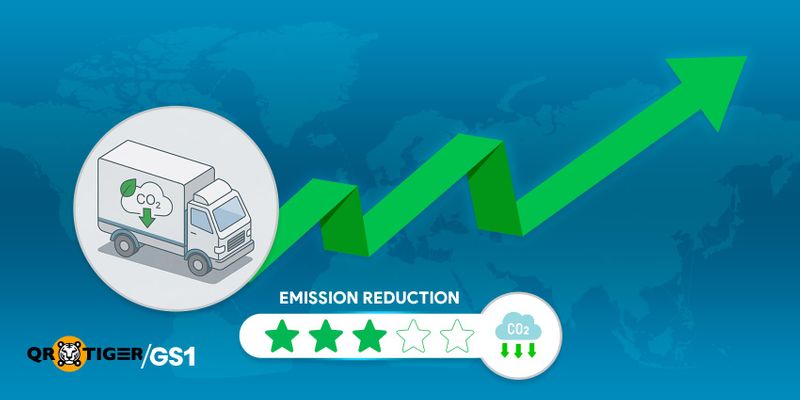
GS1 Netherlands pioneered the Lean & Green initiative in Europe, and GS1 Portugal now leads the program locally to help businesses make transport and logistics more climate‑friendly.
This European program supports companies in cutting CO2 emissions, boosting efficiency, and lowering costs. Special entry conditions are offered to SMEs and GS1 PT members, making it easier to join and benefit.
The process starts with a five‑year action plan, audited at the start and reviewed regularly. Companies track progress through biannual evaluations; each stage of emission reduction earns a Lean & Green star, up to five in total.
These steps indicate continuous progress toward zero emissions.
Digital Product Passport (DPP) Technical Commission
The Portuguese Institute of Quality (IPQ) appointed GS1 PT to lead and coordinate the national Technical Commission for the Digital Product Passport. This group brings together more than 30 organizations and stakeholders across different sectors to define how product data will be standardized and reported in Portugal.
The Commission helps shape the rules to be shared with EU authorities and simplifies sharing good practices and pilot projects. By leading this work, GS1 PT makes sure companies in the country are ready for new EU demands on product transparency, traceability, and circular economy goals.
GS1 PT services for businesses
GS1's solutions and services help businesses innovate, optimise their operations, and navigate sustainability and compliance challenges through expert consultation.
Getting Identification Codes
Companies license a Company Prefix from GS1 PT. This prefix acts as a global "ID card" used to build specific codes for different parts of the business:
- GTIN (Global Trade Item Numbers): The product ID, used to identify a specific brand’s product type. It allows shops to scan items at checkout and track stock levels in real-time.
- GLN (Global Location Number): Used to identify a physical location (like a warehouse). It ensures digital invoices and deliveries are sent to the correct address.
- SSCC (Serial Shipping Container Code) : Used as a "license plate" for shipping containers or pallets. It allows companies to track a specific shipment as it moves through the supply chain.
560 e-Label
The 560 e-Label is GS1 PT’s digital label solution that simplifies sharing product information. It lets businesses create QR codes that link consumers directly to a platform with essential details such as ingredients, nutrition facts, etc., quickly, safely, and cost-effectively.
The service supports compliance with Regulation (EU) 2021/2117, which requires wines produced from December 2023 onward to display ingredient lists and nutritional declarations. Instead of placing all details directly on the bottle, producers can provide this information through a QR code that links to a digital label.
With the 560 e-Label, companies can effortlessly meet these requirements, generate unlimited QR codes, and offer information in 24 languages so that consumers in different locations can access it.
Carbon Footprint Calculation
The service helps companies measure the greenhouse gases produced by their activities. Businesses can track a broad range of emission sources, including transport, industrial processes, refrigerants, and waste, to get a clear picture of their climate impact and how their activities contribute to CO2 equivalent emission
Working with global standards such as the GHG Protocol and ISO 14064-1, GS1 PT builds a tailored project for each business. The project involves identifying where emissions come from, breaking them down by sector or location, and pointing out areas where reductions are easiest to make.
Sync PT
Sync PT is a product information management platform that allows companies to create and share a digital “Identity Card” for each product. Producers can create this card and update product details in one place. Retailers and distributors get easy access to reliable regulatory and commercial information.
The system also supports catalogs for e‑commerce, barcode and label creation, and integration with supplier portals. Businesses can choose from flexible plans: Base, Standard, or Premium to use the required features in real-time.
These features are aligned with GS1 standards to ensure reliable data and global reach.
Validata
Validata is a service from GS1 Portugal that ensures the quality of product data and images for the digital world. Companies send their physical products to the MO's laboratory, where the team captures professional product images (up to 7 angles), collects logistical data, and validates label and packaging information against applicable regulations.
The processed data is then published directly to the Sync PT platform for sharing with business partners.
A Pick & Collect option is available, where the organization arranges product pickup across mainland Portugal, removing the need for companies to organise their own courier.
The service covers sectors beyond FMCG and retail, including textiles, clothing, footwear, and optics. Some Validata plans require an active Sync PT subscription, and pricing is exclusive to GS1 PT members.
Traceability Advisory Service
The service helps companies ensure their processes meet industry standards and regulations. A certified team works closely with each business to provide tailored support to its specific needs and ensure product traceability is reliable and compliant.
The service follows a structured path. It starts with an audit to assess current practices and then delivers a report showing priorities and improvement opportunities. From there, an action plan is created, implemented with guidance or supervision, and finalized with a report that confirms results.
This step‑by‑step approach makes companies confident in their traceability systems and builds trust across the supply chain.
Technical Support for Sustainability Reporting
GS1 PT offers specialized support for Sustainability Reporting to help companies prepare reports that meet both legal requirements and business needs.
The service covers double materiality analysis (that assesses how sustainability issues affect a company’s business and how the company’s activities impact people, society, and the environment), stakeholder engagement, ESG data collection, and team training.
These aspects ensure reports are accurate, structured, and aligned with the EU’s CSRD (Corporate Sustainability Reporting Directive), which requires large and listed companies to disclose their environmental and social impacts.
In addition to compliance, sustainability reporting helps build trust, improve reputation, and guide smarter business decisions.
Energy Efficiency Service
The service helps companies lower their energy bills and run more efficiently. It is made up of three modules that can be taken together or individually.
Module 1 - Cheapest Electricity Provider (with partner Manie): Analyses the company's energy consumption profile and automatically switches it to the most cost-effective electricity supplier each month.
Module 2 - Energy Audit & Certification (with partner Solee): An expert visits the company's premises to collect data and produce an official energy certificate, identifying where energy is being wasted.
Module 3 - Efficiency Improvement Plan (delivered by GS1 Portugal): A detailed review of areas where the company can save energy — covering lighting, heating, refrigeration, insulation, water use, transport, and supplier processes.
Each module can be subscribed to separately or all three together as a package. This is not included with standard GS1 membership.
Applications of 2D barcodes across industries in Portugal
By 2027, Portugal’s checkout systems are expected to read 2D barcodes. Unlike traditional barcodes, these can store much more product information that enhances tracking items and engaging with customers both in-store and online.
This shift is part of the GS1 Sunrise 2027 initiative, which aims to make shopping smoother and smarter.
Standard 1D barcodes will not disappear, but many companies are already preparing for the change. To stay compatible, they are printing both 1D and 2D barcodes on packaging. This will let today’s systems keep working while future upgrades are supported.
As part of the initiative, brands have two main options. They can generate GS1‑compliant 2D barcodes themselves by following GS1’s official guidelines, or they can use trusted third‑party tools like QR Tiger’s GS1 QR code generator.
If companies lack time or technical expertise, they can use external platforms, as they provide a quick and reliable way to adopt next‑generation barcodes.
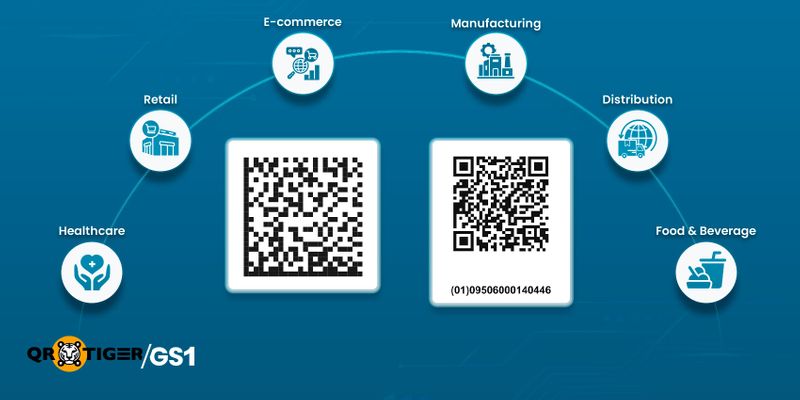
Here are key applications of these barcodes across industries in Portugal:
Retail
Retailers in Portugal are preparing for the GS1 Sunrise 2027 shift by adopting 2D barcodes at checkout. These codes go beyond simple product identification, carrying details such as batch number and serial number, expiration dates, sustainability information, and more. This helps retailers improve transparency and meet growing consumer demand for product data.
By scanning 2D barcodes, for example, GS1 QR code allows Portuguese shoppers to access richer product information directly on their smartphones. Retailers benefit from faster transactions, better inventory tracking, and stronger customer engagement.
Healthcare
The sector uses GS1 DataMatrix barcodes to improve patient safety, ensure supply chain transparency, and maintain compliance standards. Hospitals and pharmacies can encode critical data such as batch numbers, serial numbers, and expiry dates to ensure accurate dispensing and reduce errors.
By scanning 2D barcodes, healthcare providers can verify authenticity, track recalls, and meet EU regulatory requirements for medicines and medical devices.
Food and Agriculture
The food and agriculture sector uses 2D barcodes to strengthen traceability from farm to fork. Food producers can encode details like harvest dates, ingredients, allergens, and sourcing information into GS1 Digital Link QR code. These codes are applied to packaging to give consumers confidence in product quality and safety.
Only packaged products with GTIN are included to ensure reliable tracking for key export sectors such as dairy, meat, and horticulture. Using these codes strengthens food safety measures and supports sustainability goals.
Distribution
GS1’s Scan4Transport standard is used by logistics service providers to operate more efficiently. With 2D barcodes carrying the SSCC (Serial Shipping Container Code), each pallet, carton, or container gets a unique identifier. This guarantees that every unit is scanned accurately and linked to its transport record.
For example, scanning the 2D barcode on the logistics label, containsall key transport data, like delivery addresses, handling instructions, dangerous goods flags, and time windows. This means logistics partners can access shipment details with a single scan, even without an internet connection, eliminating the need to look up information in a backend system.
Inspiring success stories from GS1 in Portugal
GS1 standards and services benefit Portuguese companies with improved product visibility, smoother operations, and stronger safety. The case studies below show that they help build efficient supply chains.
MC
Wells is a Portuguese pharmacy chain owned by MC, one of Portugal's largest retailers. Their warehouse was struggling with high error rates and delays when receiving healthcare products, mainly because suppliers were shipping goods with inconsistent or missing labels; making it impossible to reliably scan and match products on arrival
MC partnered with GS1 to fix these issues. GS1 audited warehouse operations and worked directly with suppliers to ensure every box and pallet arriving at the warehouse had a proper GS1-128 barcode label, with key details like batch numbers and expiry dates.
Suppliers also shared their product information in advance using EDI (Electronic Data Interchange); a system that allows businesses to automatically exchange documents like orders, invoices, and delivery notices digitally. As a result, the warehouse system already knew what to expect before deliveries arrived.
Results:
- 99% fewer labeling errors with GS1-128 barcode scans
- 50% faster product reception at the warehouse
- 60% drop in product rejections thanks to accurate master data
Hospital De Cascais
Established in 2010, Hospital de Cascais is a modern healthcare institution in Portugal. The institution wanted to improve patient safety and reduce costs by optimizing its supply chain. The challenge was ensuring medicines were tracked accurately from warehouse to bedside, while also optimizing logistics to avoid waste and errors.
With GS1 standards and BIQ Health Solutions software, the hospital automated its logistics. Staff used handheld devices to manage stock, scan GS1 DataMatrix barcodes, and update inventory in real time. It led to automatically replenishment of supplies that save time and ensure easy availability of medicines when required.
For patient safety, every single dose of medication was uniquely identified with a GS1 DataMatrix barcode. At the bedside, nurses scanned both the patient’s wristband and the medicine barcode to confirm the right patient got the right drug at the right time.
Results:
- Patient records update instantly, with accurate invoices at discharge
- Logistics staff save time and costs when restocking
- Better product data reduces waste and supports smarter decisions

Empowering Digital Transformation in Supply Chains
GS1 Portugal empowers businesses across industries by providing global standards that simplify product identification, data sharing, and product traceability in the supply chain. It helps organizations improve sustainability, efficiency, and security while fulfilling growing demands for transparency and compliance.
Businesses can join GS1 to access trusted tools, innovative services, and expert support. Its tools and services help businesses support digital transformation.
FAQs
1. What company prefix is issued by GS1 PT?
GS1 PT issues company prefixes starting with 560, which identify businesses registered in Portugal. This prefix is part of the GS1 global numbering system, ensuring products can be uniquely identified and tracked worldwide.
2. What is a GTIN and why is it essential?
A GTIN is a unique numeric code that identifies a brand’s specific product class. It allows a product type to be consistently recognized and managed by any trading partner in the supply chain who operates within the GS1 system of standards.
3. What is the role of Application Identifiers (AIs) in GS1 barcodes?
AIs are short, standard prefix codes (like 01 for Product ID or 17 for Expiry) used in barcodes and EPC/RFID. They act like “tags” for scanners. Instead of seeing a long string of random numbers, the AI tells the computer what the following data is, its expected format, length, and exactly where one piece of information ends and the next begins.

DISCLAIMER: We acknowledge that GS1, as well as the materials, proprietary items, and all related patents, copyright, trademark, and other intellectual property (collectively, “intellectual property”) relating to its use, are the property of GS1 Global, and that our use of the same shall be in accordance with the conditions provided by GS1 Global.
