
Louisiana SB 14: Complete Details and How to Comply

Improving public health means better education, clearer food details, and systems that help people make healthier choices. That is the goal behind Louisiana Senate Bill 14.
Louisiana SB 14 is a health-focused law made to improve health in daily life. It affects healthcare, education, food, and consumer information, and it adds new duties for groups working in these areas.
Next, we’ll break down the Senate bill that’s easy to understand. You’ll learn what each part of the bill covers, who is affected, how to comply, and the deadlines businesses and organizations need to know.
After that, the rest of this blog will focus on the bill’s food and beverage labeling section, which is about QR codes and digital disclosure rules for retail food makers and brands.
-(1)jpg_800_10.jpeg)
Note: Links marked with * only work in the US or with a VPN.
What Is Louisiana Senate Bill 14?
Louisiana Governor Jeff Landry signed Louisiana Senate Bill 14 (SB 14)* into law on June 27, 2025, making Louisiana one of the first states in the country to pass a sweeping food and public health law.
The law is part of a broader national trend aligned with the "Make America Healthy Again" (MAHA) movement and mirrors similar legislation, like that passed in Texas (Senate Bill 25)
The bill contains 5 sections. Sections 1–3 contain the new rules and guidelines. Section 4 keeps Louisiana's rules in effect until federal law matches or exceeds them. Section 5 sets the start dates for each of the 3 rules.
First, let’s discuss two sections and one subsection that do not impact retail food and beverage brands:
1. School Food Ingredients
Louisiana SB 14, Section 1, R.S. 17:197.2
All public and private schools that receive state funding* cannot serve students any food or drinks containing banned ingredients.
This covers breakfast, lunch, and aftercare snacks/drinks served on campus during school hours.
Here are the 15 banned school ingredients, categorized:
Food coloring.
- Blue 1 & 2
- Green 3
- Red 3 & 40
- Yellow 5 & 6
Preservatives & Bread Additives
- BHA & BHT (Prevents oils from spoiling)
- Potassium Bromate & Azodicarbonamide (help bread rise and stay fluffy)
- Propylparaben (Anti-mold)
Fake Sugars (Artificial Sweeteners)
- Aspartame (often known as Equal or NutraSweet)
- Sucralose (often known as Splenda)
- Acesulfame Potassium (often called Ace-K)
Exception: Food and drinks sold at concession stands or vending machines are not covered by this rule.
Public schools and qualifying private schools will be mandated to buy locally grown/produced food from within the state whenever reasonably possible.
This section of the bill takes effect at the start of the 2028-2029 school year.
2. Louisiana Healthcare Training Requirements
Louisiana SB 14, Section 2, R.S. 37:920(G)
Most clinicians in direct patient care in Louisiana are now required to complete periodic continuing education in nutrition and metabolic health, while emergency providers have specific recurring course requirements for sickle cell care.
The respective licensing boards will determine the specific curriculum for both courses.
A. Nutrition & Healthy Metabolism Training: 1 hour of training every 4 years
Who must comply:
- Nurse Practitioners: Family medicine, internal medicine, pediatrics, obstetrics, and gynecology
- Doctors & Physician Assistants: Family medicine, internal medicine, pediatrics, psychiatry, endocrinology, gastroenterology, cardiology, oncology, rheumatology, neurology, nephrology, dermatology, pulmonology, surgery, immunology, hematology, obstetrics, and gynecology
B. Sickle Cell Disease Courses: One 1-hour class when you start, then a 1-hour refresher at least every 3 years after that.
Who must comply: Doctors and physician assistants working in emergency rooms
The course must be approved by the Louisiana State Board of Medical Examiners and available on the board's website.
These requirements take effect on January 1, 2026. The 1-hour training replaces one hour of the training that providers are already required to complete. Nothing is added to the total working hours.
3. Restaurant Seed Oil Notice
Louisiana SB 14, Section 3, R.S. 662
This subsection states that any restaurant or food service establishment that cooks or prepares food using seed oils must display a notice informing customers. It must be seen on the menu or any other clearly visible spot in the establishment.
The notice must say:
"Some menu items may contain or be prepared using seed oils."
What counts as a seed oil:
- Canola / Rapeseed
- Corn oil
- Cottonseed oil
- Grapeseed oil
- Rice bran oil
- Safflower oil
- Soybean oil
- Sunflower oil
Compliance Deadline: Restaurants and food businesses must have this notice in place by January 1, 2028.
In Focus: Louisiana SB 14, R.S. 40:661 | Disclosure of Harmful Ingredients
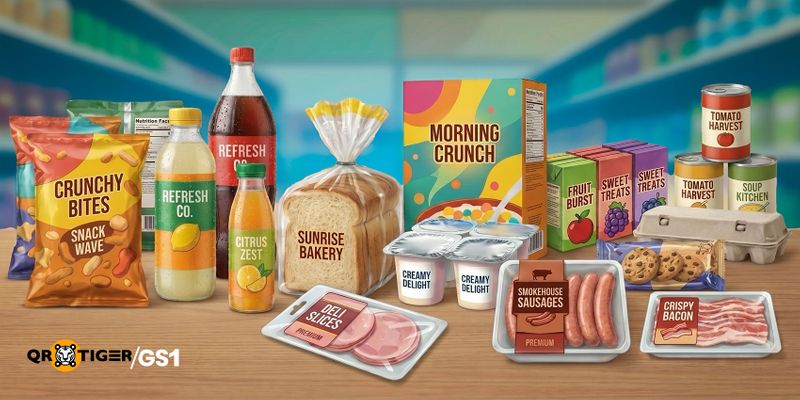
This section of the Louisiana Senate Bill 14 identifies 44 specific food additives and colorants that require disclosure/declaration via QR code. They include:
FOOD COLORINGS
- Blue Dye 1 (CAS 3844-45-9)
- Blue Dye 2 (CAS 860-22-0)
- Green Dye 3 (CAS 2353-45-9)
- Citrus Red Dye 2 (CAS 6358-53-8)
- Red Dye 3 (CAS 16423-68-0)
- Red Dye 4 (CAS 4548-53-2)
- Red Dye 40 (CAS 25956-17-6)
- Yellow Dye 5 (CAS 1934-21-0)
- Yellow Dye 6 (CAS 2783-94-0)
- Certified Food Colors by the FDA - A catch-all category covering any synthetic dye that has received FDA certification.
ARTIFICIAL SWEETENERS -(Discussed in the School Food Ingredients section)
- Acesulfame Potassium
- Aspartame
- Sucralose
PRESERVATIVES
- Butylated Hydroxyanisole (BHA) — (Discussed in the School Food Ingredients section.)
- Butylated Hydroxytoluene (BHT) — (Discussed in the School Food Ingredients section.)
- Propylparaben — (Discussed in the School Food Ingredients section.)
- Thiodipropionic Acid — Prevents fats from breaking down in packaged foods.
- Sodium Stearyl Fumarate — Prevents clumping and extends shelf life in flour-based products.
- Stearyl Tartrate — Maintains texture and freshness in dough and baked goods.
DOUGH CONDITIONERS AND FLOUR TREATMENTS
- Azodicarbonamide — (Discussed in the School Food Ingredients section).
- Potassium Bromate — (Discussed in the School Food Ingredients section).
- Bleached Flour — Chemically whitened flour that speeds up natural aging.
- Bromated Flour — Flour treated to strengthen dough and improve bread rise.
- Potassium Iodate — Strengthens and conditions dough in bread making.
- Calcium Bromate — Improves dough strength and baking performance.
- Potassium Aluminum Sulfate — A leavening agent in baking powder that helps baked goods rise.
- Sodium Aluminum Sulfate — Used in baking powder to create a second rise during baking.
MIXING AND TEXTURE-CHANGING INGREDIENTS
- Acetylated Esters of Mono- and Diglycerides — Keeps oil and water mixed in processed foods.
- Lactylated Fatty Acid Esters of Glycerol and Propylene Glycol — Improves softness and freshness in baked goods.
- Dioctyl Sodium Sulfosuccinate (DSS) — Helps mix ingredients evenly in dry food mixes.
- Sodium Lauryl Sulfate — Creates foaming or whipping effects in certain foods.
- Chemically altered fats and oils
- Partially Hydrogenated Oil (PHO) — Primary source of artificial trans fats, linked to heart disease.
- Synthetic Trans Fatty Acid — Any artificially created trans fat not covered by the PHO ban.
- Interesterified Palm Oil — Chemically altered palm oil used as a trans fat replacement.
- Interesterified Soybean Oil — Chemically altered soybean oil used as a trans fat alternative.
- Olestra — A zero-calorie fat substitute that passes through the body unabsorbed.
INDUSTRIAL AND CHEMICAL COMPOUNDS
- Lye — A strong alkaline chemical used to cure olives, pretzels, and ramen noodles.
- Morpholine — A coating agent applied to fruits and vegetables to extend shelf life.
- Propylene Oxide — Used to sterilize nuts and spices, classified as a possible carcinogen.
- Toluene — An industrial solvent that can appear as a contaminant in food packaging.
- Anisole — A chemical compound used in food flavoring, associated with health concerns at high levels.
- Dimethylamylamine (DMAA) — A stimulant used in some energy products, considered unsafe by the FDA.
FLAVORING AGENT
- Diacetyl — Artificial butter flavoring used in microwave popcorn, linked to lung disease in factory workers.
If a food or beverage product sold in Louisiana contains any of these ingredients, it must comply with the bill’s disclosure requirements by use of a QR code to provide consumers with more detailed information.
Who Is Affected?
Food manufacturers, brands, suppliers, and importers(if in charge of relabeling) selling human food products in Louisiana are the primary targets of SB 14. This includes selling through grocery chains, convenience stores, e-commerce platforms, and any other retail channel in the state.
The bill does not apply to:
- Drugs or dietary supplements
- Alcoholic beverages
- Food prepared and labeled within a retail food establishment (e.g., in-store bakery items, restaurants)
- Medical foods: It is a specially formulated products that a doctor prescribes and supervises to help manage a specific medical condition that requires a unique diet. These are not for general health or wellness, and you cannot pick them up at a grocery store. - Sample: Suplena for Kidney Disease.
- Multi-unit packages - Sample: A box of individually wrapped granola bars. The QR code and ingredient disclaimer only need to appear on the outside of the box, not on each individual granola bar wrapper inside.
What Do You Need to Do to Comply with SB 14 RS 661?
Here's a simplified compliance checklist:
- Audit your product range. Identify every SKU that contains one or more of the 44 listed ingredients.
- Add a QR code to your packaging. The QR code must appear on the product label, with a message telling consumers that more ingredient information is available by scanning it.
- The QR code must link to a manufacturer-controlled webpage. This can be done in a few ways:
Option 1 — Brand Website: If the manufacturer has its own website, the QR code can link directly to the product page on its site (e.g., www.brandname.com/product/ingredients). This is the most straightforward way to comply.
Option 2 — Third-Party QR Code Services: Many manufacturers, especially smaller ones, use third-party services to create and host their QR code pages rather than build their own.
These services own the servers, but the manufacturer pays a monthly fee and controls what appears on the page. This still counts as being "under the control of the manufacturer".
4. That webpage must display a prominent disclaimer in the following format:
"NOTICE: This product contains [ingredient name]. For more information about this ingredient, including FDA approvals, click HERE."
The word "HERE" must link directly to the FDA's food chemical safety webpage.
5. Deadline: Update packaging before January 1, 2028. Brands should start planning now, given typical packaging redesign and manufacturing lead times.
Violations are severely penalized under Louisiana's Sanitary Code, so non-compliance carries real legal risk.
*Another option is to change the product formula by removing or replacing any of the listed ingredients. If the product no longer contains any of the 44 listed ingredients, it may no longer need to follow this disclosure rule.
That said, changing a formula is not always easy, as it can affect taste, texture, shelf life, and production costs. In some cases, there may not be a suitable replacement for certain ingredients.
How to Comply with Louisiana SB 14 Using QR TIGER/GS1
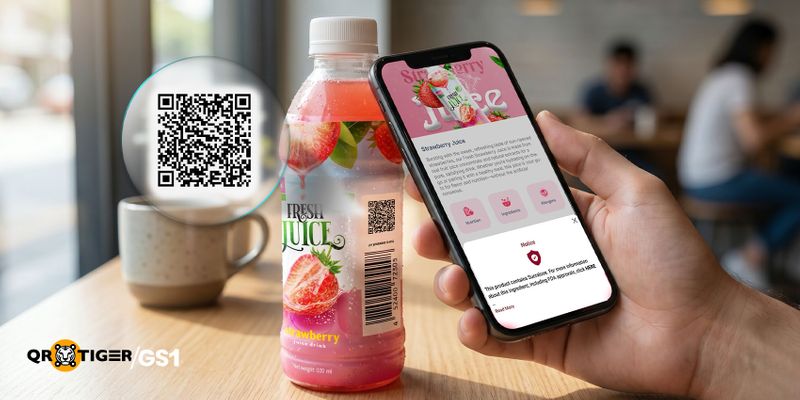
While the bill can be met with a standard dynamic QR code. But if you are updating packaging anyway, you may want to use a GS1 Digital Link QR code or QR code powered by GS1 instead.
This lets you print one barcode that can support both:
- POS and inventory scanning
- SB 14 digital disclosure requirements
Instead of adding separate codes, one barcode can handle both.
Here’s how it works after you register and complete the product identifier input section.
Option 1: Use the Single URL output
Point your GS1 DL QR code to a webpage you own or control.
Option 2: Use QR TIGER/GS1's Product Page feature.
Another option is using our product page feature to create a branded page for your product. You can choose a design and customize it to match your brand, add product details, reviews, images, and video.
The Safety section can be renamed to Notice, where the required disclosure statement can be placed and shown clearly when consumers scan the code.
As already discussed, this still meets the bill’s manufacturer-controlled web page requirement, as the brand controls the content, updates, and product information present.
Why Choose a GS1 Digital Link QR code Over a Standard Dynamic QR code for SB 14?
Both a standard dynamic QR code and a GS1 DL QR code help meet Louisiana SB 14’s ingredient disclosure requirement. Both also let you update the linked content after your packaging has been printed
But if you're a food brand thinking beyond this one regulatory requirement, a GS1 code offers stronger long-term value.
Here's why:
It Does More Than Just Link to a Page
A standard dynamic QR code usually sends every scanner to the same destination.
A GS1 DL QR code does more. It can carry your product’s GTIN (Global Trade Item Number), the same product identifier used in retail barcodes, while also directing different users to different types of information.
A consumer scanning at home might see your ingredient disclosure page. A retailer, distributor, or supply chain partner scanning the same code could access product identification, traceability, inventory, or logistics data.
One code. Product identity, consumer engagement, and business data in a single symbol.
It’s Future-Ready
Regulations continue to demand more product transparency, faster access to accurate information, and stronger traceability across the supply chain.
A GS1 Digital Link QR code helps brands prepare for that shift. Beyond today’s ingredient disclosure requirements, the same code can support recalls, batch-level tracing, expiration data, sourcing information, authentication, and future regulatory disclosures without redesigning your packaging.
Instead of adding new labels every time requirements change, your packaging is already built to adapt.

The Bigger Picture: A Growing US Trend
Louisiana Senate Bill 14 is built on a simple idea: people should know what is in the food they eat, the meals served to their children at school, and the products they buy every day.
The bill covers several areas. It removes certain ingredients from school meals, requires healthcare workers to complete nutrition and sickle cell training, and requires restaurants to post notices about seed oils.
Each part of the law supports the same goal: helping people make better-informed health choices.
For food and beverage brands, the most immediate requirement is the product disclosure rule under R.S. 40:661. Packaging updates take time, so starting early matters. Missing the deadline can also lead to real legal and financial consequences.
Looking ahead, Louisiana may not be the last state to pass laws like this. The push for clearer food information is growing, and brands that prepare their packaging now will be in a stronger position if similar rules appear elsewhere.
FAQS
When does the Disclosure of Harmful Ingredients regulation of Louisiana SB 14 take effect?
The QR code labeling provisions take effect on January 1, 2028. However, given the time required for packaging redesigns, label production, and supply chain adjustments, brands should begin compliance planning well before that date.
Does SB 14 ban any of the 44 ingredients?
It depends on where the food is being sold or served.
For food sold in stores or to the general public, SB 14 does not ban any of the 44 ingredients. Products containing them can still be sold, but they must include the required QR code and disclaimer.
Schools are different.
Starting in the 2028 to 2029 school year, food that has any of the 15 of the 44 ingredients cannot be served in meals at Louisiana public schools or state-funded private schools.
Outside of school meal programs, those same 15 ingredients are still legal in food products, but the QR code disclosure requirement still applies.
Does it have to be a GS1 QR code to comply with SB 14?
No. The law does not specify the type of QR code. Any scannable QR code that links to a compliant manufacturer-controlled webpage will satisfy the requirement..
That said, brands may find a GS1 Digital Link QR code to be a more strategic long-term investment, as it serves both product compliance and operational functions.
What if I sell the same product in multiple states?
Option 1 — Add QR code to all products
Since you control the QR code and its content, using it on all packaging keeps things consistent and avoids state conflicts in most cases.
Option 2 — Change the formula
Removing an ingredient that triggers disclosure can eliminate the need for warnings and may reduce future compliance issues as more states add similar rules.
What not to do — Louisiana-only labels
Creating Louisiana-only packaging may seem simple, but it adds cost and more work in logistics.
It also raises the risk of mistakes, like wrong labels shipping to the wrong state, or updates not being tracked properly. These errors can sometimes lead to compliance issues and shift the problem from labeling to operations.
What if my product is only available online?
If your product is sold and shipped to consumers in Louisiana, it is subject to SB 14's labeling requirements. E-commerce sales are not exempt. The law applies to any food product "offered for sale" in the state.

DISCLAIMER: We acknowledge that GS1, as well as the materials, proprietary items, and all related patents, copyright, trademark, and other intellectual property (collectively, “intellectual property”) relating to its use, are the property of GS1 Global, and that our use of the same shall be in accordance with the conditions provided by GS1 Global.
